Friday, August 21, 2026

NO WELL-GROOMED ROMAN MALE
WAS WITHOUT AN ANTINOUS BALSAMARIUM


"CLEANLINESS is next to Godliness" ... was Ovid's advice to young men setting out on amorous conquests in his poem Ars Amatoria.

A clean body and a well-groomed appearance was not only indispensable in the art of love, but was also considered a fundamental feature of Roman self-esteem, frequently contrasted with the uncleanliness and unkempt appearance of Barbarians living outside the borders of the Empire.

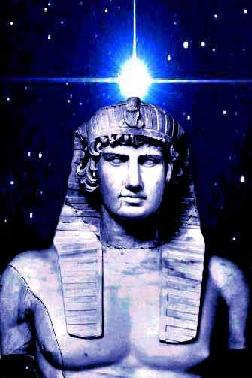
The third Friday in August is Men's Grooming Day and the ancient Romans apparently considered Antinous to be their role model because a BALSAMARIUM (bath unguent jar) in the form of the head of Antinous was hugely popular.


Any well-groomed Roman male owned an array of bathing implements, combs, strigilae, lamps, water-resistant flip-flops and other articles ... including a balsamarium to hold his bath oils or skin lotions.

Antinous balsamaria were exceedingly popular in Rome. Suitable for holding bath oils or moisturizers, an Antinous balsamarium suggested that its owner would emerge from the baths looking like a God. 

And we thought modern advertising came up with that gimmick!

THE SACRED LION HUNT


ON the 21st of August, with the Sun in the final degrees of Leo the Lion, we commemorate the Sacred Lion Hunt ... when Hadrian and Antinous slew a man-eating lion in Egypt in August 130 AD.

Priests of Antinous celebrate the event in with ritual ceremonies at the Hollywood Temple of Antinous which also see worshipers participating live online from North and South America, Europe and Africa.

During the special ceremonies they also honor the Sacred Rosy Lotus of Antinous ... the pink waterlily said to have sprung forth spontaneously from the lion's blood as it splattered the banks of the Nile.


Flamen Antonius Subia relates in vivid detail the events of the Sacred Lion Hunt: The place is Egypt, somewhere in the rocky wilderness between the scattered oases southeast of Alexandria. 

The time is August of the Year 130 AD. The Sun is poised to enter the Sign of Leo. The Constellation of Aquila the Eagle is at its zenith in the nighttime sky ... just as it is now.

It is the constellation of the Emperor. And the Emperor and his Beloved are touring Egypt when they hear grisly accounts of a man-eating lion marauding the countryside on the edge of the cultivated land. The "Marousian Lion" it was called.

They lead a hunting expedition out into the wilderness. The whole expedition is rife with symbolism from the start since the Sun is in Leo in the daytime skies and the Eagle is soaring in the nighttime skies and the Ancients believed killing lions was tantamount to defeating death itself. Lion hunting was the sport of kings.

When at last the Imperial party flushes out the man-eater, the huntsmen and archers stand back and leave Hadrian to close in on the beast with his steed. Hadrian has just got off an arrow which wounds the animal when, all of a sudden, out of nowhere, young Antinous rides ahead, his reins in his left hand, an adamantine-tipped lance in his upraised right hand.

As the Imperial retinue looks on in horror, the snarling lion charges toward the boy, causing his panicked horse to whinny and wheel about in terror. But Antinous maintains his balance and, instantly judging distance and angle, sends his lance sailing towards the lion as it quickly closed the gap between them. 

The lance slams into its rear flank, inflicting a serious but not fatal wound. Enraged even more, the lion uses its fangs to pull out the lance and charges anew against the Boy who is fumbling with his quiver to ready a shot with his bow. But an arrow is already in the air from behind Antinous, and it whizzes past his ear and hit its mark in the throat of the lion.

It has been fired by Hadrian, who is approaching at full gallop and who, even while the first arrow was still in the air, had already readied a second arrow, which this time penetrates both lungs.

The lion spins about and collapses writhing in the dust, rage in its eyes, blood and saliva guttering from its fanged mouth, gasping for breath as it struggles to get to its feet — because Antinous has dismounted and is sprinting toward it with a drawn dagger.

Hadrian draws his steed to a halt and dismounts with an agility and  lightness befitting a man half his age, fueled by adrenaline and alarm for his Beloved Boy, who faces imminent peril from the mortally wounded lion, still capable of severing an artery with one swipe of its mighty paw.

Hadrian draws his hunting axe from his belt and holds it high as he  lunges onto the lion's back and dispatches the beast with one powerful blow which splits its skull in two with a frightening crack and a spurt of bright red blood which bathes both the older man, now panting and perspiring heavily, and the younger man who still shows no visible expression of concern, just a wild-eyed look of excitement in his eyes, as if he never realized the danger he had been in — as if he thinks he is immortal.

A cheer goes up from the coterie of onlookers when they realize the lion is dead, killed seemingly by a single blow from the Emperor's hand. Courtiers whose eyes are unskilled in the ways of hunting will later claim Hadrian had struck the lion dead with a club.

As soldiers and nervous bodyguards rush forward to make sure everything is all right, the emperor, his adrenalin-strength ebbing as quickly as it came, shakily wraps a blood-spattered arm around Antinous and plants his gilded, spike-soled sandal on the dead animal's neck and nods to Antinous to do the same.

There they stand, bathed in blood and bathed in the adulation of the Imperial coterie, each with one foot on the vanquished man-eater as the animal's blood spreads out and covers the surrounding rocks and sand and a few scrubby wildflowers growing from a crevice in a rock.

Even the flowers are splattered with blood. And these red blossoms  will be plucked by members of the entourage to take back as souvenirs to show to envious courtiers who had not been invited along.

THE SACRED LION HUNT was immortalized in poetry and in stone, with Hadrian adding medallions to the Arch of Constantine showing him and Antinous with feet on the lion's neck and also making sacrifice to the great lion-killer Hercules.


Soon legend would have it that scarlet-red lotus blossoms had sprung forth from the pool of the lion's blood, the lion which had been brought down by Antinous and which had been dealt its death blow by Hadrian — the SACRED RED LOTUS.

Under the Sign of Leo. And under the Constellation of the Eagle. 

Within a few short weeks, Antinous himself would be dead. The Sacred Lion Hunt is the last recorded event in His short life.

And some time afterward, grieving Hadrian would look up into the  nighttime skies with tear-filled eyes and his court astronomers would point out a New Star which had appeared in the southern part of the Constellation of Aquila the Eagle.

The New Star would be interpreted as a celestial sign that Antinous had been raised to the firmament, that the Constellation of the Imperial Eagle had been joined by the CONSTELLATION OF ANTINOUS. It was a sign that Antinous was now a God.

If you go outside tonight and peer out into the darkness with all its deep and hidden dangers, remember Antinous and how he peered out into the barren wilderness with all its deep and hidden dangers. 

He charged forth, his bridle-reins in his left hand and an adamantine-tipped lance in his right, and he faced death unafraid.

For Antinous knew he was immortal.

The Constellation of Antinous, still under the wing of the Imperial Eagle, will be right directly over your head tonight ... shining proof that Antinous is a God and that he is indeed immortal.


Don't look out into the darkness around you and be afraid. Instead, look up and remember the Beloved Boy, who was a fearless hunter, who stalked death itself, and who emerged victorious over it.

Thursday, August 20, 2026

ASTRO FORECAST: AUGUST 20th—30th, 2026

Antinous is a Moon God. He is, of course, many other things and he wears many hats. But one of the ways he was worshiped in Antiquity was as ANTINOUS THE MOON GOD.

His worshipers looked skyward and saw His beautiful face perpetually turned towards the Earth. The Man in the Moon was actually the Blessed Boy in the Moon for the ancient priests and worshipers of Antinous. Swiftest and most youthful of all the Zodiacal deities, Antinous speeds through an entire year's worth of Astrological signs in just 28 days.

ANTINOUS THE MOON GOD represents our deepest personal needs, our basic habits and reactions, and our unconscious gay selves. Where Hadrian the Sun acts, Antinous the Moon REACTS. How do we instinctively react or respond to problems? What do we feel we need for a sense of security? Look to ANTINOUS THE MOON GOD for answers.

ANTINOUS THE MOON GOD is both our inner boy child and our inner lover. His ever changing phases, as he sweeps past all the other Planets in all the Signs, make us at turns responsive, receptive, and reflective. Eternally youthful, ANTINOUS THE MOON GOD represents our childlike spontaneous and instinctual reactions.

ANTINOUS THE MOON GOD beams down on us to make us imaginative, creative, intuitive, sentimental, adaptable, introspective, and protective. On the negative side, and depending on where he is in the Zodiac, he can make us moody, restless, and irrational.

Antinous Astrology Forecast


AUGUST 20th to 30th, 2026


THURS-FRIDAY, AUGUST 20th-21st, 2026

This week, we come to the Scorpio First Quarter Moon, which is the lunar phase we call the THIEF MOON in honor of Prometheus ... the first thief ... and it was thanks to his larcenous thievery that humans are not living in burrows and dens like animals ... Rituals and meditations tonight can focus on your "inner thief" — the things you rob yourself of — self-esteem, self-love, self-confidence, for example. By robbing yourself of these qualities, you are vulnerable to real-life thieves ... Tonight's lunar phase is also reminding us about the ability to take what we need without asking in advance. It is about getting back what is rightfully ours.

SAT-SUNDAY, AUGUST 22nd-23rd, 2026

This weekend, look for guidance from an older person in financial and relationship issues ... or offer guidance to a younger person ... when Venus is in opposition to Saturn. This is a time when maturity triumphs over youthful zeal. Sit back and heed the guidance of an old soul ... who can also be a spirit guide. And if you see a younger person blundering into a trap, this is the day to intercede and offer a wise word of advice based on personal experience.

MON-WEDNESDAY, AUGUST 24th-26th, 2026

This week, Mercury leaves selfish Leo and enters compassionate Virgo. It has been said that Virgo Mercury is like having a cyber-servant or surrogate replicant who anticipates all your inter-personal communications needs and rushes to your beck and call. Mercury will be in Virgo until September 10th, which means you can expect advice and supportive suggestions for "upgrading" your cognitive and communications skills for the coming weeks.

THURSDAY, AUGUST 27th, 2026

There's a Lunar Eclipse overnight Thursday-Friday when we come to the Pisces Full Moon ... In heterosexual astrology, the Pisces Full Moon is just a moon of sensual spiritual energy. But in Antinous Gay Moon Magic, this is the HOMOTHEOSIS MOON ... the archetype of gay sexuality ... when your sexual dreams can come true ... This hot Full Moon tells you it may be time to take your relationship to a whole new level ... This lunar phase helps you to deepen your love relationships in meaningful ways, making constructive compromises which allow each partner freedom while strengthening the bonds which unite you.

FRI-SUNDAY, AUGUST 28th-30th, 2026

This weekend, both the Sun and Mercury align in conjunction and both are in a 90-degree square aspect to Uranus. This aspect creates unreliability and betrayal amongst friends, allies and coworkers. Stress and rancor and lots of rage and unrest are the result.

SNEAK PREVIEW OF NEXT WEEK:

Another exciting week lies ahead between August 31st and September 6th, 2026, when ANTINOUS THE MOON GOD squares off against the Sun for the GEMINI THIRD QUARTER MOON which in Antinous Moon Magic is called the CONSOLATION MOON because it is the Lunar Archetypal energy of serendipity and fortuitous misadventures. You win the Silver Medal (but not the Gold). You win $20 in the lottery (but not the jackpot of $20 million). It is about finding $50 in an old wallet ... More details next time ....


THE SACRED BAND OF THEBES
THE ARMY OF LOVERS


AUG. 20 the Religion of Antinous commemorates the Sacred Band of Thebes, the Army of Gay Lovers whose courage and valour have echoed down through the ages as an inspiration that Gay Love is a magical means of Conquering Fear and  Doubt.

The Sacred Band of Thebes, also called The Theban Band, was a battalion composed entirely of homosexual friends and lovers. This military unit, consisting of 150 male couples, was based on the belief that men fighting alongside their lovers would die rather than shame one another.

According to Aristotle, the Army of Lovers were sworn into military service at the Tomb of Iolaus, one of the many male lovers of Hercules. Iolaus had helped the god in the Twelve Herculean Tasks. 

He often acted as Hercules' charioteer and companion, and the closeness of their relationship was such that he was known as Heracles' symbomos (altar-sharer), since the two could be honored at one and the same altar — a very rare occurrence in ancient Greece, where each divinity would have his or her own altar.

Iolaus was called the eromenos (beloved boy) of Hercules, and was thus a Sacred Hero of same-sex love in Thebes. Hercules, Iolaus and Eros were often depicted together.

That is probably why the army of gay lovers was called the Sacred Band, since they took their oath of allegiance at the Sacred Tomb of Iolaus, which was at the same time a shared sacred altar to Hercules. In effect, the warriors were swearing that they would fight alongside their comrades the same way Iolaus and Hercules fought together — armed with the arrows of Eros.


You can see the parallels to Hadrian and his beloved boy Antinous, and later this week the parallels become even clearer when we commemorate the SACRED LION HUNT.

After that hunt in the Libyan desert in the summer of the year 130 AD, Hadrian and Antinous made sacrifice to the Great Lion Slayer Hercules — thus cementing the identification between Hadrian/Hercules and Antinous/Iolaus — and their affiliation with the Sacred Band of Thebes.

The great Theban gener
al and tactician Epaminondas is generally credited with establishing The Sacred Band, although some sources claim it was his "beloved friend" Pelopidas who was responsible for recruiting them. No matter — they both fought side-by-side at the head of The Sacred Band.

This corps d'elite first took to the battlefield against Sparta, which had dominated Greece since the fall of Athens in 404 BC. The Spartans were confident of victory, as they had never suffered a defeat on the battlefield — never ever.

Deploying the Sacred Band on his front left wing, "Epaminondas made his left wing fifty deep and flung it forward in the attack." 

The "extra weight" of this wing and the "fanatical bravery of the Sacred Band" broke the Sparta right wing, which contained their best warriors. In the ensuing hand-to-hand combat, the Spartan king was killed and their right gave way.

Witnessing this, the rest of the Spartan forces, who had not yet been engaged, fell back in disarray, running for their lives. Thus, Sparta suffered their first recorded defeat in more than 400 years — at the hands of an Army of Gay Lovers.

But the end came in 338 BC at the battle of Chaeronea when King Phillip II of Macedonia and his son Alexander (later called Alexander the Great) defeated the combined forces of Athens and Thebes-Boetia. Alexander confronted The Sacred Band of Thebes, the elite corps of 300 homosexual lovers who were by that time the most respected soldiers in the world.

But alas! They were no match for the Macedonians under Phillip and Alexander. It was a rout. The Athenian and Theban armies gave way and began retreating from the advancing Macedonians. Only The Sacred Band stood their ground — and died. Only a few were subdued and captured. Of those who died, it was found that not one had been wounded in the back — a sign that they had not turned away from the fight.

Alexander was so moved by their nobility and courage that he asked his father to bury them with honour and raise a monument in the form of a Sacred Lion over their mass grave. In 1881, the shattered fragments of this Lion Tomb were discovered, surrounded by the bones of 254 pairs of men with their weapons, arranged in a phalanx of seven rows, the battle formation of the Sacred Band.

In 1902 the fragments of the Sacred Lion were reconstructed and placed again over the tomb of The Sacred Band (depicted left) by the secret homosexual society known as the Order of Chaeronea, founded by gay-rights pioneer George Cecil Ives.

It reminds us once again of the Sacred Lion Hunt which we celebrate later this week.

So, what has all of this got to do with us in our daily lives? We're not soldiers. We're not brave and courageous. Like Dorothy Gale, we're meek and mild. Timid. We know that if we were on a battlefield, we would turn and run. We would hide and "play dead" and hope nobody found us.

We assume that the Army of Gay Lovers were all fearless. We think they were unafraid. We don't think of them as being scaredy-cats like us. We think they didn't mind the prospect of agonizing death. We think they were somehow above such mortal fears and doubts.

That's nonsense, of course. They were scared out of their wits. We can scarcely imagine how afraid they were. As they stood there alone against the mightiest army in the Ancient World, their emotions shifted beyond the mere terror of possibly being killed, to the actual horror of inescapable agony and death. It is one thing to be terrified — we all know the fears generated by terrorists who fly airliners into buildings. 

But the emotions experienced by those trapped in the planes or inside the burning buildings go far beyond mere terror to the actual horror of inescapable agony and death. That is the Mystery of Terror as opposed to the Mystery of Horror. We tend to forget the distinction!

The Army of Gay Lovers were not without fear. On the contrary, they were staring into the horror of impending pain and death. But they did not allow their fear to overwhelm them. 

Instead, they turned their fear "inside-out" and used it as a magical shield. The barbs of fear were no longer poking inward to themselves, but instead were pointing outward towards their foes.

And that is the Mystery Teaching of the Army of Gay Lovers. It was no doubt part of the initiation which the recruits underwent at the Tomb of Iolaus. They were schooled in magico-religious methods for handling fear. It's about learning to harness Mars energy. Mars is all about the double-edge sword of fear/bravery and how you can learn to wield that Sword of Mars.

It's not about being fearless. It's about being able to transform your fear into a mighty force which wins the battle of life. Mars Warrior Energy is not about death. It is about LIFE. It is about harnessing fear and doubt and turning them into useful energies in your daily life.

Life — from the time you are born until the time you die — life is just one constant battle. And if you give in, then you are lost. And if you give in to the fear and doubt that constantly confront you each and ever day, then you are lost. It's about using selfless love and transcendant awareness to transform fear and doubt into constructive energies which empower you to stand up and wade into the fray of daily life.


The Band of Thebes were initiated into Mystery Teachings which showed them how to transform fear and doubt into a magical force which made them invincible — capable of asserting their will and making their dreams become reality. 

And the catalyst was male-male love and devotion.

This is one of the deepest and most profound Mystery Teachings of the Religion of Antinous

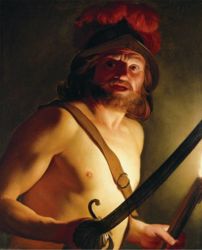
We are talking about the Mysteries of Antinous-Mars. This is why Flamen Antinoalis Antonius Subia has painted Antinous in the guise of the War God (above). 

Antinous is not just about gay male beauty. He is about gay male warrior energy.

Mars is a very important constituent aspect of Antinous. In Fixed Star Astrology, the STAR OF ANTINOUS is characterized by a mixture of Jupiter/Mars energy along with Venus energy — unique among Fixed Stars. To overlook Mars is to overlook a major component of what Antinous is all about.

Mars and his Alchemical Intelligence Graphiel and Daimon Barzabel (Deimos and Phobos) is much misunderstood by philosophers and occultists. 

The fiery Graphiel/Barzabel energies of the red planet ("terror" Deimos and "horror" Phobos) are often seen as frightful and horrific and destructive and warlike with no other qualities. This is a shallow analysis and one that should be discarded. Understanding your Martial nature — the Antinous-Mars warrior inside you — is essential to your survival and growth as a gay man. Terror and horror accompany us all our lives.

We are all afraid every day. We are all riddled with doubts every day. Look around you — most people are consumed with fear and doubt. Fear fuels their lives! But each of us can learn to turn our fears and doubts "inside-out" so that their barbs no longer point inward towards us, but instead so that these barbs of fear and doubt form a protective shield around us. 

It girds us with a constructive energy which helps us to advance through the Herculean travails which we face in our daily lives. Instead of being "fearfully" timid, we become "fearsomely" determined not to let life get us down.

Tomorrow, this transformational ability to turn fear "inside-out" will help us to understand how Antinous was able to charge the man-eater during the SACRED LION HUNT.

He must have been terrified. He was young and inexperienced and alone on his steed and armed only with an adamantine-tipped lance.

But through his loving bond with Hadrian/Hercules, Antinous/Iolaus was also magically armed with the "fearsomely strong" energies of the Sacred Band of Thebes. 


Flamen Antinoalis Antonius affirms: "We consecrate and honor their memory and call upon their strength and courage in our own hearts, that we may become the New Sacred Band." 

Wednesday, August 19, 2026

TONIGHT IS THE MOON OF PROMETHEUS
THE SCORPIO FIRST QUARTER MOON


PROMETHEUS was the first thief and it was thanks to his larcenous thievery that humans are not living in burrows and dens like animals.

He stole fire from the Gods and brought it down to us mortals living on Earth. And at this, the hottest time of the year (in the Northern Hemisphere at any rate), we celebrate the SCORPIO FIRST QUARTER MOON with this legendary act of "breaking and entering with malicious intent to commit a felony."

Tonight is the night of the THIEF MOON, the PROMETHEUS MOON.

In ANTINOUS MOON MAGIC, each phase of the moon represents a Divine Spirit or Archetype. The Spirit of the Thief Moon is the Divine Thief. This Spirit is the stealer of hearts. He sneaks up on others and intentionally relieves them of those things they hold dear. We associate this lunar phase with Prometheus.

One of the Titans, Prometheus fashioned men out of clay (women did not appear until Pandora), and Athena breathed life into these clay men. Originally all men had Prometheus' power to foretell the future (the Greek name "Prometheus" means "Forethought") but Zeus became enraged that a Titan had created a sentient and nearly divine race, so he stripped them of that fortune-telling power and also stripped them of fire.

Prometheus urged his fellow Titans to use cunning and stealth to overcome the Gods. But when the Titans opted for brute force, Prometheus foresaw the outcome and betrayed the Titans and went over to the side led by Zeus.

But when Zeus turned against men and wanted to smite them all and create a rival race, Prometheus betrayed Zeus by stealing fire and giving it to his clay men so that they would have a light to see their way without the help of the gods even if only a few were clairvoyant, not all, as he had originally intended.

Outraged, Zeus bound Prometheus to the rock and his eagle dined on his liver every day. But being a Titan, he could not die, and his liver was restored every night.

In the end, Prometheus won his freedom by foretelling that Zeus would meet his downfall if he mated with a certain mortal woman ... which is why Poseidon fell and Zeus did not, because Zeus heeded the foretold warning.

Prometheus was the first thief. He was the first Divine friend of mankind. It is fitting that Prometheus graces the fountain at Rockefeller Center in Manhattan. Prometheus was mankind's first divine friend, who gave us the civilization-building gift of fire. It was stolen from the Gods!

Thus the SCORPIO FIRST QUARTER MOON is a time of cunning and deception, thievery, robbery, stealth. Unlike the PERDITION MOON, which is about loss in a general sense, the THIEF MOON is about intentional taking.

In a very literal sense, it can signify a night when break-ins or burglaries are rife. But most often it represents your inner self ... the things you rob yourself of  ... self-esteem, self-love, self-confidence, for example. By robbing yourself of these qualities, you are vulnerable to real-life thieves.
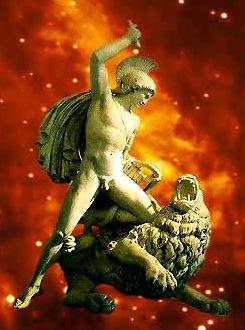
But this lunar phase is also talking about the positive aspects of being a thief, like Prometheus or Mercury. Antinous/Mercury is the God of Thieves, Con Men and Convicts. Prometheus stole fire from the Gods to give to mankind, saying it rightfully belonged to mortals. Mercury famously stole from Apollo and yet charmed his way to "acquittal".

Tonight's lunar phase is reminding us about the "inner thief" inside all of us ... the ability to take what we need without asking in advance. It is about getting back what is rightfully ours by means of cunning and skulduggery. We are all thieves, only the dishonest ones deny it. 

TOPAZ HELPS YOU AT THE THIEF MOON
By Our Crystal Meditation Advisor Martin Campbell


OUR inspirational astrology expert Hernestus has informed me that today is the second Scorpio First Quarter Moon in succession. It is the THIEF MOON of Antinous. Hernestus suggests that this moon will have you focusing on your own "inner thief". The aspect of you robbing you of the qualities which would otherwise permit you to progress spiritually.


We all have such blocks, doubts, hang-ups. For years I was completely closed to faith. Christianity rejected me and I knew nothing about other mainstream religions. My culture told me that any non-mainstream religions were cults or devil worshipers. 

So I closed myself off and just focused on worship of material objects like most people around me. I told myself that faith was nonsense, superstitious 'mumbo jumbo' that only weak people needed. 

Yet I sub-consciously knew there was a 'lack' there in my soul. I first found Gaia calling to my feminine side, it made sense.

Mainstream religions were typically all male macho Gods - maybe a female divinity would work better for a gentle gay boy?! 

It worked for a while but nature needs balance and so I found Antinous dragging me out of my spiritual closet to give me a divine male balance! 

Since I opened myself up to Gaia and Antinous I have found other gods and spirits who support them and me. There is no going back in that spiritual closet now!

To help you dismiss your doubts to the closet and embrace your inner spiritual diva I recommend that you focus on/hold the following crystal while you meditate:

TOPAZ - these semi-precious crystals sound expensive but usually aren't as expensive as you may imagine if bought as a stone rather than within a jewel. 

Their ability is to get you focused on 'being' rather than 'doing'. We all 'do' stuff all the time which distracts us and keeps us achieving 'things'.

How often do we just 'be', sit still, listed to our heartbeat, focus on our breath in and out? How often do we question what we are doing or why we think a certain way? Why are we so full of doubts and uncertainties?

Topaz helps you to cut through all of that nonsense and see the trust in crystal clear sight."

Love and Light,
MARTIN

To get more advice from Martin Campbell and to find out how to contact him CLICK HERE.

BEN PASTOR'S 'HORSEMAN'S SONG'
RIVETING GARCÍA LORCA MURDER MYSTERY


WE all know that Spanish poet (and saint of Antinous) Federico García Lorca was murdered by Fascists on August 19th, 1936 ... or do we?

In a brilliant new thriller by author BEN PASTOR he was murdered twice ... once in 1936 and again in 1937 ... and it is up to a persistently thorough German Wehrmacht sleuth to find out what really happened ... and why.

Antinomaniacs are familiar with Ben Pastor for her richly researched historical novel THE WATER THIEF is about the search for the Lost Tomb of Antinous by Roman sleuth Aelius Spartianus. 

In that book, Spartianus not only discovers the whereabouts of the Beauteous Boy's tomb, but also uncovers a nefarious plot to bring down the Roman Empire.

Ben Pastor has written a series of Spartianus mysteries set in the days of the Roman Empire.

But the award-winning Italian-American historian and mystery writer is also the author of a series of novels about a World War II German military detective named Martin Bora who dodges mortar shells and Nazi intrigue to get to the bottom of baffling murders at the risk of life and limb. 


The new novel is entitled THE HORSEMAN'S SONG, a reference to García Lorca's celebrated poem Canción del Jinete (The Horseman's Song) about a young rider galloping through darkness on a journey that ends in death.

Pastor skillfully works this symbolism into this tale of a young Scottish-German officer walking a tightrope of death between Spanish Fascists and Red Republicans ... all grimly intent on annihilating each other ... as German military intelligence spies lurk in the shadows. 

And along the way he must side-step booby-traps placed by envious officers, enamored gay comrades, jealous rebels ... and the love spells of an Aragon bruja witch.

As always with every book by Pastor, the historical research is immaculate and the writing is tight and fast-paced. You can't skip over a single sentence lest you miss a vital clue or insight into the solving of the riddle.

For those of you who have read her earlier Martin Bora novels, all set during World War II, this book is something of a prequel, introducing us to a Martin in his late 20s ... younger and more naive ... a young man galloping on his own journey through dark shadows of death.

It's a book everyone who is interested in Federico García Lorca must read.

Tuesday, August 18, 2026

FEDERICO GARCÍA LORCA
SAINT OF ANTINOUS


ON AUGUST 19th, the Religion of Antinous honors St. Federico García Lorca, who was openly gay and who is one of the greatest poets of the Spanish language. 
He was executed by the Fascists on this day, August 19th, during the Spanish Civil War in 1936.

García Lorca's central themes are love, pride, passion and violent death, which also marked his own life.


The Spanish Civil was just getting underway in August 1936 and García Lorca was seen by the right-wing forces as an enemy. The author hid from the soldiers but he was eventually found.

An eyewitness has told that he was taken out of a Civil Government building by guards and Falangists belonging to the "Black Squad". García Lorca was shot in Granada without trial. The circumstances of his death are still shrouded in mystery. He was buried in a grave that he had been forced top dig for himself. 

According to some sources, he had to be finished off by a coup de grâce. One of his assassins later boasted, that he shot "two bullets into his arse for being a queer".

It was the end of a brilliant career as a poet and dramatist who was also remembered as a painter, pianist and composer.

In the 1920s he was close friends with Luis Buñuel and Salvador Dalí, among many others who later became influential artists in Spain. Despite the accolades from artists and critics, he suffered from bouts of depression brought on largely by his inner conflict about his homosexuality.

He was tortured by the demands of being a celebrity in a homophobic society and the yearnings of his gay soul.

During his lifetime only a handful of close friends were allowed to read the collection of gay poems which would be published many years later as his Sonnets of Dark Love. Here is one of them, entitled Love Sleeps in the Poet's Heart:


You'll never understand my love for you,
because you dream inside me, fast asleep.
I hide you, persecuted though you weep,
from the penetrating steel voice of truth.
Normalcy stirs both flesh and blinding star,
and pierces even my despairing heart.
Confusing reasoning has eaten out
the wings on which your spirit fiercely soared:
onlookers who gather on the garden lawn
await your body and my bitter grief,
their jumping horses made of light, green manes.
But go on sleeping now, my life, my dear.
Hear my smashed blood rebuke their violins!
See how they still must spy on us, so near!


With the Catalan painter Salvador Dalí and the film director Louis Buñuel he worked in different productions.

Dalí and Lorca had met in 1923. From the beginning, Lorca was fascinated by the young Catalan's personality and looks. Also Dalí had admitted that Lorca impressed him deeply.

When Buñuel and Dalí made their famous surrealist short film Un Chien Andalou (1928), García Lorca was offended: he thought that the film was about him.

Lorca's friendship with Dalí inspired a poem, a defense of modern art and at the same time an expression of homosexual love. Dalí dedicated his painting of Saint Sebastian to his friend, who often compared himself to the tortured homoerotic martyr.

"Let us agree," Lorca wrote to Dalí, "that one of man's most beautiful postures is that of St. Sebastian."

"In my 'Saint Sebastian' I remember you," Salvador Dalí replied, ". . . and sometimes I think he IS you. Let's see whether Saint Sebastian turns out to be you."

García Lorca was capable only of a "tragic, passionate relationship," Dalí once wrote — a friendship pierced by the arrows of Saint Sebastian.


The Religion of Antinous honors this great artist who lived and loved tragically and passionately and who died tragically for being gay.

Monday, August 17, 2026

THE ANTINOUS OF RENO NEVADA


WE love it when Antinomaniacs from around the world share images of Antinous they discover during their globetrotting travels.

This statue of Antinous in the guise of Dionysus is the center of an Italian restaurant in Reno Nevada. He holds the thyrsus staff of Dionysus in one hand and a goblet of wine in the other.

He is flanked by two maenads who are totally naked ... though his private parts are hidden discreetly ... lest prudish American diners be put off their pasta.

And to top it all off ... this statue rotates slowly to give diners on all sides a 360-degree view of him ... under a twinkling starry heaven.


Sunday, August 16, 2026

ANTINOUS THE MOVIE STAR
UPSTAGES EVERYBODY IN 'CLEOPATRA'


ANTINOUS defies time and space ... appearing in Cecil B. DeMille's 1934 film CLEOPATRA, which starred Claudette Colbert.

The epic movie premiered on 16 August 1934 ... with Hollywood hyping the anniversary of the death of Cleopatra VII queen of Egypt on 12 August 30 BC.

In the movie, the Antinous Capitoline statue gazes into the atrium pool beside Calpurnia (played by Gertrude Michael) in Julius Caesar's Villa in Rome.

In another scene, Caesar (played by William Warren) has Antinous on his mind ... or at least on his head ... or perhaps springing forth as Athena sprang forth from the brow of Zeus. 

Handsome Henry Wilcoxon is Mark Antony (left) and C. Aubrey Smith is bearded Enobarbus. 

The Antinous Capitoline statue upstages all the actor in this wonderful peplum ... despite the fact that Caesar lived in the 1st Century BC and Antinous lived in the 2nd Century AD.

Saturday, August 15, 2026

THE BIRTHPLACE OF ANTINOUS
IS THE HOME OF 'MAD HONEY'


TURKEY's hallucinogenic "Mad Honey" is produced when bees pollinate rhododendron flowers in the remote mountainside towns of the Black Sea region ... where Antinous was born and spent his childhood.

After his death and deification, Antinous was identified with ARISTAEUS (below right), the inventor of beekeeping, so it is likely that he knew about the effects of Bithynian "Mad Honey."

He must have seen beekeepers hauling their hives up the slopes of the mountains of his homeland until they reach vast fields of cream and magenta rhododendron flowers. 

Here, they unleashed their bees, which pollinated the blossoms and made a kind of honey from them so potent, it has been used as a weapon of war.

The dark, reddish "Mad Honey," known as "deli bal" in Turkey, contains an ingredient from rhododendron nectar called grayanotoxin ... a natural neurotoxin that, even in small quantities, brings on light-headedness and sometimes, hallucinations. 

Throughout the ages, Bithynia has traded this potent produce with Greece and Rome and (in later centuries) Western Europe, where the honey was infused with drinks to give boozers a greater high than alcohol could deliver.

When over-imbibed, however, the honey can cause low blood pressure and irregularities in the heartbeat that bring on nausea, numbness, blurred vision, fainting, potent hallucinations, seizures, and even death, in rare cases. 

Nowadays, cases of mad honey poisoning crop up every few years ... oftentimes in travelers who have visited Turkey.

Rhododendron flowers occur all over the world, and yet mad honey is most common in the Bithynia region ... the biggest honey-producing region in Turkey.

"There are more than 700 different species (of rhododendron) in the world, but according to our knowledge just two or three include grayanotoxin in their nectars," says Süleyman Turedi, a doctor at the Karadeniz Technical University School of Medicine in Trabzon, Turkey, who studies deli bal's effects and has witnessed more than 200 cases of mad honey poisoning.

In Turkey, not only do the poisonous rhododendrons abound, but the humid, mountainous slopes where Antinous grew up provide the perfect habitat for these flowers to grow in monocrop-like swaths. 

When bees make honey in these fields, no other nectars get mixed in ... and the result is deli bal, potent and pure.

Although the product makes up only a tiny percentage of Bithynia's honey production, it has long held a strong Turkish following.

"People believe that this honey is a kind of medicine," Turedi says. “They use it to treat hypertension, diabetes mellitus and some different stomach diseases. And also, some people use deli bal to improve their sexual performance."

The honey is taken in small amounts, sometimes boiled in milk, and consumed typically just before breakfast, he adds ... not slathered on toast or stirred generously into tea the way normal honey would be.

Its value to customers has given beekeepers an incentive to keep visiting those rhododendron fields and producing it alongside their normal honey products.

Johnny Morris, a travel journalist from the United Kingdom, puts its Turkish predominance partly down to history, too. In 2003, for his popular travel column called "Grail Trail," he went to taste mad honey in Trabzon, a Turkish city that’s backed by mountains and faces the Black Sea.

"It’s got a long history in Turkey," he says. "It was used as a weapon of mass destruction for invading armies."

Indeed, in 67 B.C. Roman soldiers invaded the Black Sea region under General Pompey's command, and those loyal to the reigning King Mithridates secretly lined the Romans' path with enticing chunks of mad honeycomb. 

The unwitting army ate these with gusto, as the story goes.

Driven into an intoxicated stupor by the hallucinogenic honey, many of the flailing soldiers became easy prey, and were slain.

Mad Honey is still sold under the counter at shops in the area today. Turedi explains that Turks in the region have the know-how to consume it responsibly.

"Local people are able to distinguish mad honey from other honeys. It causes a sharp burning sensation in the throat and thus it’s also referred to as bitter honey," he says.

People who have tried is say that even a drop or two of it on the tongue has a numbing effect. Experts say deli bal retains its numbing, head-spinning traits because it is untreated, unprocessed, and essentially pure.

"We know that if you eat more than one spoonful of honey including grayanotoxin, you are at risk of Mad-Honey poisoning," Turedi says.

"In spring and summer, the honeys are fresh and may include more grayanotoxin than in other seasons." 

If that doesn’t dissuade the adventurous foodie, then Turedi says to limit intake to less than a teaspoon, "and if you feel some symptoms associated with mad honey, you should get medical care as soon as possible."

For adherents of Antinous on pilgrimages to the land of his birth, the dangerously sweet syrup retains its ancient mystery, tucked away in shops that are difficult to find.

ANTINOUS CAN HELP YOU TO RELAX


ON National Relaxation Day, August 15th, we look at HOMTHEOSIS as a reflective Concept.

We don't have scientific proof, but if we're right, this little word we have been casting about may possibly as a regular meditative practice stimulate the immune system, elevate mood, foster psychological integration, counter stress and improve the health of practitioners over time as well as in certain immediate regards. 

"Homotheosis" refers to a certain oneness of a gay man with the god Antinous who we regard as the "Gay God." 

As a concept it is to a certain inherent extend also a reference to a practice which can combine elements of meditation, prayer and veneration and devotions to Antinous to arrive at a unique experience that is transcendental. 

It is up to you to incorporate and integrate it's elements to your liking, to for instance invite Antinous into your existing regimen of meditational practices. 

"Homotheosis" is a concept with potential we have but begun to explore. Gay men & LGBTGQI people as well as straight all stand to benefit from the acquaintance with Antinous offered by Homotheosis. 

Let us know of your personal experiences in this regard.

Friday, August 14, 2026

ANTINOUS MEETS THE REPTILE FROM HADES
BUT WILL HE KILL IT? ... OR RESCUE IT?


AUGUST 14th is World Lizard Day and here is one of the most mysterious ... and missing ... statues of Antinous, showing him as Antinous Sauroktonos, the Lizard-Slayer.

The statue once stood in Dresden's Japanische Palais. But it was lost in the firestorms which swept Dresden during Allied bombing in the final days of World War II.

There is a famous statue of by Praxiteles of Apollo Sauroktonos, showing the God of Light with a stone poised over a lizard on a tree stump. 

The Praxiteles statue was oft copied by the Romans and also by artists up to the present day.

But this statue depicts Antinous as Apollo.

There is an ambivalence which has always intrigued historians. 

Is Antinous/Apollo about to kill the lizard? Or is he consciously sparing the life of the lizard?

Forget Nietzsche and other modern "experts" who philosophize about the "light" and "dark" side of human libidos and psyches.

The answer lies ... as always ... in Greek and Roman Symbological Imagery. 

(Image: Versions of Praxiteles' Apollo-Sauroktonos)

In Greek and Roman myths, the lizard symbolizes a sneaky spy who is eavesdropping on us. 

It is keeping tabs on our every move … It is a boyish tattle-tale who says, "Nyah, nyah ... I saw what you did and I'm gonna tell on you!"

The lizard is Ascalaphus, who is mentioned variously in Ovid's Metamorphoses and also by Pseudo-Apollodorus and other writers.

There are a couple of versions of the tale of Ascalaphus being metamorphosed into a skulking lizard and/or an owl (the better to spy on you at night).

In one version, Demeter persuades Pluto to permit her daughter Proserpine (Persephone) to return to the land of the living on condition that she imbibe neither food nor drink in the Elysian Fields.

But the mischievous little Hades boy "daimon" (Greek for "spirit") Ascalaphus observers her secretly biting into a pomegranate to eat its seeds and drink its juice.

Ascalaphus goes running off to tell Jupiter what he had seen ... whereupon Proserpine is condemned to remain with Pluto forever.

Proserpine/Persephone curses Ascalaphus by hurling a few drops of pomegranate juice at him which results in red speckles on his skin -- and he is transformed into a slinking newt ("askalaxos") with red-speckled scales for skin. 

Or else he becomes a speckled owl ("Bubos askalaphos").

In yet another version, Demeter herself takes vengeance by transforming Ascalaphus into a lizard and crushing him with a huge stone at the bottom of Pluto's realm.

Then, in turn, Hercules comes along and lifts the stone ... freeing Ascalaphus. Thus, Hercules is sometimes called the "Lizard Liberator" for that reason. 

But Ascalaphus's new-found freedom was short-lived because Demeter transformed him into a spotted horned owl ... as Ovid writes: "... a loathsome bird, ill omen for mankind, a skulking screech-owl, sorrow's harbinger. That tell-tale tongue of his no doubt deserved the punishment."

Thus, throughout the ages, Ascalaphus has become a synonym for someone who is punished cruelly for telling the truth. Back in the days when cultivated people studied the Classics, the imagery of a boy with a stone poised over a lizard was very clear. 

Tennessee Williams used that Classical imagery throughout his play "Night of the Iguana"which uses a Mexican lizard tied to a tree as a metaphor for the lies and mendacity and religious hypocrisy which have restricted unpleasant truths from being set free.

Antonius Subia says: 
This story of the tatter-tale daemon boy-lizard is endearing … and I have a fondness for sneaky little spies who reveal the truth...and I admire him for not letting Proserpina get away with fooling the Lord of the Underworld … he made quite sure that she stayed in the underworld like everybody else.  
This Ascalaphus is obviously a Gay lizard-boy, not in the least charmed by Prosephone's supposed beauty … when he saw that she had broken the rules, he wasted no time reporting it to Jupiter.  Perhaps Demeter/Sabina held a grudge against the little Gay Lizard...but I'm sure Jupiter/Hadrian appreciated the loyalty of the little traitor-informant. Antinous had no secrets to hide … and even if he did … I'm sure that he could count on the loyalty of the little gay lizard … if anything … the lizard kept Antinous informed of what Hadrian was up to behind closed doors … always a dangerous game … but for the sake of truth … this little gay lizard isn't afraid to die!

Why is Apollo so often depicted as the Lizard-Slayer? There's a theory that Apollo Sauroktonos is a spoof of Apollo's first deed as a young boy-god.

(Image: Apollo Vanquishing Python by symbolist painter Gustave Moreau)

Apollo's first achievement was to rid Pytho (Delphi) of the serpent (or dragon) Python. 

This monstrous beast protected the sanctuary of Pytho from its lair beside the Castalian Spring. 

There it stood guard while the "Sibyl" gave out her prophecies as she inhaled the trance inducing vapors from an open chasm. 

Apollo killed Python with his bow and arrows (Homer wrote "he killed the fearsome dragon Python, piercing it with his darts"), and then Apollo took charge of Delphi, turning it into his own special Oracle.

So ... is Antinous about to slay the lizard like Apollo slaying Python?

Or is Antinous actually lifting the stone away from the lizard, like Hercules liberating Ascalaphus in the River of Styx? 

Either way, of course, Antinous is engaging very powerful, dark energies. 

The Python is the guardian of Divine Secrets ... and Apollo mastered and become lord of Divine Secrets by overpowering Python. And Ascalaphus is the herald of dark secrets and unpleasant truths which must be told ... even at the risk of severe penalty.

Either way, these images have nothing to do with 20st Century sensitivities about animal cruelty.

These are very powerful images of Divine Secrets.