24 de julio es la fiesta de Xochipilli , dios azteca de placer. Su nombre significa " Príncipe de la flor" o incluso " Niño de flor " . Él es una deidad de la creatividad , las artes , la música , la danza , la celebración y el placer. Su objetivo principal es ayudar a relajarse , descansar y un paso atrás de tomar la vida demasiado en serio . Xochipili es también el protector y patrono de los homosexuales y prostitutas masculinas y sus estatuas fueron talladas con flores y plantas psicoactivas . Sus ofertas son las flores y su símbolo es un colgante en forma de lágrima elaborado a partir de Nácar .
Thursday, July 24, 2025
WE CELEBRATE THE FIESTA OF XOCHIPILLI
GAYEST OF ALL THE AZTEC GODS
24 de julio es la fiesta de Xochipilli , dios azteca de placer. Su nombre significa " Príncipe de la flor" o incluso " Niño de flor " . Él es una deidad de la creatividad , las artes , la música , la danza , la celebración y el placer. Su objetivo principal es ayudar a relajarse , descansar y un paso atrás de tomar la vida demasiado en serio . Xochipili es también el protector y patrono de los homosexuales y prostitutas masculinas y sus estatuas fueron talladas con flores y plantas psicoactivas . Sus ofertas son las flores y su símbolo es un colgante en forma de lágrima elaborado a partir de Nácar .
Wednesday, July 23, 2025
WE CELEBRATE THE NEPTUNALIA
AND HONOR ANTINOUS LINKS TO NEPTUNE
THE 23rd of July is the ancient Roman Neptunalia festival, when Romans honored Neptune with feasting and frivolity.
Although identified with the Greek Poseidon, god of the sea, the Roman Neptune was originally god of fresh water and prayed to at this time of year to prevent drought.
Coins minted by a priest of Antinous in Corinth show Antinous with Neptune/Poseidon.
More clues to the link between Antinous and Neptune come from the Black Sea coast.
Experts working at a dig on the Black Sea coast in Bulgaria say they have found a well-preserved altar to Poseidon/Neptune which suggests the surrounding ruins were once a major temple to the god of the seas.
Archaeologists found the building in front of the medieval fortified wall of the seaside town of Sozopol, according to Bozhidar Dimitrov, director of Bulgaria’s National History Museum.
It is a little-known fact that Antinous was associated in a gay context with the classical god of the seas, called Poseidon by the Greeks and Neptune by the Romans.
Coins minted by a priest of Antinous at Corinth named HOSTILIUS MARCELLUS (from whom our own Julien Hostilius Marcellus takes his priestly name) show Antinous as Neptune/Poseidon.
It is a reference to the myth that Poseidon became enthralled with another marine male deity, Nerites, who was said to be the handsomest of all males on Earth, in the Heavens or in the Seas.
The sexual union of Poseidon and Nerites produced Anteros, god of requited love.
In those days, few people could read or write, but everyone knew these myths. So anyone who held one of these Antinous/Poseidon coins could "read" the gay symbolism.
So any discovery concerning Neptune/Poseidon is of great interest to us, since the dig could ultimately reveal Antinous-related artefacts.
At the Sozopol site, Dimitrov said that the numerous pieces of marble found during excavations indicate that the temple was destroyed after the declaration of Christianity as the official religion of the Roman empire in 330 AD.
The structure was partially pulled down and partially reconfigured as a Christian house of worship dedicated to a Christian saint, whose iconography was similar to that of the ancient god Neptune.
Dimitrov said that in Sozopol, there was a simiar example of how a temple to the Thracian horseman in the centre of the old town was converted into a church dedicated to Saint George, riding a horse to slay a demon dragon.
He said, according to a report by local news agency Focus, that in the case of the temple to Neptune – the god of the sea – the time of its destruction saw the building of a Christian church a very short distance away, dedicated to Saint Nicholas, the patron saint of fishermen and sailors.
Tuesday, July 22, 2025
THE HELIACAL RISING OF THE DOG STAR
Arise in Me…Sothis,
Let me be cleansed
Let me be renewed
Let the Inundation flood
Across the heart
Dog Star Returns
A New Antinous coming forth
To set the soul in order
To purify with clear water
That we may be whole again
~FLAMEN ANTONIUS SUBIA
Monday, July 21, 2025
WE REMEMBER HEROSTRATUS
THE ULTIMATE NOTORIETY SEEKER
ON 21 July we remember Herostratus, whose name is synonymous with all persons who commit heinous crimes for the sole purpose of making their names notorious ... the eternally aggrieved ego ... the call for damnatio memoriae ... destroyer of beauty, youth and success perceived as insults to the entitled outsider.
Antinous and Hadrian visited TEMPLE OF ARTEMIS in June of 129 AD.
Herostratus' name lived on in classical literature and has passed into modern languages as a term for someone who commits a criminal act in order to bask in the resultant notoriety.
Sunday, July 20, 2025
THE BIRTH OF ALEXANDER
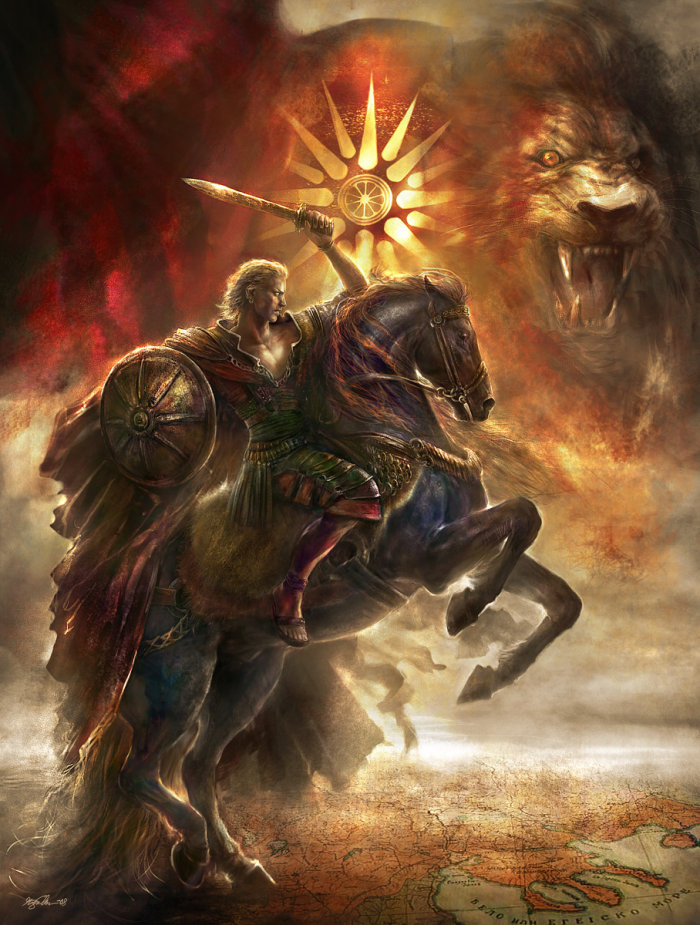
IT IS SAID that on the night before the mother of Alexander, Olympias, was to be married to King Phillip of Macedonia, she dreamt that a thunderbolt struck her body and filled it with power.
After the marriage, it is said that Phillip peeked into her chamber, and found her lying with a serpent, and that he afterward dreamt that her womb was sealed and that a lion dwelled within her.
And on the night that he was born, 20th of July, 356 BC, the great Temple at Ephesus was burned to the ground by a vandal, because the goddess Artemis was away, assisting with the birth of Alexander the Great.
He was considered to be the son of Zeus, and this divine origin was what was given as an explanation for the unprecedented conquests that he accomplished. In his youth Aristotle, a student of Plato, educated him along with his following of young princes, who were later serve as his generals, and the founders of great dynastic monarchies of the Hellenistic world.
Foremost of these was his ever loyal and devoted Hepheistion, whose reciprocated love for Alexander was homosexual in nature.
In one of their first battles, while Phillip was still king, the young Alexander proved himself by defeating the Sacred Band of Thebes, the army of homosexual lovers who were the most famous and courageous warriors of their time.
Alexander is said to have wept at their destruction, and buried them with honor, erecting a statue of a Lion over their graves.
He would later go one to conquer the entire Eastern world, Asia Minor, Syria, Judea, Egypt, and all of Persia, as far East as India. The Empire of Alexander spread Greek culture throughout the world, and made the communication of far-distant ideas possible so that the new Hellenistic culture that he created, was a combination of classical Greece and of the exotic cultures that were imported from every corner.
After the death of Alexander, at only 33 years of age, he was deified by his generals who divided his great Empire among themselves. We praise the glorious warrior Alexander of Macedonia, and elevate him, and worship him as a God, an example of the greatness of homosexuality, and a heroic protector of the Divine Antinous.
Saturday, July 19, 2025
ALEXANDRIA ALIGNED TO SUN
ON ALEXANDER THE GREAT'S BIRTHDAY
ALEXANDRIA, home to one of the seven wonders of the ancient world, may have been built to align with the rising sun on the day of Alexander the Great's birth.
The Macedonian king, who commanded an empire that stretched from Greece to Egypt to the Indus River in what is now India, founded the city of Alexandria in 331 B.C.
It would later become hugely prosperous, home to Cleopatra, the magnificent Royal Library of Alexandria and the 450-foot-tall (140 meters) Lighthouse of Alexandria, one of the SEVEN WONDERS OF THE ANCIENT WORLD.
Hadrian and Antinous visited Alexandria in the summer and early autumn of 130 AD.
Ancient Alexandria was planned around a main east-west thoroughfare called the Canopic Road, points out Giulio Magli, an archaeo-astronomer at the Politecnico of Milan.
A study of the ancient route reveals it is not laid out according to topography; for example, it doesn't run quite parallel to the coastline.
But on July 20th, the birthday of Alexander the Great, the rising sun of the 4th Century BC rose "in almost perfect alignment with the road," Magli was quoted as saying.
July 20th, 356 BC, is the date which has always been accepted as the birthday of Alexander the Great. Whether it was his actual birthday or only the official royal observance of his birth is unknown.
It is said that on the night before the mother of Alexander, Olympias, was to be married to King Phillip of Macedonia, she dreamt that a thunderbolt struck her body and filled it with power.
After the marriage, it is said that Phillip peeked into her chamber, and found her lying with a serpent, and that he afterward dreamt that her womb was sealed and that a lion dwelled within her.
And on the night that he was born, 20th of July, 356 BC, the great Temple at Ephesus was burned to the ground by a vandal, because the goddess Artemis was away, assisting with the birth of Alexander the Great.
He was considered to be the son of Zeus, and this divine origin was what was given as an explanation for the unprecedented conquests that he accomplished. In his youth Aristotle, a student of Plato, educated him along with his following of young princes, who were later serve as his generals, and the founders of great dynastic monarchies of the Hellenistic world.
Foremost of these was his ever loyal and devoted Hepheistion, whose reciprocated love for Alexander was homosexual in nature.
In one of their first battles, while Phillip was still king, the young Alexander proved himself by defeating the SACRED BAND OF THEBES, the army of homosexual lovers who were the most famous and courageous warriors of their time.
Alexander is said to have wept at their destruction, and buried them with honor, erecting a statue of a Lion over their graves.
He would later go one to conquer the entire Eastern world, Asia Minor, Syria, Judea, Egypt, and all of Persia, as far East as India.
The Empire of Alexander spread Greek culture throughout the world, and made the communication of far-distant ideas possible so that the new Hellenistic culture that he created, was a combination of classical Greece and of the exotic cultures that were imported from every corner.
After the death of Alexander, at only 33 years of age, he was deified by his generals who divided his great Empire among themselves. We praise the glorious warrior Alexander of Macedonia, and elevate him, and worship him as a God, an example of the greatness of homosexuality, and a heroic protector of the Divine Antinous.
Friday, July 18, 2025
CARAVAGGIO, SAINT OF ANTINOUS
ON JULY 18th the Religion of Antinous honors Saint Caravaggio.
Michelangelo Merisi da Caravaggio, who died under suspicious circumstances on this day in 1610, was an extraordinary painter whose homoerotic images of young men have caused art historians to call him the first modern painter.
St. Caravaggio is the Patron of Gifted Bad Boys — Gay Boys who are blessed with incredible talents but who are too impatient and too rebellious to abide by the rules of society.
St. Caravaggio was always in trouble. In 1592, when he was not yet 20 years old, he fled Milan after a series of brawls and the wounding of a police officer. He went to Rome and was there, for the most part, until 1606, when he again had to flee. His life in Rome was of growing financial and professional success, but it was also punctuated with crime.
In the years 1600-1606 alone, he was brought to trial no less than eleven times. The charges covered a variety of offenses, most involved violence. It is significant that, despite his reputation for homosexuality, and his endless brushes with the police, he was never charged with sodomy, then a capital offense.
But he was charged with murder. On 29 May 1606 he killed one Tommasoni in a brawl after a disputed game of royal tennis, and had to flee to escape execution. He went first to Naples, then to Malta, where he was feted and made a Knight of St John.
Then, after "an ill considered quarrel" with a senior knight, he was on the run once more, all around Sicily, then on to Naples again.
But this time there was no hiding place. The knights, known for their relentlessness, pursued him, and Caravaggio, now 39 nine, in an attempt to seek forgiveness and refuge in Rome, tried to get there, but died at Porto Ercole, apparently of a fever, though the circumstances are highly suspicious.
Despite his hunted and, in the end, desperate life, he always managed to go on painting, often without a proper workshop of any kind. He was variously described, even by admirers, as a man of "stravaganze" as "uno cervello stravagantissimo" (exceptionally odd) and a "cervello stravolto".
His father died when he was six, his mother when he was 18, which may help to explain his anger at the world. His paintings show that he was a man of the most profound religious convictions, of a humble and contrite heart, and with a fanatical devotion to his art.
His fundamental ideas were always absolutely clear, though he continually changed and improved his techniques. He believed in total realism, and he always painted from life, dragging poor people in from the street if need be.
He became a great realist by painting flowers and fruit, in a variety of lights, sometimes pure still lifes, sometimes with street boys, such as the model for Bacchus (above).
To achieve realism, he liked to pull his subject out of surrounding darkness into strong lateral or overhead light, as close to the viewer as possible.
This was a new kind of art, which was to have momentous consequences. It has led some modern writers to speculate that, born into the 20th or 21st Century, Caravaggio would have been a photographer or a filmmaker.
But that is nonsense. Caravaggio, it is clear, adored the feel and line of a brush on a slightly springy surface, prepared with grey (as a rule), and the sheer creative excitement of using the brush to bring the real world out of the darkness of the canvas.
For the first time in the history of art, Caravaggio eliminated the space between the event in the painting and the people looking at it. He created a kind of virtual reality to give you a feeling as though you are right there inside the painting.
Even we, whose vision and sense of reality has been blunted and distorted by television and the cinema, still get tremendous impressions of participating when we see his great canvases close up. What then must it have been like in the early seventeenth century, for people who had never come across anything approaching this blast of actuality, to be brought face-to-face with a reenactment of sacred events in two dimensions, such as St. Francis of Asisi in Ecstasy?
Artists were particularly struck, or perhaps shocked is a better word, but horribly stimulated too, and stirred to find out exactly how the man did it.
Caravaggio, despite all his difficulties, always finished each piece of work if he possibly could, then went directly on to another, with fresh ideas and new experiments.
He was a Bad Boy. But he was a gifted genius. The Religion of Antinous honors this Patron of Gifted Bad Gay Boys as an exemplar and saint. Let us lift our glasses to St. Caravaggio.