Tuesday, May 20, 2025

IT'S RUBIES FOR THE FORUM MOON
By Our Crystal Meditation Advisor Martin Campbell


OUR astrological expert Hernestus describes the Aquarius Third Quarter Moon as the FORUM MOON perfect for oracles or spell work involving interaction with groups or a public setting - any place where numerous people gather, especially gardens and parks.


Many of you find yourself attending meetings in your work. Hopefully you all have social interactions with groups of friends. You may even be lucky enough to meet in open spaces. 

Such gatherings and interactions are how we humans meet, do business and attempt to understand one another. 

It is likely that we have the most developed manner of communicating of all Earth's animals. Some of us are very good at interacting - many are not. So we can use this opportunity to either enhance our existing ability or develop one we lack.

So, for crystal enhanced meditations this moon phase I would recommend the following crystals:

Ruby - Rubies are protective crystals so help prevent the impact of others negative communication. They are best known for helping you to have crystal sharp thoughts, confidence and even dynamic leadership - you can become the life of the party!

Celestite - These beautiful pale blue crystals have many attributes. For this moon phase, however, they have key two key aspects. Firstly they bring mental clarity aiding fluent communication. Secondly they help you to analyse complex ideas and be open to new ones - ideal for a positive exchange of ideas.

Love and Light,
MARTIN

To get more advice from Martin Campbell and to find out how to contact him CLICK HERE.

THE SACRED BULL HUNT 2024
By Flamen Antinoalis Antonius Subia


ON May 20th as the Sun leaves Taurus the Sign of the Bull, we celebrate The Sacred Bull Hunt of Antinous.

The commemoration marks the end of Taurus, the death of the Bull of Heaven ... and the coming of Gemini, the Divine Twins ... or shall we say The Lovers ... Hadrian and Antinous.

The Cycle of the Sacred Hunts are of course a recognition that Antinous was a God of the Hunt, that in his life-time, he is recorded in verse to have participated in a Lion Hunt, and in stone relief, his image has been identified as one of the participants, along with Hadrian in the hunt of the Bear and the Boar, and also the Lion on the tondos of the Arch of Constantine.

We might call this cycle "Hunt Spirituality," an awareness of the active element of Antinous.  

From his images we are given to understand him as a melancholy, day-dreaming, slightly self-involved, yet gentle and radiantly peaceful boy...but this is only part of the beautiful story.

Another part, which is in the ancient record and therefore can be regarded as biographical, is that he was a hunter...on horseback...and perhaps on foot...able to chase down wild animals, and kill them with a spear.

The Sacred Hunts commemorate the nature of the animals which then become part of who Antinous is, and by extension, who we may become, or find ourselves to be.

Whether we see ourselves as the Hunter Antinous, or the Hunted Animal...or a mingling of the two...the significance is always through our own personal essence...animalistic...the Sacred Hunts, therefore are one of the significant forms that Animalism has taken up in the New Religion of Antinous.

Antinous was never historically said to have hunted a Bull...so for historical accuracy, this is not a Sacred Hunt with historical precedence...this would be my own invention....but I will try to explain the essence of what I feel it means, and perhaps will you understand and even add your own meaning..or detract from it, or have no opinion at all.

But as I feel now...the Bull Hunt is probably one of the more meaningful and powerful understandings of Antinous that I have discovered.

There is an ancient connection between Antinous and the Bull that has remained unexplained, or unobserved because the meaning is unclear.

If there is no historical precedent to prove that Antinous participated in the bullfights, there is evidence to show that the bull was sacred to Antinous.

There are a number of coins from Asia Minor, that portray Antinous standing by the side of a bull, or have a Bull on the reverse. A coin from Antinous's home town Bithynium-Claudiopolis is among this type.

The majority are of the type that read "Fatherland of Antinous the God"...they were minted in cities where the Religion of Antinous was strongest and most heart-felt, where he was openly proclaimed to be a God of the Country...and so from the coins, we can know that the bull, among other animals, was considered to be a sacred symbol of Antinous.

The Bull, therefore, is an ancient, stone-age and early Bronze age symbol for a King, and it is from this connection that the notion of the Bull of Heaven is derived.

The Egyptians believed that the Ka of Osiris would take the form of a perfect young Bullock...when one of these perfect bulls was discovered, it was treated with deep reverance, and allowed to live in splendor like a living god...because it was a living god...it was Osiris.

When the bull reached the age of 28, the age when Osiris was murdered, the bull was sacrificed.

Certain parts were eaten by the Pharaoh, while the body of the bull was mummified and given a tomb at Saqqara.

Plutarch said "The Apis should ever to be regarded by us, as a fair and beautiful image of the soul of Osiris."

The Apis Bull was the Spirit of Osiris in living form...eternal and ever-present. Antinous was of course first compared to Osiris because he drowned in the Nile.  In ancient antiquity when a King died, his Ka and his Ba...soul and spirit, were said to join and take form as Osiris in the underworld, so as to circle the cosmos in the Boat of Millions of Years.

In later history, any person who could afford to have the elaborate ceremonies associated with mummification and the recitation of the Book of the Dead could also join Osiris.

It would seem to be highly probable to suppose that Antinous may have undergone the most elaborate Egyptian burial that Hadrian could arrange....that Antinous was very likely mummified and entombed in or near his temple in Antinoopolis...if he was not bought home and entombed at Hadrian's Villa.

Mummification seems very likely, though there is no proof or evidence that it occurred...but that he was first and very closely identified with Osiris seems to hint that perhaps his association with Osiris would have been elaborated, and not merely allegorical.

Antinous and Osiris were united in one being...known as Osarantinous.

Our sacred Obelisk Text repeatedly mentions him as "The God, Osiris-Antinous the Justified"...because among several other gods, one of the most important elements of the divinity of Antinous was his connection to Osiris.

The living symbol of Osiris was the Apis Bull...therefore, as the Coins of Bithynia seem to suggest...the Bull was likewise, the living symbol of Antinous...the Ka of Antinous...the Spirit of Antinous in living form.

The Bull can therefore be viewed as a symbol of our spiritual connection to Antinous...the living spirit of Antinous, the consumption of which, like the flesh of the sacred Apis Bull is in essence the consumption of the Spirit of Antinous.

There is a strong likelihood that Antinous and Hadrian may have hunted Bulls.

We must therefore wonder what the Bull Hunt means to us, in what of so many contexts we may choose to view the brutal combat between a man and a bull...which is in a sense, a parable of man against nature...against the world (earthquakes for example)...the ferocious forces that are greater and able to destroy us, over which we can only triumph with excessive courage, at the risk of our very existence.

The Bull Hunt, therefore, is a sacred observance of how with intensities of inner strength, we can overcome all those forces that would destroy us.

And so it is, in the Name of Antinous, that I offer you the Sacred Bull Hunt, in observance of which I recommend that you take a moment to think upon the obstacles of your life, those which seem overwhelming, or on the verge of destroying you, or breaking you down, those from which you seek to flee...that you may find the courage to face them, even at the cost of everything that you count as dear and of value.

It is these wild forces that we must face, if we are ever to regard ourselves as Men.

In Commemoration of the End of Taurus,


May Antinous, the Spirit of Osiris give you strength.

~ANTONIUS SUBIA

AS THE BEES MYSTERIOUSLY DISAPPEAR
WE REMEMBER ANTINOUS-ARISTAEUS


AS we celebrate World Bee Day on May 20th, we mourn the fact that a mysterious malady is wiping out as many as half of the beehives needed to pollinate much of produce in North America and many other parts of the world.

This is a crisis of mythic proportions ... in the truest sense of the word. In Classical Mythology the world's bees all vanished ... and it took the daring plunge of a brave Hero to find the divine powers to bring the bees back ... and to save mankind.

It is all there in Virgil's version of the story of Aristaeus (Aristée/Arista
ios).

As this statue in the Louvre shows, Antinous was identified by the Ancients with Aristaeus ... they both descended into a river and emerged with godly powers.

Aristaeus was the son of Apollo and the river-nymph Cyrene and his assignment on the earthly plane was to teach mortal humans the art of farming and cultivating crops and tending livestock and keeping bees.

Honey was practically a form of ambrosia, or at least the nearest thing to ambrosia that mortal men had. It was the job of Aristaios to teach men how to cunningly harvest honey without being stung.

But Aristaeus had inadvertently caused the death of Eurydice by causing her to tread upon a venomous serpent. Her death and Orpheus's attempt to bring her back to the earthly plane were the origins of the Orphic Mysteries.

Shortly after Eurydice died, the bees which Aristaeus had been nurturing all began dying of a unexplainable cause. Nothing he could do seemed to prevent them from dying and soon they were all gone and humans were deprived of honey, beeswax, mead and the many other products which bees provide to man, not to mention the fact that, without bees, there was nobody to pollinate plants. The situation was dire.

Here's what Bulfinch writes, quoting Virgil:

"Aristæus, who first taught the management of bees, was the son of the water-nymph Cyrene. His bees had perished, and he resorted for aid to his mother. He stood at the river side and thus addressed her: 'O mother, the pride of my life is taken from me! I have lost my precious bees. My care and skill have availed me nothing, and you my mother have not warded off from me the blow of misfortune.'

"His mother heard these complaints as she sat in her palace at the bottom of the river, with her attendant nymphs around her. They were engaged in female occupations, spinning and weaving, while one told stories to amuse the rest. The sad voice of Aristæus interrupting their occupation, one of them put her head above the water and seeing him, returned and gave information to his mother, who ordered that he should be brought into her presence.

"The river at her command opened itself and let him pass in, while it stood curled like a mountain on either side. He descended to the region where the fountains of the great rivers lie; he saw the enormous receptacles of waters and was almost deafened with the roar, while he surveyed them hurrying off in various directions to water the face of the earth.

"Arriving at his mother’s apartment, he was hospitably received by Cyrene and her nymphs, who spread their table with the richest dainties. They first poured out libations to Neptune, then regaled themselves with the feast, and after that Cyrene thus addressed him: 'There is an old prophet named Proteus, who dwells in the sea and is a favorite of Neptune, whose herd of sea-calves he pastures. We nymphs hold him in great respect, for he is a learned sage and knows all things, past, present, and to come. He can tell you, my son, the cause of the mortality among your bees, and how you may remedy it.'"


The story goes on to say a river nymph escorted Aristaeus to the cave of Proteus where he subdued the cantankerous old prophet (who was a shape-shifter and tried unsuccessfully to elude Aristaeus by changing form). Aristaeus told him of his plight and wanted to know the cause of this misfortune and how to remedy it. Bulfinch writes:

"At these words the prophet, fixing on him his gray eyes with a piercing look, thus spoke: 'You receive the merited reward of your deeds, by which Eurydice met her death, for in flying from you she trod upon a serpent, of whose bite she died. To avenge her death, the nymphs, her companions, have sent this destruction to your bees. You have to appease their anger, and thus it must be done: Select four bulls, of perfect form and size, and four cows of equal beauty, build four altars to the nymphs, and sacrifice the animals, leaving their carcasses in the leafy grove. To Orpheus and Eurydice you shall pay such funeral honors as may allay their resentment. Returning after nine days, you will examine the bodies of the cattle slain and see what will befall.'

"Aristæus faithfully obeyed these directions. He sacrificed the cattle, he left their bodies in the grove, he offered funeral honors to the shades of Orpheus and Eurydice; then returning on the ninth day he examined the bodies of the animals, and, wonderful to relate! a swarm of bees had taken possession of one of the carcasses and were pursuing their labors there as in a hive."


So there we have it! Even the most illiterate and ignorant peasant would know the story of Aristaeus and the bees and the plunge into the river to unravel a Sacred Mystery. Aristaeus survived the plunge and emerged with Secret Knowledge which was of a great service to mankind.

For without bees to pollinate orchards and crops, mankind can scarcely survive ... a fact which has come home to haunt us today as bee populations dwindle worldwide and food riots rage in developing countries.

Ancient peoples, even those who could not read or write, could look at the statue of Antinous-Aristaeus and immediately see the Sacred Symbolism ... Like Aristaios, Antinous is a god who took the plunge into a river and who emerged with knowledge of Sacred Mysteries.


Wearing a sun hat, carrying a farm tool and holding an olive sprig, Antinous-Aristaeus symbolizes the union of sunshine and water (Apollo/Cyrene) combined with ingenuity and hard work and the ability to dive into the spiritual depths ... defying death ... and to emerge with a miracle which benefits all humankind.

Monday, May 19, 2025

PETER WILDEBLOOD
SAINT OF ANTINOUS


ON May 19th, the Religion of Antinous honors our Saint Peter Wildeblood, a British journalist, novelist, playwright and gay-rights campaigner, who was born on this day in 1923.

He became one of the first men in Britain to declare publicly that he was gay, when he was arrested and put on trial in a headline-making case in 1954. 

He was sent to prison on a conviction of "conspiring to incite acts of gross indecency and buggery." 

His case created such an uproar that it helped to lead to the 1960s reform of anti-gay laws in the UK.

In the uptight post-war years of the early '50s, Wildeblood had made something of a name for himself in the theatre and as a roving reporter for a major newspaper, London's Daily Mail, when he happened to meet a 23-year-old RAF corporal named Eddie McNally in Piccadilly Circus.

Although Eddie McNally was not Peter Wildeblood's type, they developed a relationship over time. In the summer of 1952 they arranged to go on holiday together at Edward Montagu's beach hut on the English coast. John Reynolds, who was also an airman and a friend of Eddie McNally, also joined them.

About 18 months later, on Saturday, January 9, 1954, Peter Wildeblood was arrested at his home and his house was searched. He was charged with conspiring with Edward Montagu and Michael Pitt-Rivers to incite Eddie McNally and John Reynolds to commit indecent acts.

The police tipped off the press and the story was headlined in all the Sunday newspapers the next day. Eddie McNally and John Reynolds became witnesses for the prosecution.

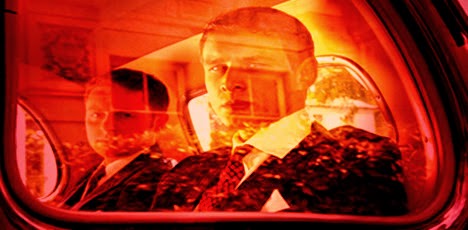
The media went on a feeding frenzy and his picture was plastered all over the front pages for weeks. One paper retouched his photos to make it appear that he was wearing lipstick. He was vilified in public. He later described one incident when a woman recognized him being driven past in a vehicle.


"That night, a woman spat at me," Wildeblood wrote later. "She was a respectable looking, middle-aged, tweedy person wearing a sensible felt hat. She was standing on the pavement as the car went by. I saw her suck in her cheeks, and the next moment a big blob of spit was running down the windscreen.  

"This shocked me very much. The woman did not look eccentric or evil; in fact she looked very much like the country gentlewomen with whom my mother used to take coffee when she has finished her shopping on Saturday mornings. She looked thoroughly ordinary, to me. But what did I look like to her? Evidently, I was a monster."

What so troubled the decent people of the day was not that homosexual practices went on — everybody knew they always had and always would — but that anybody would openly declare himself to be "a homosexual." 

He was in the news constantly until his conviction and sentencing to 18 months in prison. Because he was (understandably) depressed, he was considered suicidal and was transferred to a dire hospital for the criminally insane where the squalid conditions affected not only his mental health but also his physical health.

He was released after 12 months and immediately launched a personal crusade to overturn anti-gay sex laws in Britain. He lobbied in Parliament and wrote articles and a book entitled Against the Law which outlined how gay people can be entrapped and harassed in their own homes for consensual activity among adults which does not affect anyone else.


His three main points were: homosexuality between consenting adults in private should not be illegal, that prison only encourages homosexuality, and that prison hospitals were inhumane.

While writing this he bought a small drinking club in Soho which attracted a mixture of types on the fringes of society. This provided material for his fictional autobiography about the club, A Way Of Life.

It was a surprise success and encouraged him to write more novels and plays which were hits on stage in London's West End in the late 1950s. In the '60s he became a well-known TV scriptwriter and producer. In the '70s he was lured by Canadian television with a lucrative contract, and emigrated to Canada, where he adopted Canadian citizenship and was responsible for numerous hit productions over the next 16 years.

When he retired in the 1980s, he went to live in a wooden Edwardian cottage in Victoria on the western coast of Canada which had a stunning view over the Juan de Fuca Straits to the Olympic Mountains above Seattle. He suffered a series of debilitating strokes in the mid-'90s which left him speechless and quadriplegic. He learned to communicate via a computer using movements of his chin. He suffered a final stroke and died November 13, 1999, at the age of 76.

In saluting Saint Peter Wildeblood, the Religion of Antinous honors the beacon of courage and hope which he represented in an age of darkness and despair for gay men everywhere. Everyone advised him to remain quiet, and yet he chose to speak out. He did not choose to be exposed but, placed at the mercy of events, he chose to become their master.

His book was a courageous act of defiance against the kind of injustice which the straight world called justice. 

"Very faintly," he wrote, "as though at the end of a tunnel, I could see what I must do. I would make a statement ... I would simply tell the truth about myself ... I would be the first homosexual to tell what it felt like to be an exile in one's own country. I might destroy myself, but perhaps I could help others."

Sunday, May 18, 2025

WORSHIPERS WORLDWIDE VIA ZOOM
CELEBRATE THE SACRED BULL HUNT


WORSHIPERS worldwide tonight celebrate The Sacred Bull Hunt of Antinous in ceremonies originating from the Hollywood Temple of Antinous and uplinked globally via Zoom.

The commemoration marks the end of Taurus, the death of the Bull of Heaven ... and the coming of Gemini, the Divine Twins ... or shall we say The Lovers ... Hadrian and Antinous.

The Cycle of the Sacred Hunts are of course a recognition that Antinous was a God of the Hunt, that in his life-time, he is recorded in verse to have participated in a Lion Hunt, and in stone relief, his image has been identified as one of the participants, along with Hadrian in the hunt of the Bear and the Boar, and also the Lion on the tondos of the Arch of Constantine.

We might call this cycle "Hunt Spirituality," an awareness of the active element of Antinous.  

From his images we are given to understand him as a melancholy, day-dreaming, slightly self-involved, yet gentle and radiantly peaceful boy...but this is only part of the beautiful story.

Another part, which is in the ancient record and therefore can be regarded as biographical, is that he was a hunter...on horseback...and perhaps on foot...able to chase down wild animals, and kill them with a spear.

The Sacred Hunts commemorate the nature of the animals which then become part of who Antinous is, and by extension, who we may become, or find ourselves to be.

Whether we see ourselves as the Hunter Antinous, or the Hunted Animal...or a mingling of the two...the significance is always through our own personal essence...animalistic...the Sacred Hunts, therefore are one of the significant forms that Animalism has taken up in the New Religion of Antinous.

Antinous was never historically said to have hunted a Bull...so for historical accuracy, this is not a Sacred Hunt with historical precedence...this would be my own invention....but I will try to explain the essence of what I feel it means, and perhaps will you understand and even add your own meaning..or detract from it, or have no opinion at all.

But as I feel now...the Bull Hunt is probably one of the more meaningful and powerful understandings of Antinous that I have discovered.

There is an ancient connection between Antinous and the Bull that has remained unexplained, or unobserved because the meaning is unclear.

If there is no historical precedent to prove that Antinous participated in the bullfights, there is evidence to show that the bull was sacred to Antinous.

There are a number of coins from Asia Minor, that portray Antinous standing by the side of a bull, or have a Bull on the reverse. A coin from Antinous's home town Bithynium-Claudiopolis is among this type.

The majority are of the type that read "Fatherland of Antinous the God"...they were minted in cities where the Religion of Antinous was strongest and most heart-felt, where he was openly proclaimed to be a God of the Country...and so from the coins, we can know that the bull, among other animals, was considered to be a sacred symbol of Antinous.

The Bull, therefore, is an ancient, stone-age and early Bronze age symbol for a King, and it is from this connection that the notion of the Bull of Heaven is derived.

The Egyptians believed that the Ka of Osiris would take the form of a perfect young Bullock...when one of these perfect bulls was discovered, it was treated with deep reverance, and allowed to live in splendor like a living god...because it was a living god...it was Osiris.

When the bull reached the age of 28, the age when Osiris was murdered, the bull was sacrificed.

Certain parts were eaten by the Pharaoh, while the body of the bull was mummified and given a tomb at Saqqara.

Plutarch said "The Apis should ever to be regarded by us, as a fair and beautiful image of the soul of Osiris."

The Apis Bull was the Spirit of Osiris in living form...eternal and ever-present. Antinous was of course first compared to Osiris because he drowned in the Nile.  In ancient antiquity when a King died, his Ka and his Ba...soul and spirit, were said to join and take form as Osiris in the underworld, so as to circle the cosmos in the Boat of Millions of Years.

In later history, any person who could afford to have the elaborate ceremonies associated with mummification and the recitation of the Book of the Dead could also join Osiris.

It would seem to be highly probable to suppose that Antinous may have undergone the most elaborate Egyptian burial that Hadrian could arrange....that Antinous was very likely mummified and entombed in or near his temple in Antinoopolis...if he was not bought home and entombed at Hadrian's Villa.

Mummification seems very likely, though there is no proof or evidence that it occurred...but that he was first and very closely identified with Osiris seems to hint that perhaps his association with Osiris would have been elaborated, and not merely allegorical.

Antinous and Osiris were united in one being...known as Osarantinous.

Our sacred Obelisk Text repeatedly mentions him as "The God, Osiris-Antinous the Justified"...because among several other gods, one of the most important elements of the divinity of Antinous was his connection to Osiris.

The living symbol of Osiris was the Apis Bull...therefore, as the Coins of Bithynia seem to suggest...the Bull was likewise, the living symbol of Antinous...the Ka of Antinous...the Spirit of Antinous in living form.

The Bull can therefore be viewed as a symbol of our spiritual connection to Antinous...the living spirit of Antinous, the consumption of which, like the flesh of the sacred Apis Bull is in essence the consumption of the Spirit of Antinous.

There is a strong likelihood that Antinous and Hadrian may have hunted Bulls.

We must therefore wonder what the Bull Hunt means to us, in what of so many contexts we may choose to view the brutal combat between a man and a bull...which is in a sense, a parable of man against nature...against the world (earthquakes for example)...the ferocious forces that are greater and able to destroy us, over which we can only triumph with excessive courage, at the risk of our very existence.

The Bull Hunt, therefore, is a sacred observance of how with intensities of inner strength, we can overcome all those forces that would destroy us.

And so it is, in the Name of Antinous, that I offer you the Sacred Bull Hunt, in observance of which I recommend that you take a moment to think upon the obstacles of your life, those which seem overwhelming, or on the verge of destroying you, or breaking you down, those from which you seek to flee...that you may find the courage to face them, even at the cost of everything that you count as dear and of value.

It is these wild forces that we must face, if we are ever to regard ourselves as Men.

In Commemoration of the End of Taurus,


May Antinous, the Spirit of Osiris give you strength.

~ANTONIUS SUBIA

TODAY IS THE FESTIVAL OF ANTINOUS
IN HIS GUISE AS PAN AND CERNUNNOS


THE 18th of May is the festival of Pan and Cernunnos, Old Horny ... an aspect of Antinous in this art by ANTONIUS SUBIA.

Pan represents the masculine energy in nature, virility and the link between civilization and the wild places. 

He is of two natures: human and animal and reminds us that we are not separate from the animal kingdom. 

He is the god of wild, unstoppable sexuality, not of love. He is the hunter and the hunted, he knows both sides of the pursuit. 

Pan is said to have a nap, just after noon for a couple of hours, and it is best not to disturb him during this time. 

This is the time when he can send healing dreams to those who ask his aid.

Saturday, May 17, 2025

TODAY IS INTERNATIONAL DAY AGAINST
HOMOPHOBIA, TRANSPHOBIA AND BIPHOBIA


THE International Day Against Homophobia, Transphobia and Biphobia is observed on May 17 and aims to coordinate international events that raise awareness of LGBT rights violations and stimulate interest in LGBT rights work worldwide. 


Commemorations are taking place in almost 120 countries, in all world regions.

The day is particularly strong in Europe and Latin America, where it is commemorated with public events in almost all countries.

May 17 is also marked in multiple countries in all world regions including, 32 of the 76 countries in the world where same-sex relationships are criminalized.

Common actions include large-scale street marches, parades and festivals. In Cuba, for example, Mariela Castro has led out a huge street parade in honor of May 17 for the past several years.

In Chile in 2013, 50,000 people took to the streets to mark May 17, and the VIII Santiago Equality march.

The main purpose of the May 17 mobilisations is to raise awareness of violence, discrimination, and repression of LGBT communities worldwide, which in turn provides an opportunity to take action and engage in dialogue with the media, policymakers, public opinion, and wider civil society.

One of the stated goals of May 17 is to create an event that can be visible at a global level without needing to conform to a specific type of action.