Thursday, November 25, 2021

THIS IS THE DAY THE ORION NEBULA
WAS DISCOVERED AND NAMED


ON 25 November 1610 French astronomer Nicolas-Claude Fabri de Peiresc (Peiresc) discovered the Orion Nebula and coined the term "nebula". 

The Ancient Egyptians equated Orion with Osiris ... the rise of the Orion Constellation and dog star Sirius coincided with the Nile Inundation ... symbolized by Osiris rising from the dead.

Like Osiris, Antinous died in the Nile and rose to divinity. The first miracle of Antinous was the bountiful Nile Inundation in 131 AD which ended a long drought ... bringing life from death.

Wednesday, November 24, 2021

FREDDIE MERCURY
SAINT OF ANTINOUS


ON November 24th the Religion of Antinous celebrates the outrageous life of St. Freddie Mercury.

St. Freddie Mercury whose death from AIDS on this date in 1991 shocked the world, was a courageous performer whose gayness, while not always stated, was a visible part of his persona. He served as an inspiration for millions of gay men, particularly those who, like him, fight ethnic prejudice every day of their lives.

St. Freddie, who was of Indian Parsi descent, and who was born on the island of Zanzibar and grew up in India, has been referred to as "Britain's first Asian rock star."

Like all great showbiz artists, St. Freddie was acutely aware of his public image and went to great lengths to cultivate the persona of Freddie Mercury -- and to hide any trace of the little Parsi boy named Farrokh Bulsara. Freddie Mercury -- or rather the showbiz image called Freddie Mercury -- was beyond all definitions of ethnic origin, or sexual orientation or political affiliation. Not surprisingly, many people were confused and sometimes irritated by the image.

People criticized him for "hiding" his ethnic background. But as a friend told an interviewer after Freddie's death, "[Farrokh] Bulsara was a name he had buried. 

He never wanted to talk about any period in his life before he became Freddie Mercury, and everything about Freddie Mercury was a self-constructed thing."

People also criticized him for not "coming out" publicly. But again, Freddie Mercury (the showbiz image) was beyond gender limitations. 

In fact, Mercury referred to himself as "gay" in a 1974 interview with NME magazine. He was frequently spotted at the cruisiest gay bars across Europe, the UK and America. On the other hand, he would often distance himself from partner Jim Hutton during public events in the 1980s.

Freddie Mercury (the rock icon) was too big to be contained in one gender mold.

He was diagnosed with HIV in 1987. Everyone knew he was sick and everyone surmised the reason. But Freddie Mercury (the image) could never die.

And so it was, that Freddie Mercury never acknowledged his illness until November 23, 1991, when a tersely worded statement was issued announcing that he had AIDS.

A few hours later, he was dead. At the age of 45.

Although he cultivated a very flamboyant stage personality, several sources (including people of my own acquaintance who knew him "intimately") refer to Mercury as having been very shy in person. He also granted very few interviews. Mercury once said of himself: "When I'm performing I'm an extrovert, yet inside I'm a completely different man."

One man was an Indian Parsi kid called Farrokh Bulsara who had been born in Zanzibar.

The other man was FREDDIE MERCURY:

Farrokh Bulsara died on November 24, 1991.

Freddie Mercury will live forever.

The Religion of Antinous honors Freddie Mercury as a Saint of Antinous because he embodies the artistic genius and the flamboyant courage that inspires each of us to strive to be a "star". St. Freddie Mercury admonishes us to strip off the guise of conventionality and the put on our "star" outfits and to take the stage of life. He teaches us to live each day as if it is forever.

Tuesday, November 23, 2021

YOUR ONLINE ANTINOUS SHOP


LOOKING for that perfect holiday season gift? One-stop shopping is just one click away at the online TEMPLE OF ANTINOUS SHOP

This shop features official Antinous articles selected and designed by FLAMEN ANTONIUS SUBIA personally.

If you admire the artwork of Antonyus, then order your own posters of his hand-picked favorite paintings and photographs.

A wide range of T-shirts is available, including classic "T", fitted "T", ringer "T", sleeveless, long-sleeve and baseball jersey — in up to nine colors, depending on the style and design you prefer.

The handy Antinous Tote Bag is a must-have as is a wide array of Antinous lapel buttons and refrigerator magnets in various sizes and designs.

Naturally, there are coffee mugs — and even an official Antinous beer stein appropriately adorned with the well-known Subian portrait of Antinous/Dionysus.

One of our favorites is the Antinous Keepsake Box, available in red-mahogany or black, with a tile cover portrait of the Louvre's breath-taking Ecouen Antinous. This roomy box is perfect for any home shrine or altar and is the perfect jewelry box.

And of course the ever-popular Antinous bumper sticker (at the top of this entry) provides the Beauteous Boy's blessings on any vehicle.

All items are ordered with safety and guaranteed efficiency through cafepress, which has a sound reputation for speedy delivery around the world, with secure payment in all major currencies.

Monday, November 22, 2021

WE PRAY TO ANTINOUS/DIANA
TO GUIDE US IN OUR HUNT BY MOONBEAMS


TONIGHT, November 22,  is one of the festivals of Diana goddess of the Moon and hunting. 

She is goddess of wild places and wild animals and the protector of young women, pregnant women and those giving birth. 

Diana is the twin sister of Apollo. 

As Antinous is often assimilated to Apollo, he therefore substitutes as the twin of Diana, though he can often be viewed as her male double, so that Antinous is Diana. 

Antinous and Diana are both hunters, and moon deities, and they are also gods of magic and darkness. 

Diana is often compared to Hecate, the supreme goddess of Theurgian magicians, who rose to prominence during the reign of Marcus Aurelius. 

Antinous therefore is the male equivalent of Hecate.

ANTONIUS SUBIA says: "We pray to Diana to guide us in our hunt and to illuminate our nights with the silver light of her sublime power. We recognize that the Moon of Diana is the Moon of Antinous."

Sunday, November 21, 2021

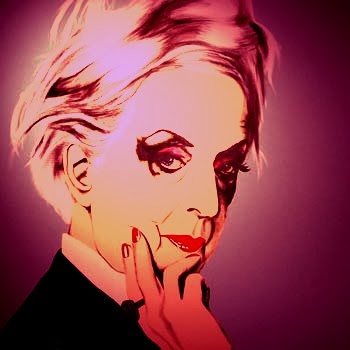
QUENTIN CRISP
SAINT OF ANTINOUS


ON November 21st the Religion of Antinous honors Saint Quentin Crisp, who died on this day in 1999. He was born on Christmas Day in 1908. 

He became a gay icon in the 1970s after publication of his memoir, The Naked Civil Servant, his true-life account of his defiant exhibitionism and longstanding refusal to conceal his homosexuality.

John Hurt helped to make Quentin Crisp a media star in the movie adaptation of The Naked Civil Servant in the 1970s. In a sequel 30 years later Hurt made him a screen legend, very much in keeping with the lifelong ambition of Quentin Crisp.

In the second film, An Englishman In New York, Hurt portrayed the elderly Quentin Crisp as the New York gay icon based in Manhattan's funky-gritty Lower East Side in the 1980s and '90s.


At an age when most people would retire to a nursing home, Quentin Crisp left his native England and moved to New York City, where he pursued a career as a bon vivant and raconteur.

Asked by a BBC interview if he intended to die in New York, Saint Quentin emphatically said: "Oh no, I didn't come to New York to die. I came to New York to LIVE."

Arriving in New York in his 70s, he lived in his accustomed artistic squalor in a Lower East Side walk-up with a view through a grimy window pane of the next door neighbor's grimy bedroom window.


Every bit the considerate Englishman, he turned off his bare-bulb light at 11 p.m. and sat in the dark, lest the neighbor complain the glare from the 60-watt bulb (through two filthy window panes) kept him awake.

Saint Quentin experienced a meteoric rise after his cunning agent launched him into a career as a raconteur in an off-Broadway one-man show and he became a movie reviewer for a Christopher Street magazine.

But he experienced a meteoric fall from grace when, during one of his frequent TV talk-show appearances, he flippantly remarked that AIDS was "just a fad" which would soon be out of fashion, and the gay community viciously turned on him. Quentin, who had never apologized for anything in his life (and was not about to start apologizing), was perplexed when he was dropped by his agent and editor until his eyes were opened when he got to know young artist Patrick Angus, who later died of AIDS.

But in a Hollywood happy ending, Quentin was rescued by performance artist Penny Arcade, who put him back on stage, and Christopher Street re-hired him, paving the way for a glorious comeback and reconciliation with the gay community when he was in his 90s.


It is fitting that most people know Saint Quentin only through these two films. As might be expected, the best recommendation for the films comes from Quentin Crisp himself, who once famously said: "Any film, even the worst, is better than real life."

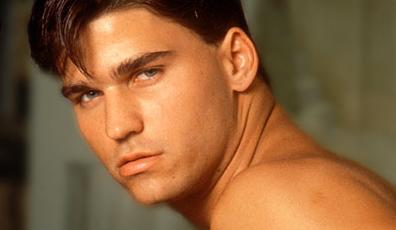
ICONIC GAY PORN STAR JOEY STEFANO
IS A SAINT OF ANTINOUS


WE honour iconic gay porn actor Joey Stefano as a saint of Antinous. 

Nicholas Anthony Iacona Junior was born January 1, 1968, in suburban Philadelphia USA and died November 21, 1994, of a drug overdose. 

Over the course of his five-year career, Stefano appeared in 58 gay adult films, and two music videos with Madonna. 

Despite his success, Stefano did not save his earnings and relapsed into drug and alcohol abuse. 

In 1990, he was diagnosed HIV positive. 

On November 21, 1994, Stefano's body was found in a motel room in Hollywood. He was 26 years old.

He symbolizes gay men who skyrocket to celebrity but who fall into disillusionment and ruin just as quickly.

Saturday, November 20, 2021

SORROWING HADRIAN WAITS
FOR THE COLOSSI OF MEMNON TO SING


WE commemorate the solemn visit of a very grief-stricken Emperor Hadrian to Thebes and the Colossi of Memnon less than a month after the demise of his Beloved Antinous.

Antinous had drowned at the end of October and Hadrian had issued decrees establishing the CITY OF ANTINOOPOLIS at the spot on the shores of the Nile where his Beloved had died. 


Hadrian probably left the body with priests before the Imperial Entourage continued its scheduled tour up the Nile to the historic city of Thebes.

The Colossi of Memnon stand at the entrance of what was a great temple for Amenophis III.

The Colossi of Memnon at Thebes were mistakenly identified as such by the Greeks. They were the giant statues of Amenhotep III at the entrance of his now destroyed Temple. 


Memnon (left above) was actually the "brazen-crested Memnon, a comely man" according to Odysseus, King of the Ethiopians (Susa in the East not Africa) who came with a great force to help Troy against the Achaean invaders, and was killed by Achilles. At his death his soldiers turned into birds.

By the time Emperor Hadrian arrived, the statues were in a ruinous state and emitted a wailing sound at dawn when the rising sun heated the stone. Greeks and Romans traveled from afar to hear the statues "speak" to them. Hadrian left graffiti here.

Flamen ANTONIUS SUBIA writes:

"After the death of Antinous, the Imperial entourage visited the ancient city of Thebes in the Upper Nile, it was the furthest south that Hadrian ever journeyed. The court visited the two Colosoi of Memnon, which are monumental seated statues of Amenhotep III built in the 18th dynasty.

"It was said that a ringing sound was emitted by the statues in the early mourning, and that anyone who heard the statues speak was favored by the gods, as the belief was that the statues were of Memnon, the son of Aurora. Hadrian did not hear the sound, but the empress Sabina did.

"The God of Thebes was Amon, the ram-headed, who was equated with Jupiter. Julia Balbilla, poetess and companion of Sabina, who was with the court throughout the voyage and was present at the Death and Liberation of Antinous, wrote these words. These are the first words written after the death of Antinous. They were inscribed, like graffiti on the Colossus of Memnon.

"'I, Balbilla, when the rock spoke, heard the voice of the divine Memnon or Phamenoth. I came here with the lovely Empress Sabina. The course of the sun was in its first hour, in the fifteenth year of Hadrian's reign, on the twenty-fourth day of the month Hathor. I wrote this on the twenty-fifth day of the month Hathor'."

Rather more recently, in the 21st Century, while researching his novel about Antinous entitled THE LOVE GOD, author MARTIN CAMPBELL made a pilgrimage to the Colossi of Memnon in the footsteps of the Divine Hadrian. He filed this report via email from Thebes:

"The Nile is noiselessly rushing by my hotel only a hundred or so feet from where I am writing.

"I have stood at the Colossi of Memnon and seen where Sabina and Julia Balbilla wrote verses about Hadrian.

"I walked around Luxor temple where Hadrian would have officiated as pharaoh. I have looked at the ruins of the Roman barracks where he may have stayed while in Luxor (then Thebes). I have been to the Dendera temple where Trajan decorated a temple to childbirth which may later have been converted to a temple to Bes, possibly by Hadrian."

The truth is that we all follow in the footsteps of the Divine Hadrian as he attempts to work out his grief in the weeks following the death of his Beloved and just seven days before the Birthday of Antinous on November 27th.