IRAN publicly executed two teenage boys on July 19th, 2005, in the city of Mashad.
Their names were Mahmoud Asgari and Ayaz Marhoni, one 18 and the other 17 or 16 years old.
They were accused of raping a 13-year-old boy, but it has been established that the authorities invented the charge of rape in order to prevent public sympathy for the true reason for their execution, that they were Homosexuals.
After their arrest the two boys endured a year of imprisonment and torture before the high court of Iran upheld their sentence and their execution by hanging was carried out in a public square in the city of Mashad.
International outrage was met with arrogance and impunity by the religious and conservative Iranian government, and a systematic persecution soon began against homosexuals, which has led to an unabated spate of sporadic executions over the years, and untold numbers of arrests and torture.
These events indicate that the worldwide struggle for Gay Freedom has not decreased but has become more violent and inhumane.
The photo at left is a shocking depiction of anti-homosexual violence.
For their suffering, we proclaim Mahmoud Asgari and Ayaz Marhoni and all of the unnamed gay victims of Iranian persecution, Saints and Innocent Martyrs of the Religion of Antinous.
May all those who see this image of violence rise up for the cause of Gay Freedom, and remember those who suffer in Iran.
Wednesday, July 19, 2023
THE SACRED GAY MARTYRS OF IRAN
Tuesday, July 18, 2023
CARAVAGGIO, SAINT OF ANTINOUS
ON JULY 18th the Religion of Antinous honors Saint Caravaggio.
Michelangelo Merisi da Caravaggio, who died under suspicious circumstances on this day in 1610, was an extraordinary painter whose homoerotic images of young men have caused art historians to call him the first modern painter.
St. Caravaggio is the Patron of Gifted Bad Boys — Gay Boys who are blessed with incredible talents but who are too impatient and too rebellious to abide by the rules of society.
St. Caravaggio was always in trouble. In 1592, when he was not yet 20 years old, he fled Milan after a series of brawls and the wounding of a police officer. He went to Rome and was there, for the most part, until 1606, when he again had to flee. His life in Rome was of growing financial and professional success, but it was also punctuated with crime.
In the years 1600-1606 alone, he was brought to trial no less than eleven times. The charges covered a variety of offenses, most involved violence. It is significant that, despite his reputation for homosexuality, and his endless brushes with the police, he was never charged with sodomy, then a capital offense.
But he was charged with murder. On 29 May 1606 he killed one Tommasoni in a brawl after a disputed game of royal tennis, and had to flee to escape execution. He went first to Naples, then to Malta, where he was feted and made a Knight of St John.
Then, after "an ill considered quarrel" with a senior knight, he was on the run once more, all around Sicily, then on to Naples again.
But this time there was no hiding place. The knights, known for their relentlessness, pursued him, and Caravaggio, now 39 nine, in an attempt to seek forgiveness and refuge in Rome, tried to get there, but died at Porto Ercole, apparently of a fever, though the circumstances are highly suspicious.
Despite his hunted and, in the end, desperate life, he always managed to go on painting, often without a proper workshop of any kind. He was variously described, even by admirers, as a man of "stravaganze" as "uno cervello stravagantissimo" (exceptionally odd) and a "cervello stravolto".
His father died when he was six, his mother when he was 18, which may help to explain his anger at the world. His paintings show that he was a man of the most profound religious convictions, of a humble and contrite heart, and with a fanatical devotion to his art.
His fundamental ideas were always absolutely clear, though he continually changed and improved his techniques. He believed in total realism, and he always painted from life, dragging poor people in from the street if need be.
He became a great realist by painting flowers and fruit, in a variety of lights, sometimes pure still lifes, sometimes with street boys, such as the model for Bacchus (above).
To achieve realism, he liked to pull his subject out of surrounding darkness into strong lateral or overhead light, as close to the viewer as possible.
This was a new kind of art, which was to have momentous consequences. It has led some modern writers to speculate that, born into the 20th or 21st Century, Caravaggio would have been a photographer or a filmmaker.
But that is nonsense. Caravaggio, it is clear, adored the feel and line of a brush on a slightly springy surface, prepared with grey (as a rule), and the sheer creative excitement of using the brush to bring the real world out of the darkness of the canvas.
For the first time in the history of art, Caravaggio eliminated the space between the event in the painting and the people looking at it. He created a kind of virtual reality to give you a feeling as though you are right there inside the painting.
Even we, whose vision and sense of reality has been blunted and distorted by television and the cinema, still get tremendous impressions of participating when we see his great canvases close up. What then must it have been like in the early seventeenth century, for people who had never come across anything approaching this blast of actuality, to be brought face-to-face with a reenactment of sacred events in two dimensions, such as St. Francis of Asisi in Ecstasy?
Artists were particularly struck, or perhaps shocked is a better word, but horribly stimulated too, and stirred to find out exactly how the man did it.
Caravaggio, despite all his difficulties, always finished each piece of work if he possibly could, then went directly on to another, with fresh ideas and new experiments.
He was a Bad Boy. But he was a gifted genius. The Religion of Antinous honors this Patron of Gifted Bad Gay Boys as an exemplar and saint. Let us lift our glasses to St. Caravaggio.
Monday, July 17, 2023
THE CANCER NEW MOON
THE ADONIS MOON OF ANTINOUS
TONIGHT's Cancer New Moon is the moon of romantic renewal which we call the ADONIS MOON in Antinous Moon Magic ... the lunar phase which enhances partnerships.
Each lunar phase represents a Divine Spirit or Archetype. The Spirit of the Adonis Moon is the Perfect Lover.
This is the Spirit which dwells in each gay heart. It is the ultimate friend, partner, soul mate and lover.
This Spirit embodies the perfection of a gay relationship, the perfect friend, the perfect companion.
This Spirit defies all conventions and may not conform to societal formats for partnership, but it nonetheless constitutes the perfect partner.
To paraphrase a classic Grace Jones song, this Spirit may not be perfect, but this spirit is perfect for you.
Throughout history, Antinous has always been identified with Adonis, the god of beauty and desire, and a central figure in various mystery religions. The statue shown here is of Antinous in his guise as Adonis.
Adonis is one of the most complex figures in classical times. He has had multiple roles, and there has been much scholarship over the centuries concerning his meaning and purpose in Greek religious beliefs. He is an annually-renewed, ever-youthful vegetation god, a life-death-rebirth deity whose nature is tied to the calendar.
His name is often applied in modern times to handsome youths, of whom he is the archetype. Adonis is often referred to as the mortal god of Beauty.
Rituals and meditations tonight are best suited for focusing on your partner ... or how to find a partner ... or simply a good night for being with your partner.
THIS NEW MOON RITUAL WORKS WONDERS
By Our Crystal Meditation Advisor Martin Campbell
TONIGHT is the Cancer New Moon, the Adonis Moon of Antinous honouring our spouses, partners and significant others.
Typically black (although can be found in other colours) Onyx is a powerful stone which can help you to recognize and integrate the dualities we often have within us such as homotheosis - man = god, god = man. We stand under the moon and read an incantation over them asking for the blessing of the goddess.
We then place them under the pillows we sleep on until the next Full Moon ... in two weeks' time.
Then we read an incantation of thanks and offering while burning the intentions in a cauldron. I then soak the ashes in water and sprinkle them around the base of our roses.
Our intentions almost always come true and our roses are magnificent. Last year, one orange rose was still flowering in mid November!
So tonight might be a very good night to start such a cycle for yourselves folks!
Love and Moon Light
SKIN ART MAKES ANTINOUS
AN INDELIBLE PART OF YOUR LIFE
ANTINOUS skin art is popular among many modern-day worshipers of the Most Great and God God.
Thousands of people want a relationship with Antinous which ... literally ... goes under the skin.
The most famous celebrity with an Antinous tattoo is ADAM LAMBERT, who has called on all of his fans to learn all they can about Antinous.
The tattoo, which reaches from nipple to hips down the left flank of his torso, features a bust similar to ones he saw on a trip to Greece.
Adam Lambert says he is "obsessed" with Antinous.
He told an interviewer recently: "I have a tattoo of Antinous, Emperor Hadrian’s lover, on my ribs. It was a very public relationship and they travelled around together until Antinous died. They were like the early gay power couple!"
The tattoo at the top of this page is on the arm of PRIEST MICHAELUS, who says he wanted to have Antinous a permanent part of him. Michaelus explains:
"I had my first tattoo when I turned 50. It was a wolf with claw marks. I thought, since I loved werewolves, this was very fitting. That was 2006.
"In 2007 I had been a follower of Antinous for some time and I know my next tattoo, or several, would be devoted to him.
And what better way to show my faith ... especially living in the bible belt.
"I went to my tattoo artist, whom I knew is Native American Inuit. She had several tattoos showing symbols of her people. I told her I wanted Antinous' name first and whatever way she thought it would look best.
"I knew she was a spiritual person and that what she designed would be just right. She free-handed it on my arm and it looked amazing.
"My next tattoos was an Antinous design by ANTONIUS SUBIA which showed Antinous riding a lion. It is on my right shoulder (above right).
"I then wanted to have Antinous name in hieroglyphics which says 'Antinous the Beautiful God.' This is on my right forearm and right beside that on my wrist is a red lotus again free-handed by my artist.
"Lastly on the top of my right hand is my symbol or sigil for my Antinous Priestly name which is Michaelus (Latinize of Michael) Lucian (meaning light), Marius (Mars), Aquila (after the first Priest of Antinous).
"I have had many people ask about the name tattooed on my right arm which is Antinous. This has given me a wonderful opportunity to tell others about my God Antinous."
Below are several more skin art designs proudly worn by adherents of Antinous:
Sunday, July 16, 2023
ANTINOUS SHOOTS HIS ARROWS
INTO YOUR HEART
INTO YOUR HEART
THE PERSEID meteors streak across the heavens from late July to reach their peak in mid-August. Go outside on a clear night and you will see dozens of meteors.
They appear to originate in the Constellation of Antinous right in the middle of the July and August night sky — as though Antinous is shooting arrows at you.
There are many, many other ways of working ANTINOUS STAR MAGIC. As always with such things, the "magic" is within your heart and soul. So there are no firm-and-fast rules ... it all depends on you.
Saturday, July 15, 2023
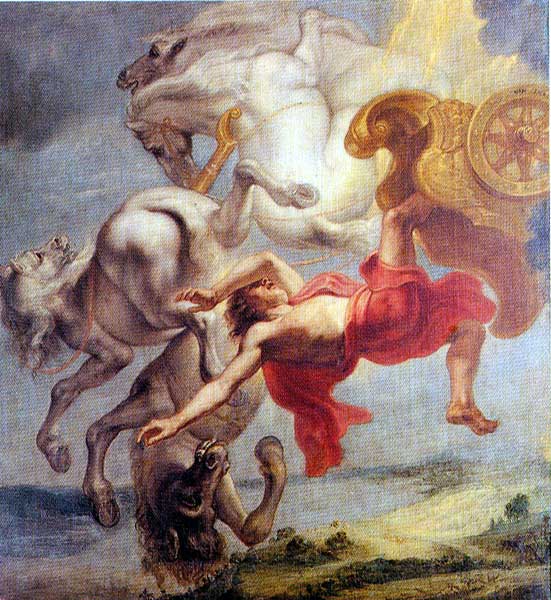
ANTINOUS IN PHAETHON'S CHARIOT
WE CELEBRATE July 15th as the date of the triumphal arrival of Hadrian and Antinous at Tarsus in what was the biggest "celebrity arrival" in that city since Cleopatra had landed with her barge two centuries earlier.
Passing through the Cilician Gate, the famous mountain road used by Alexander to cross the Taurus Mountains, the Imperial court arrived at the city of Tarsus, the guardian of Asia Minor.
It was outside of Tarsus that Alexander battled against the Persian Army and defeated Darius, after which he soon took control of the vast Empire of the Persians, the traditional enemies of Greece. Tarsus was the crossroad between the Hellenic west and the Persian-Phoenician East.
The people of Tarsus were rapturous and espcially adored Antinous, according to Antinous authority Royston Lambert, who writes:
"Tarsus added Adriana to its name, provided a splendid festival and seems to have taken very special note of Antinous."
It was here that Hadrian and Antinous first encountered the devotion that the Phoenicians and Canaanites held for the Sun God, whom they called El, Baal, or Elagabal.
The Greeks called the deity who was the orb, heat and light of the Sun, Helios, and he was pictured riding a chariot pulled by burning horses, who made their way across the sky.
Phaethon was the son of Helios, and he one day tried to drive his father's chariot but lost control, so that the sun moved erratically out of its course and scorched Ethiopia. Zeus struck Phaethon down before he could do further damage.
Flamen Antonius Subia explains the parallels:
"So it is that Antinous, on his journey towards Ethiopia, would find himself unable to control the mighty horses that pulled Hadrian's chariot, and would be struck down by the jealous Sun. We pray to Father Helios of Tarsus on this day."