Sunday, August 21, 2022

ANTINOUS FRAGMENTS
By David M. Kohlmeier


I want to tell you about my Beloved, 

But you’re going to be disappointed. 

He doesn’t always make sense. 


In His dark blue hoodie, He waits by

The roaring ocean. “Seagulls are my favorites,” 

He says, eating a cheap lobster roll. “No one appreciates 

Them.” 


Sometimes, on the edges of my sight, 

I glimpse His horns. Bull horns. I turn to see, wanting

To really behold that virile minotaur-like manliness I’m sure

He has beneath the soft twink exterior, but

It always vanishes the instant I turn. He laughs 

at me. “How butch do you think I am?”

And He’s not being rhetorical. 

He wants me to answer. 

I never do. 


In church they sing hymns of the beautiful one

Who died, who was lost, but who lives again, who goes

To prepare the way to Heaven for us, and I rock and say “Amen” 

Over and over, for I know who they sing of: my Beloved sinking

Into the waves, slipping to the muck below, I cry for Him, lost,

And when the summer sun scorches my skin, when I cower and want to rush

Towards any cooler space or shaded shelter, wondering 

When will the heat grow

Too much for any of our modern magic to save us, I remember

He is there, on that blazing bier, preparing the way for me.

He long ago entered into the fury of the heart of all heat

And cools it, softens it, 

And you too will know this

when you finally know the right way to look at the Sun.


I trace my fingers in the baptismal font and raise the waters

To my brow, the waters of His drowning. He tells me “I’m not dead anymore you know” 

But I know His hair isn’t fully dry just yet.

The priest says “Enter into the baptism of His death” and so I do,

And doing so I know far more than the priest does what his words mean. 


My Beloved is fond of the smell of pine, and sometimes

In clouds of pine smoke I catch Him praying,

To Heavenly Father, but not the one I was taught about. The Father 

Of lightning, the roaring storm smasher, who also 

Sits in my cupboard, guarding the pantry. Domestic

Zeus. 

My Beloved toois far more domestic than others say,

He does His share of chores. Minds the errands, doesn’t care

If themessiness of my children clutters up what he just cleaned. 

He’s surprisingly happy in this cramped chaotic apartment. 

And He prays to Mother, othertimes to Parent;

Beloved tells me of Them, the fearful mountain

That was whole before the Gods forced Them into a binary, 

Before a conspiracy ripped off Their cock,

Agdistis.

"The only true God in the end," He tells me. 

"Even Father fears Their power" 


And when He dances in Their name I hear the songs of 

Ancient priestesses, who have cast off their bloody genitals, undoing

The curse of Parent because these priestesses choose it, for them the knife

Is freedom, shaping

Their bodies into the bodies of their true selves, long before Christians 

And their mutilating myth of two genders. 


"I was not a priestess," the Beloved says, "but I remember them. That

is what freedom means. The choice to be, even when it bleeds." 


He raises His cup of wine, pours out a libation to Father,

To Parent, and He is transfigured before me, 


Coarse goat skins on His smooth flesh, eyes feral, cruel, a smile with sharp

Teeth exposed. They say in church that the dead Lover becomes one with God, and so 

My Beloved is one with Wild 

Bacchus, 

I could be ripped apart,

His mouth

To my throat full of dagger teeth,

But I know He won’t,

I’m the safest when most at His mercy, 

drinking the dripping red from His lips.

He holds me and I should be afraid but I’m not. 

Who is Lover and who is Beloved? 

He laughs when I talk of my age. My nearness

To turning 50. 

"You realize I'm over a thousand years older than you,

don’t you?" He laughs. "So

"who is really the Daddy here?”

There is nothing greater, He reminds me

Than the One who Tops the whole Universe from the Bottom. 


And just like that, He is once more

In His hoodie, His tight blue jeans, His tossled hair,

Full lips, soft smirk, the "pretty boy." Harmless. "Gay boy." 

"Twink." But I know in His eyes endless 

aeons of wisdom, I know the supernovas

shimmer there at the edges where He cries.

Beloved falls back on the couch and lazily scrolls 

His phone,

Disappearing into the background. 


My Beloved is more than He appears.

He doesn't look up, but speaks: …

"So are you. 

It's why we get along so well."


THE SACRED LION HUNT


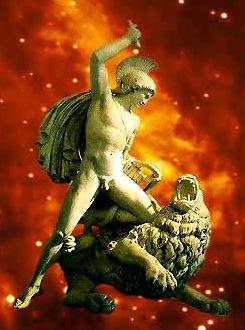
ON the 21st of August, with the Sun in the final degrees of Leo the Lion, we commemorate the Sacred Lion Hunt ... when Hadrian and Antinous slew a man-eating lion in Egypt in August 130 AD.

Priests of Antinous celebrate the event in with ritual ceremonies at the Hollywood Temple of Antinous which also see worshipers participating live online from North and South America, Europe and Africa.

During the special ceremonies they also honor the Sacred Rosy Lotus of Antinous ... the pink waterlily said to have sprung forth spontaneously from the lion's blood as it splattered the banks of the Nile.


Flamen Antonius Subia relates in vivid detail the events of the Sacred Lion Hunt: The place is Egypt, somewhere in the rocky wilderness between the scattered oases southeast of Alexandria. 

The time is August of the Year 130 AD. The Sun is poised to enter the Sign of Leo. The Constellation of Aquila the Eagle is at its zenith in the nighttime sky ... just as it is now.

It is the constellation of the Emperor. And the Emperor and his Beloved are touring Egypt when they hear grisly accounts of a man-eating lion marauding the countryside on the edge of the cultivated land. The "Marousian Lion" it was called.

They lead a hunting expedition out into the wilderness. The whole expedition is rife with symbolism from the start since the Sun is in Leo in the daytime skies and the Eagle is soaring in the nighttime skies and the Ancients believed killing lions was tantamount to defeating death itself. Lion hunting was the sport of kings.

When at last the Imperial party flushes out the man-eater, the huntsmen and archers stand back and leave Hadrian to close in on the beast with his steed. Hadrian has just got off an arrow which wounds the animal when, all of a sudden, out of nowhere, young Antinous rides ahead, his reins in his left hand, an adamantine-tipped lance in his upraised right hand.

As the Imperial retinue looks on in horror, the snarling lion charges toward the boy, causing his panicked horse to whinny and wheel about in terror. But Antinous maintains his balance and, instantly judging distance and angle, sends his lance sailing towards the lion as it quickly closed the gap between them. 

The lance slams into its rear flank, inflicting a serious but not fatal wound. Enraged even more, the lion uses its fangs to pull out the lance and charges anew against the Boy who is fumbling with his quiver to ready a shot with his bow. But an arrow is already in the air from behind Antinous, and it whizzes past his ear and hit its mark in the throat of the lion.

It has been fired by Hadrian, who is approaching at full gallop and who, even while the first arrow was still in the air, had already readied a second arrow, which this time penetrates both lungs.

The lion spins about and collapses writhing in the dust, rage in its eyes, blood and saliva guttering from its fanged mouth, gasping for breath as it struggles to get to its feet — because Antinous has dismounted and is sprinting toward it with a drawn dagger.

Hadrian draws his steed to a halt and dismounts with an agility and  lightness befitting a man half his age, fueled by adrenaline and alarm for his Beloved Boy, who faces imminent peril from the mortally wounded lion, still capable of severing an artery with one swipe of its mighty paw.

Hadrian draws his hunting axe from his belt and holds it high as he  lunges onto the lion's back and dispatches the beast with one powerful blow which splits its skull in two with a frightening crack and a spurt of bright red blood which bathes both the older man, now panting and perspiring heavily, and the younger man who still shows no visible expression of concern, just a wild-eyed look of excitement in his eyes, as if he never realized the danger he had been in — as if he thinks he is immortal.

A cheer goes up from the coterie of onlookers when they realize the lion is dead, killed seemingly by a single blow from the Emperor's hand. Courtiers whose eyes are unskilled in the ways of hunting will later claim Hadrian had struck the lion dead with a club.

As soldiers and nervous bodyguards rush forward to make sure everything is all right, the emperor, his adrenalin-strength ebbing as quickly as it came, shakily wraps a blood-spattered arm around Antinous and plants his gilded, spike-soled sandal on the dead animal's neck and nods to Antinous to do the same.

There they stand, bathed in blood and bathed in the adulation of the Imperial coterie, each with one foot on the vanquished man-eater as the animal's blood spreads out and covers the surrounding rocks and sand and a few scrubby wildflowers growing from a crevice in a rock.

Even the flowers are splattered with blood. And these red blossoms  will be plucked by members of the entourage to take back as souvenirs to show to envious courtiers who had not been invited along.

THE SACRED LION HUNT was immortalized in poetry and in stone, with Hadrian adding medallions to the Arch of Constantine showing him and Antinous with feet on the lion's neck and also making sacrifice to the great lion-killer Hercules.


Soon legend would have it that scarlet-red lotus blossoms had sprung forth from the pool of the lion's blood, the lion which had been brought down by Antinous and which had been dealt its death blow by Hadrian — the SACRED RED LOTUS.

Under the Sign of Leo. And under the Constellation of the Eagle. 

Within a few short weeks, Antinous himself would be dead. The Sacred Lion Hunt is the last recorded event in His short life.

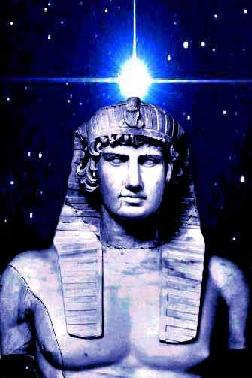
And some time afterward, grieving Hadrian would look up into the  nighttime skies with tear-filled eyes and his court astronomers would point out a New Star which had appeared in the southern part of the Constellation of Aquila the Eagle.

The New Star would be interpreted as a celestial sign that Antinous had been raised to the firmament, that the Constellation of the Imperial Eagle had been joined by the CONSTELLATION OF ANTINOUS. It was a sign that Antinous was now a God.

If you go outside tonight and peer out into the darkness with all its deep and hidden dangers, remember Antinous and how he peered out into the barren wilderness with all its deep and hidden dangers. 

He charged forth, his bridle-reins in his left hand and an adamantine-tipped lance in his right, and he faced death unafraid.

For Antinous knew he was immortal.

The Constellation of Antinous, still under the wing of the Imperial Eagle, will be right directly over your head tonight ... shining proof that Antinous is a God and that he is indeed immortal.


Don't look out into the darkness around you and be afraid. Instead, look up and remember the Beloved Boy, who was a fearless hunter, who stalked death itself, and who emerged victorious over it.

Saturday, August 20, 2022

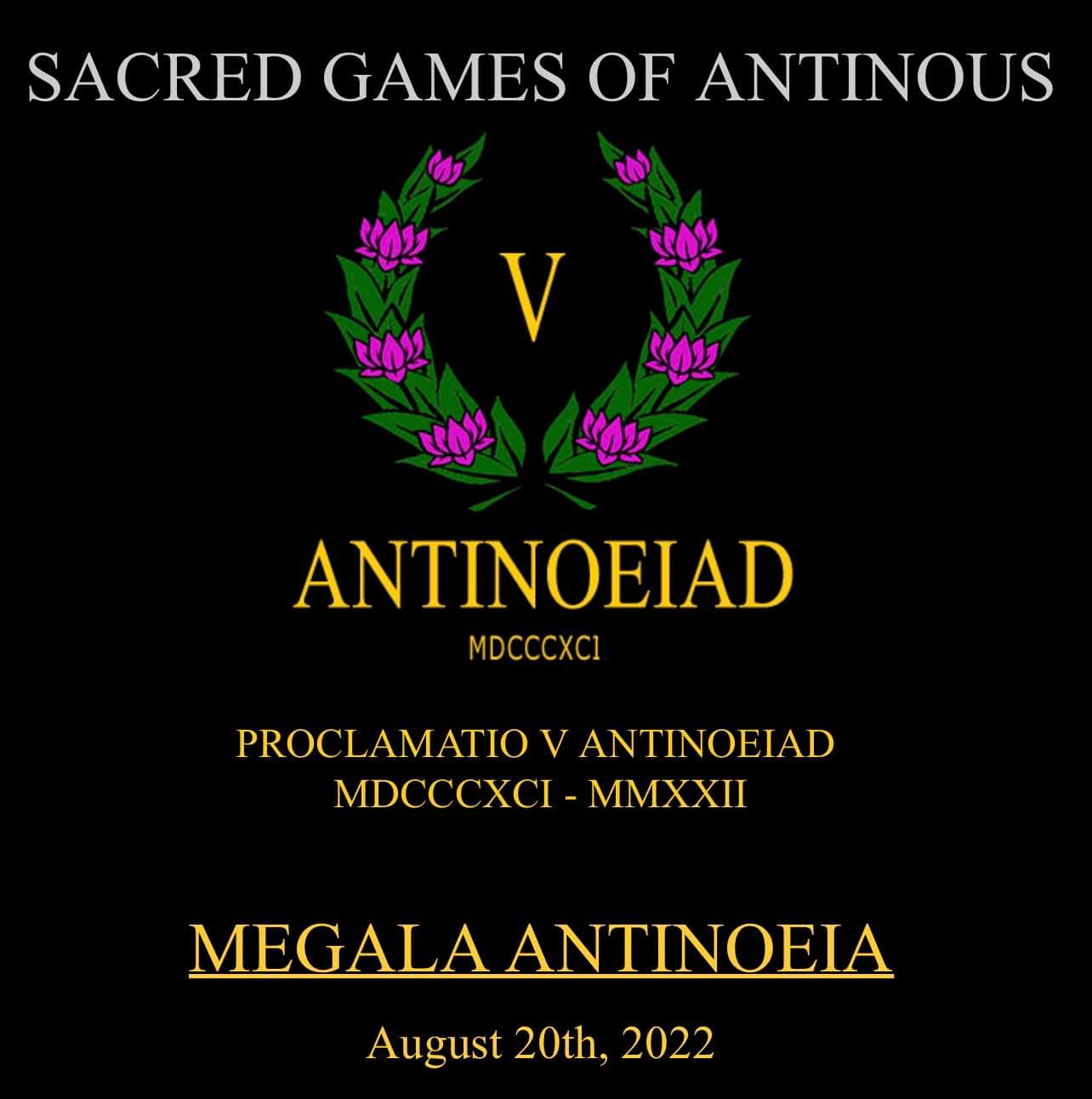
LET THE GAMES BEGIN!
THE 5th MODERN GAMES OF ANTINOUS


It is with great joy that we,
The Priesthood of the Temple of Antinous
Solemnly announce the opening of
The 5th Antinous Sacred Games!
In all there are 14 entrants.
Some entrants submitted multiple pieces,
but these are judged together as one entry.
An independent panel of judges
will determine the three top awardees.

Here are the entries:

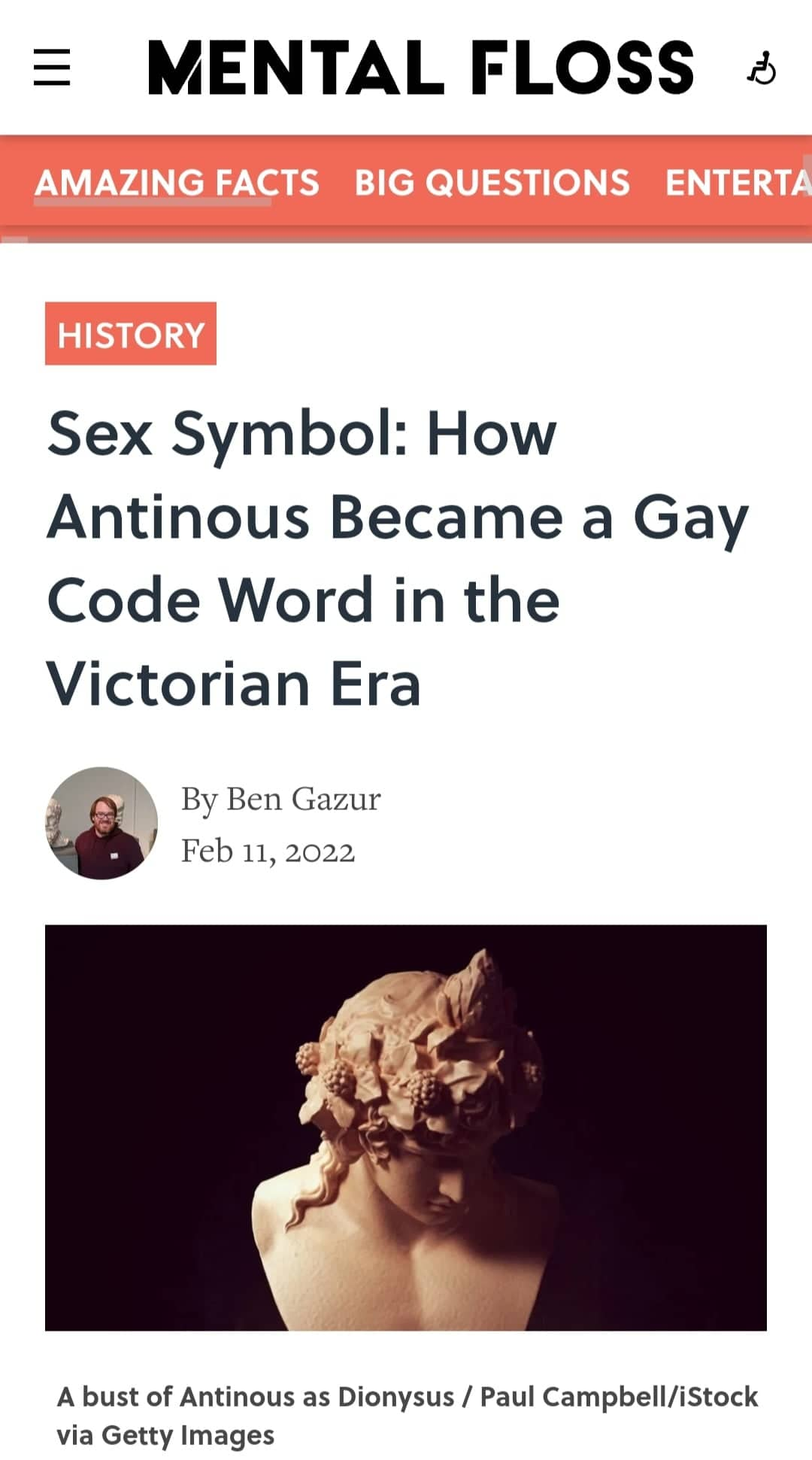
Dr. Ben Gazur article on Antinous


Two Songs By Felipe Trinidad
(mp3 files available on request)


Poetic Essays by Ramon Martinez
"Maricones D Antaño"


"Antinous" Photo By James Eastburg


Academic Paper by Steven Wharton
(available as PDF on request)


Photo by Keith MezaenAset Hoberg
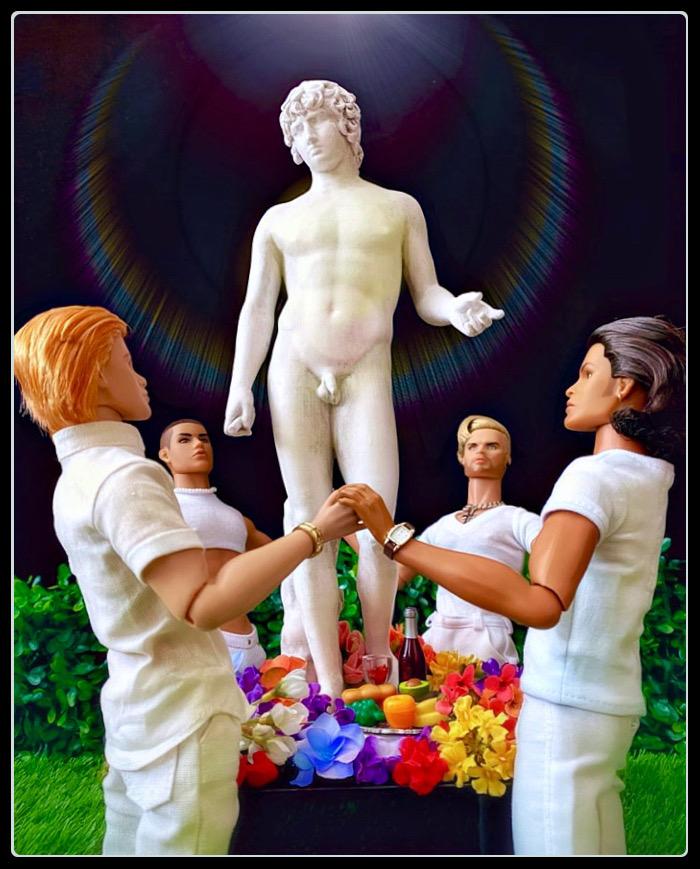
"Adoration of Antinous"


Antinous Bennu/Phoenix Illustration
By Miranda Baggins


Blog Posts By Pasquale Curatora


Antinous Healing Prayer Card By Lawrence Gullo


Thoughts On Antinous
By David M. Kohlmeier
(word document available on request)


"Across Rivers Of Time"
Art by Gwailome


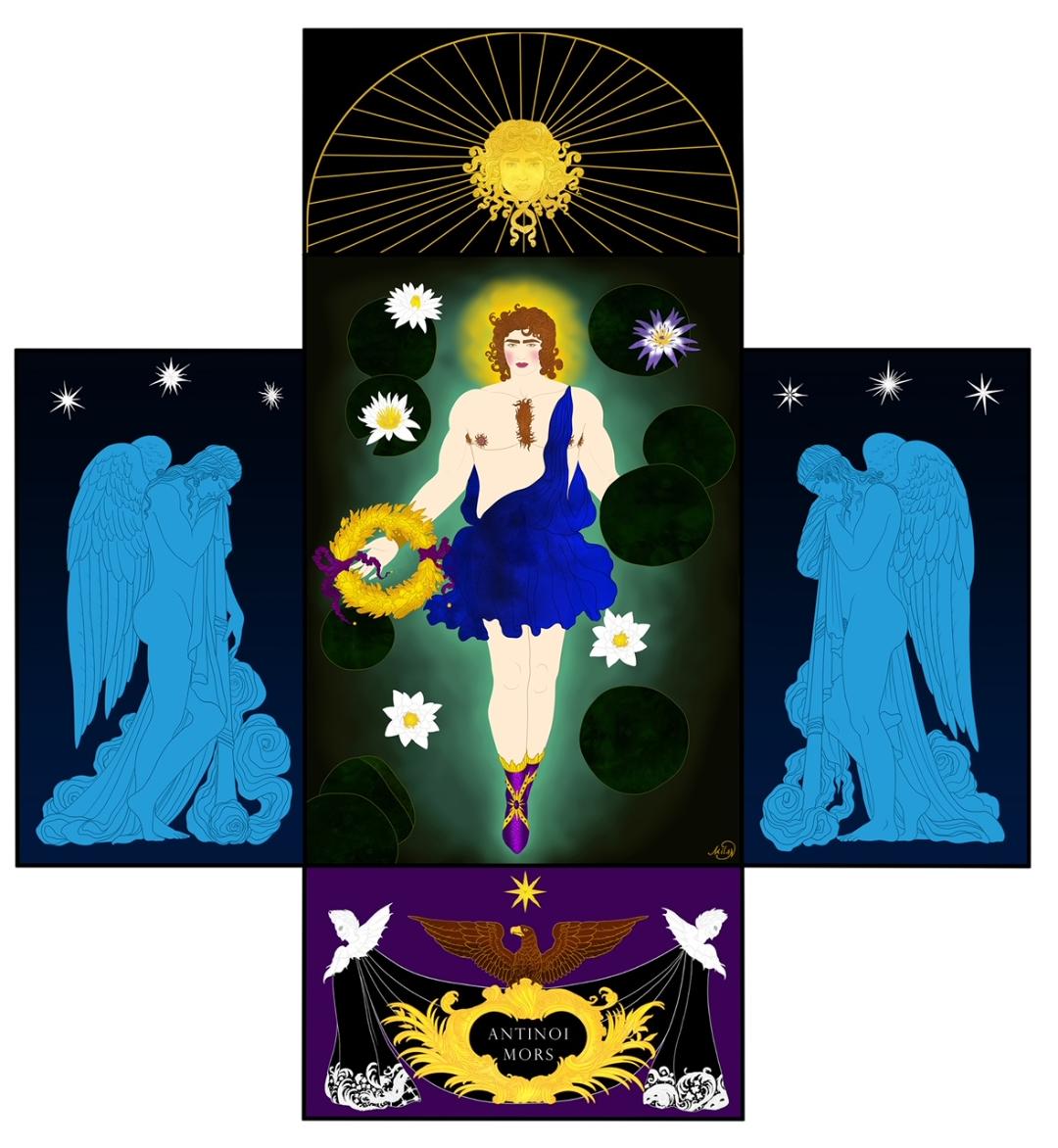
"Antinoi Mors" (Death of Antinous)
by Milan Kovačević


Wes Miles Self-Portrait
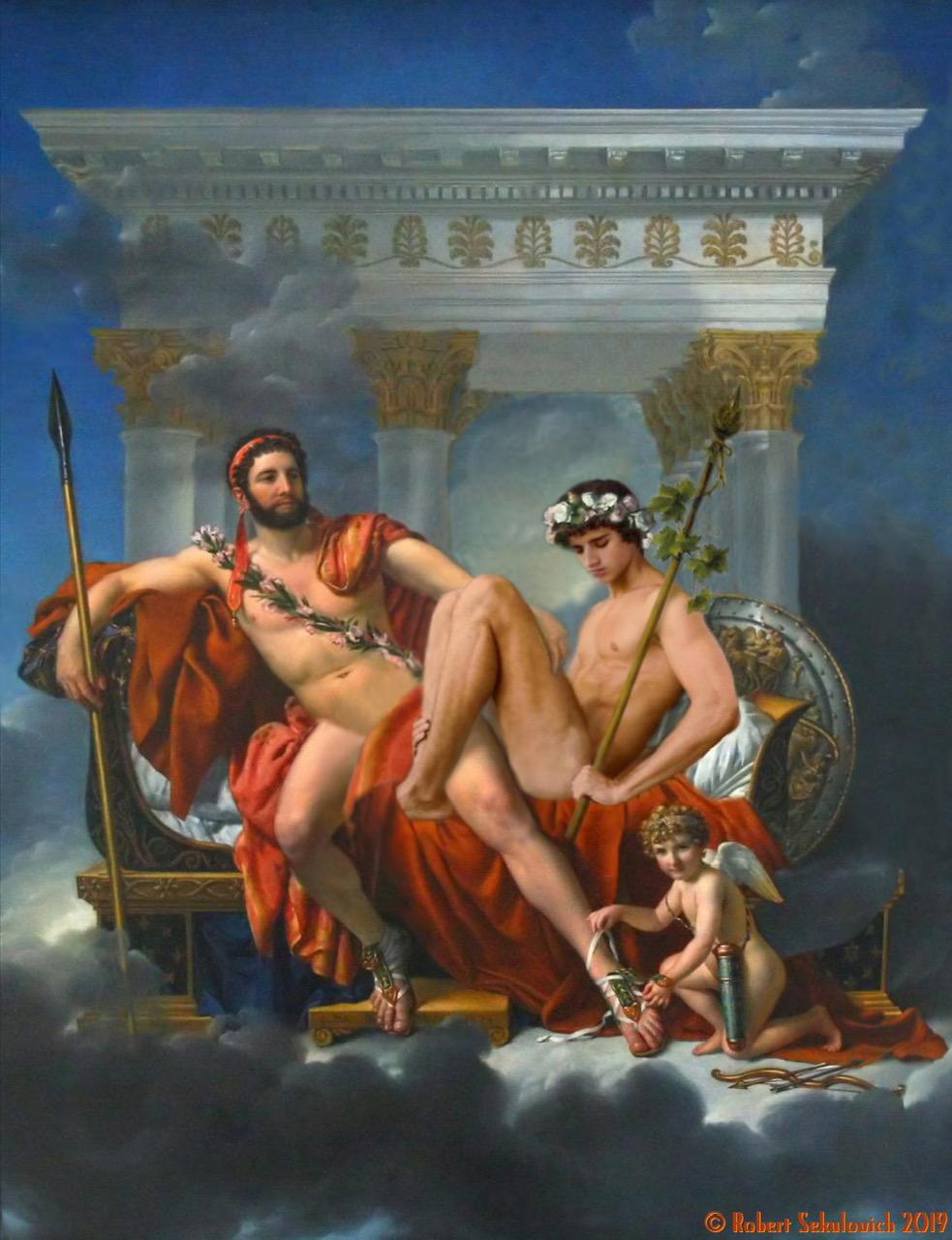
Based on "Bacchus" By Simeon Solomon


Multiple Illustrations, Sculpture, Jewelry
By Robert Sekulovich


Prize Awardees will be announced
in global Zoom ceremonies tonight!

May Antinous bless all those
Who participate in His Sacred Games!

AVE ANTINOUS!

THE SACRED BAND OF THEBES
THE ARMY OF LOVERS


AUG. 20 the Religion of Antinous commemorates the Sacred Band of Thebes, the Army of Gay Lovers whose courage and valour have echoed down through the ages as an inspiration that Gay Love is a magical means of Conquering Fear and  Doubt.

The Sacred Band of Thebes, also called The Theban Band, was a battalion composed entirely of homosexual friends and lovers. This military unit, consisting of 150 male couples, was based on the belief that men fighting alongside their lovers would die rather than shame one another.

According to Aristotle, the Army of Lovers were sworn into military service at the Tomb of Iolaus, one of the many male lovers of Hercules. Iolaus had helped the god in the Twelve Herculean Tasks. 

He often acted as Hercules' charioteer and companion, and the closeness of their relationship was such that he was known as Heracles' symbomos (altar-sharer), since the two could be honored at one and the same altar — a very rare occurrence in ancient Greece, where each divinity would have his or her own altar.

Iolaus was called the eromenos (beloved boy) of Hercules, and was thus a Sacred Hero of same-sex love in Thebes. Hercules, Iolaus and Eros were often depicted together.

That is probably why the army of gay lovers was called the Sacred Band, since they took their oath of allegiance at the Sacred Tomb of Iolaus, which was at the same time a shared sacred altar to Hercules. In effect, the warriors were swearing that they would fight alongside their comrades the same way Iolaus and Hercules fought together — armed with the arrows of Eros.


You can see the parallels to Hadrian and his beloved boy Antinous, and later this week the parallels become even clearer when we commemorate the SACRED LION HUNT.

After that hunt in the Libyan desert in the summer of the year 130 AD, Hadrian and Antinous made sacrifice to the Great Lion Slayer Hercules — thus cementing the identification between Hadrian/Hercules and Antinous/Iolaus — and their affiliation with the Sacred Band of Thebes.

The great Theban gener
al and tactician Epaminondas is generally credited with establishing The Sacred Band, although some sources claim it was his "beloved friend" Pelopidas who was responsible for recruiting them. No matter — they both fought side-by-side at the head of The Sacred Band.

This corps d'elite first took to the battlefield against Sparta, which had dominated Greece since the fall of Athens in 404 BC. The Spartans were confident of victory, as they had never suffered a defeat on the battlefield — never ever.

Deploying the Sacred Band on his front left wing, "Epaminondas made his left wing fifty deep and flung it forward in the attack." 

The "extra weight" of this wing and the "fanatical bravery of the Sacred Band" broke the Sparta right wing, which contained their best warriors. In the ensuing hand-to-hand combat, the Spartan king was killed and their right gave way.

Witnessing this, the rest of the Spartan forces, who had not yet been engaged, fell back in disarray, running for their lives. Thus, Sparta suffered their first recorded defeat in more than 400 years — at the hands of an Army of Gay Lovers.

But the end came in 338 BC at the battle of Chaeronea when King Phillip II of Macedonia and his son Alexander (later called Alexander the Great) defeated the combined forces of Athens and Thebes-Boetia. Alexander confronted The Sacred Band of Thebes, the elite corps of 300 homosexual lovers who were by that time the most respected soldiers in the world.

But alas! They were no match for the Macedonians under Phillip and Alexander. It was a rout. The Athenian and Theban armies gave way and began retreating from the advancing Macedonians. Only The Sacred Band stood their ground — and died. Only a few were subdued and captured. Of those who died, it was found that not one had been wounded in the back — a sign that they had not turned away from the fight.

Alexander was so moved by their nobility and courage that he asked his father to bury them with honour and raise a monument in the form of a Sacred Lion over their mass grave. In 1881, the shattered fragments of this Lion Tomb were discovered, surrounded by the bones of 254 pairs of men with their weapons, arranged in a phalanx of seven rows, the battle formation of the Sacred Band.

In 1902 the fragments of the Sacred Lion were reconstructed and placed again over the tomb of The Sacred Band (depicted left) by the secret homosexual society known as the Order of Chaeronea, founded by gay-rights pioneer George Cecil Ives.

It reminds us once again of the Sacred Lion Hunt which we celebrate later this week.

So, what has all of this got to do with us in our daily lives? We're not soldiers. We're not brave and courageous. Like Dorothy Gale, we're meek and mild. Timid. We know that if we were on a battlefield, we would turn and run. We would hide and "play dead" and hope nobody found us.

We assume that the Army of Gay Lovers were all fearless. We think they were unafraid. We don't think of them as being scaredy-cats like us. We think they didn't mind the prospect of agonizing death. We think they were somehow above such mortal fears and doubts.

That's nonsense, of course. They were scared out of their wits. We can scarcely imagine how afraid they were. As they stood there alone against the mightiest army in the Ancient World, their emotions shifted beyond the mere terror of possibly being killed, to the actual horror of inescapable agony and death. It is one thing to be terrified — we all know the fears generated by terrorists who fly airliners into buildings. 

But the emotions experienced by those trapped in the planes or inside the burning buildings go far beyond mere terror to the actual horror of inescapable agony and death. That is the Mystery of Terror as opposed to the Mystery of Horror. We tend to forget the distinction!

The Army of Gay Lovers were not without fear. On the contrary, they were staring into the horror of impending pain and death. But they did not allow their fear to overwhelm them. 

Instead, they turned their fear "inside-out" and used it as a magical shield. The barbs of fear were no longer poking inward to themselves, but instead were pointing outward towards their foes.

And that is the Mystery Teaching of the Army of Gay Lovers. It was no doubt part of the initiation which the recruits underwent at the Tomb of Iolaus. They were schooled in magico-religious methods for handling fear. It's about learning to harness Mars energy. Mars is all about the double-edge sword of fear/bravery and how you can learn to wield that Sword of Mars.

It's not about being fearless. It's about being able to transform your fear into a mighty force which wins the battle of life. Mars Warrior Energy is not about death. It is about LIFE. It is about harnessing fear and doubt and turning them into useful energies in your daily life.

Life — from the time you are born until the time you die — life is just one constant battle. And if you give in, then you are lost. And if you give in to the fear and doubt that constantly confront you each and ever day, then you are lost. It's about using selfless love and transcendant awareness to transform fear and doubt into constructive energies which empower you to stand up and wade into the fray of daily life.


The Band of Thebes were initiated into Mystery Teachings which showed them how to transform fear and doubt into a magical force which made them invincible — capable of asserting their will and making their dreams become reality. 

And the catalyst was male-male love and devotion.

This is one of the deepest and most profound Mystery Teachings of the Religion of Antinous. 

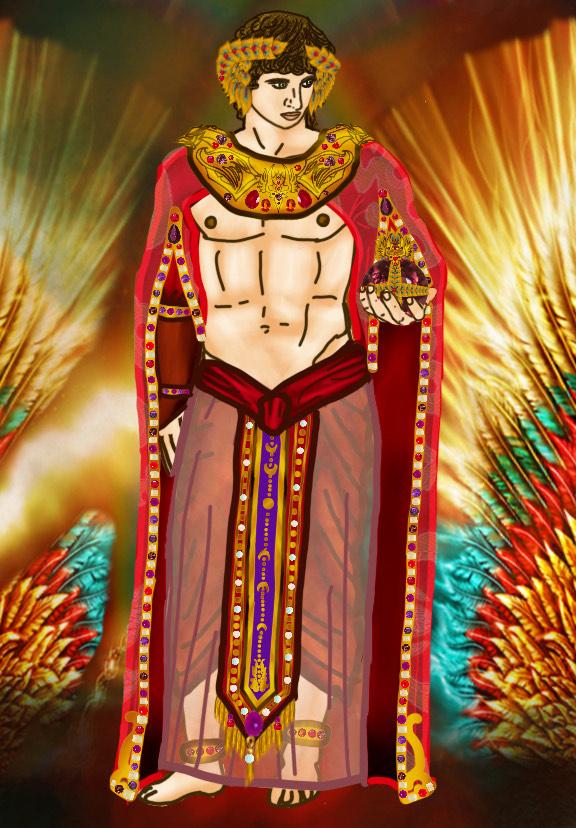
We are talking about the Mysteries of Antinous-Mars. This is why Flamen Antinoalis Antonius Subia has painted Antinous in the guise of the War God (above). 

Antinous is not just about gay male beauty. He is about gay male warrior energy.

Mars is a very important constituent aspect of Antinous. In Fixed Star Astrology, the STAR OF ANTINOUS is characterized by a mixture of Jupiter/Mars energy along with Venus energy — unique among Fixed Stars. To overlook Mars is to overlook a major component of what Antinous is all about.

Mars and his Alchemical Intelligence Graphiel and Daimon Barzabel (Deimos and Phobos) is much misunderstood by philosophers and occultists. 

The fiery Graphiel/Barzabel energies of the red planet ("terror" Deimos and "horror" Phobos) are often seen as frightful and horrific and destructive and warlike with no other qualities. This is a shallow analysis and one that should be discarded. Understanding your Martial nature — the Antinous-Mars warrior inside you — is essential to your survival and growth as a gay man. Terror and horror accompany us all our lives.

We are all afraid every day. We are all riddled with doubts every day. Look around you — most people are consumed with fear and doubt. Fear fuels their lives! But each of us can learn to turn our fears and doubts "inside-out" so that their barbs no longer point inward towards us, but instead so that these barbs of fear and doubt form a protective shield around us. 

It girds us with a constructive energy which helps us to advance through the Herculean travails which we face in our daily lives. Instead of being "fearfully" timid, we become "fearsomely" determined not to let life get us down.

Tomorrow, this transformational ability to turn fear "inside-out" will help us to understand how Antinous was able to charge the man-eater during the SACRED LION HUNT.

He must have been terrified. He was young and inexperienced and alone on his steed and armed only with an adamantine-tipped lance.

But through his loving bond with Hadrian/Hercules, Antinous/Iolaus was also magically armed with the "fearsomely strong" energies of the Sacred Band of Thebes. 


Flamen Antinoalis Antonius affirms: "We consecrate and honor their memory and call upon their strength and courage in our own hearts, that we may become the New Sacred Band."

Friday, August 19, 2022

NO WELL-GROOMED ROMAN MALE
WAS WITHOUT AN ANTINOUS BALSAMARIUM


"CLEANLINESS is next to Godliness" ... was Ovid's advice to young men setting out on amorous conquests in his poem Ars Amatoria.

A clean body and a well-groomed appearance was not only indispensable in the art of love, but was also considered a fundamental feature of Roman self-esteem, frequently contrasted with the uncleanliness and unkempt appearance of Barbarians living outside the borders of the Empire.

The third Friday in August is Men's Grooming Day and the ancient Romans apparently considered Antinous to be their role model because a BALSAMARIUM (bath unguent jar) in the form of the head of Antinous was hugely popular.


Any well-groomed Roman male owned an array of bathing implements, combs, strigilae, lamps, water-resistant flip-flops and other articles ... including a balsamarium to hold his bath oils or skin lotions.

Antinous balsamaria were exceedingly popular in Rome. Suitable for holding bath oils or moisturizers, an Antinous balsamarium suggested that its owner would emerge from the baths looking like a God. 

And we thought modern advertising came up with that gimmick!

Thursday, August 18, 2022

THE MOON OF LUCIUS AELIUS CAESAR
THE TAURUS THIRD QUARTER MOON


TONIGHT  is the night of the Taurus Third Quarter Moon which we call the "Moon of Brothers" in honor of Lucius Aelius Caesar who was a veritable brother to Antinous at the imperial court of Emperor Hadrian.


Each Lunar Phase represents a Divine Spirit or Archetype. The Spirit of the "Lucius Moon" is the Spirit of Brotherhood. This is the Kindred Spirit who accompanies you all your life and who is there for you through thick and thin. 

Even when all others abandon you, your brother stands by you. But he is no pushover. 

He admonishes you to do better, to straighten up and fly right, even though he himself is no paragon of virtue. 

This Spirit knows you a bit too well, perhaps. He is cocky and has a tendency to swagger and boast. He can be a free spirit who is a high-stepper, a bit of a dandy, a man with a chip on his shoulder, a brother who exudes "attitude".

On this night we remember Lucius Aelius Caesar (January 13, 101 - January 1, 138), who became the adopted son and intended successor of Hadrian, but who never attained the throne, dying of illness before Hadrian after a brief life of licentious love of luxury. 

Aelius Caesar is a major character in Marguerite Yourcenar's epic historical novel MÉMOIRES D'HADRIEN (MEMOIRS OF HADRIAN). Lucius, as we affectionately call him, is the recipient of much bittersweet love and adoration from followers of the Religion of Antinous. 

For us he represents so many pretty young men whose bright futures are thwarted by tragic illness. 

Aelius Caesar is often called the Western Favorite, because of the possibility that he rivaled Antinous for Hadrian's love. We venerate Aelius Caesar as the fallen Prince of Flowers, the spiritual twin brother of Antinous.

The Taurus Third Quarter Moon is about comfort and luxury along with practicality.

This is the night for ANTINOUS MOON MAGIC rituals on behalf of your "brothers", whether biological, social or spiritual brothers, and regardless of gender. 

This is the night you celebrate a brotherly good friend (generally male) who definitely is on your side.

Your brother shares your dreams. This brother may have a bit of "attitude". He loves comfort and style and can be a bit superficial at times. But he stands beside you to help you fulfill your dreams.

This can be a biological brother, but more likely a brother in spirit. He may tease you and be your rival but, when the chips are down, he will stand up for you and fight valiantly for you. Honor him, he is your brother!

CHALCEDONY AT THE LUCIUS MOON
By Our Crystal Meditation Advisor Martin Campbell


OUR venerable astrology expert Hernestus has informed me that today is the Taurus Third Quarter Moon or "Lucius Moon of Antinous". Hernestus suggests that this moon will encourage us to focus on brothers and brotherhood.

I had an interesting insight into this once. Living in the Pagan heartland of England - Glastonbury - we see regular spiritual events to mark the Pagan calendar, solstices etc. Many of these involve a procession through the streets of the town. 

Glastonbury has the only temple to the Goddess (representing all of the divine feminine aspects of any faith) in the UK (and maybe Europe).

Consequently this little town (10,000 inhabitants) has the only national Goddess Conference attracting priestesses, speakers and delegates from all over the world. To end the conference there is a parade through the streets.

Soman and I had never seen this so we wandered down (2 minutes from our house) to where the parades start. We fully expected to see lots of 'buxom', middle aged women in flowing, tie-dye dresses, long hair and festooned with crystal jewelry. 

There were hundreds of them! They sang songs about their goddesses, played drums and chanted that they 'walked with the goddess' as the procession moved through the streets.

Then, suddenly, there was a surprise. There was a man on the parade! A gay man, carrying a rainbow flag and proudly chanting along with the women about his devotion to a goddess! I nearly cried with joy! 

You see we all have moments where our expectations and stereotypes get challenged. These wonderful women were devoted spiritual beings. Of course they would embrace a brother into their faith - especially a gay one! 

I too have female deities I hold in my worship. It could have been me walking, singing and laughing under that banner. 

These colourful women were my sisters and that  joyous gay guy in the parade was my spiritual brother. You reading this are my brotherly companions in adoration of Antinous. 

If you want to meditate on your brother, brothers, spiritual brothers or brotherhood in general I would suggest the following crystals to hold and focus your energies through while meditating during this moon:

Chalcedony - This beautiful crystal comes in many forms (stones, crystals, geodes etc.). Generally they are pale white, pink or blue. 

In ancient times (probably known to Hadrian who was paranoid about such things) Chalcedony was sometimes formed into chalices for leaders to drink from as it was said to dispel poisons. 

It certainly dissipates negative energy. Perhaps its key attribute, though, is to help us focus on brotherhood and goodwill to all men. 

Rhodonite - This red or pink stone was used in ancient times as an emotional ' First Aid' kit. It was believed to heal torment, shock and pain arising from deeply emotional situations. As a result, this crystal encourages you to focus on brotherhood and humanity."

Love and Light,
MARTIN

To get more advice from Martin Campbell and to find out how to contact him CLICK HERE.