Wednesday, August 19, 2026

TONIGHT IS THE MOON OF PROMETHEUS
THE SCORPIO FIRST QUARTER MOON


PROMETHEUS was the first thief and it was thanks to his larcenous thievery that humans are not living in burrows and dens like animals.

He stole fire from the Gods and brought it down to us mortals living on Earth. And at this, the hottest time of the year (in the Northern Hemisphere at any rate), we celebrate the SCORPIO FIRST QUARTER MOON with this legendary act of "breaking and entering with malicious intent to commit a felony."

Tonight is the night of the THIEF MOON, the PROMETHEUS MOON.

In ANTINOUS MOON MAGIC, each phase of the moon represents a Divine Spirit or Archetype. The Spirit of the Thief Moon is the Divine Thief. This Spirit is the stealer of hearts. He sneaks up on others and intentionally relieves them of those things they hold dear. We associate this lunar phase with Prometheus.

One of the Titans, Prometheus fashioned men out of clay (women did not appear until Pandora), and Athena breathed life into these clay men. Originally all men had Prometheus' power to foretell the future (the Greek name "Prometheus" means "Forethought") but Zeus became enraged that a Titan had created a sentient and nearly divine race, so he stripped them of that fortune-telling power and also stripped them of fire.

Prometheus urged his fellow Titans to use cunning and stealth to overcome the Gods. But when the Titans opted for brute force, Prometheus foresaw the outcome and betrayed the Titans and went over to the side led by Zeus.

But when Zeus turned against men and wanted to smite them all and create a rival race, Prometheus betrayed Zeus by stealing fire and giving it to his clay men so that they would have a light to see their way without the help of the gods — even if only a few were clairvoyant, not all, as he had originally intended.

Outraged, Zeus bound Prometheus to the rock and his eagle dined on his liver every day. But being a Titan, he could not die, and his liver was restored every night.

In the end, Prometheus won his freedom by foretelling that Zeus would meet his downfall if he mated with a certain mortal woman ... which is why Poseidon fell and Zeus did not, because Zeus heeded the foretold warning.

Prometheus was the first thief. He was the first Divine friend of mankind. It is fitting that Prometheus graces the fountain at Rockefeller Center in Manhattan. Prometheus was mankind's first divine friend, who gave us the civilization-building gift of fire. It was stolen from the Gods!

Thus the SCORPIO FIRST QUARTER MOON is a time of cunning and deception, thievery, robbery, stealth. Unlike the PERDITION MOON, which is about loss in a general sense, the THIEF MOON is about intentional taking.

In a very literal sense, it can signify a night when break-ins or burglaries are rife. But most often it represents your inner self ... the things you rob yourself of  ... self-esteem, self-love, self-confidence, for example. By robbing yourself of these qualities, you are vulnerable to real-life thieves.

But this lunar phase is also talking about the positive aspects of being a thief, like Prometheus or Mercury. Antinous/Mercury is the God of Thieves, Con Men and Convicts. Prometheus stole fire from the Gods to give to mankind, saying it rightfully belonged to mortals. Mercury famously stole from Apollo and yet charmed his way to "acquittal".

Tonight's lunar phase is reminding us about the "inner thief" inside all of us ... the ability to take what we need without asking in advance. It is about getting back what is rightfully ours by means of cunning and skulduggery. We are all thieves, only the dishonest ones deny it. 

TOPAZ HELPS YOU AT THE THIEF MOON
By Our Crystal Meditation Advisor Martin Campbell


OUR inspirational astrology expert Hernestus has informed me that today is the second Scorpio First Quarter Moon in succession. It is the THIEF MOON of Antinous. Hernestus suggests that this moon will have you focusing on your own "inner thief". The aspect of you robbing you of the qualities which would otherwise permit you to progress spiritually.


We all have such blocks, doubts, hang-ups. For years I was completely closed to faith. Christianity rejected me and I knew nothing about other mainstream religions. My culture told me that any non-mainstream religions were cults or devil worshipers. 

So I closed myself off and just focused on worship of material objects like most people around me. I told myself that faith was nonsense, superstitious 'mumbo jumbo' that only weak people needed. 

Yet I sub-consciously knew there was a 'lack' there in my soul. I first found Gaia calling to my feminine side, it made sense.

Mainstream religions were typically all male macho Gods - maybe a female divinity would work better for a gentle gay boy?! 

It worked for a while but nature needs balance and so I found Antinous dragging me out of my spiritual closet to give me a divine male balance! 

Since I opened myself up to Gaia and Antinous I have found other gods and spirits who support them and me. There is no going back in that spiritual closet now!

To help you dismiss your doubts to the closet and embrace your inner spiritual diva I recommend that you focus on/hold the following crystal while you meditate:

TOPAZ - these semi-precious crystals sound expensive but usually aren't as expensive as you may imagine if bought as a stone rather than within a jewel. 

Their ability is to get you focused on 'being' rather than 'doing'. We all 'do' stuff all the time which distracts us and keeps us achieving 'things'.

How often do we just 'be', sit still, listed to our heartbeat, focus on our breath in and out? How often do we question what we are doing or why we think a certain way? Why are we so full of doubts and uncertainties?

Topaz helps you to cut through all of that nonsense and see the trust in crystal clear sight."

Love and Light,
MARTIN

To get more advice from Martin Campbell and to find out how to contact him CLICK HERE.

BEN PASTOR'S 'HORSEMAN'S SONG'
RIVETING GARCÍA LORCA MURDER MYSTERY


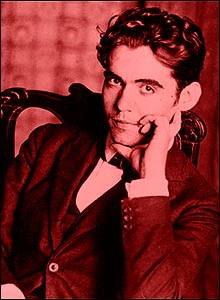
WE all know that Spanish poet (and saint of Antinous) Federico García Lorca was murdered by Fascists on August 19th, 1936 ... or do we?

In a brilliant new thriller by author BEN PASTOR he was murdered twice ... once in 1936 and again in 1937 ... and it is up to a persistently thorough German Wehrmacht sleuth to find out what really happened ... and why.

Antinomaniacs are familiar with Ben Pastor for her richly researched historical novel THE WATER THIEF is about the search for the Lost Tomb of Antinous by Roman sleuth Aelius Spartianus. 

In that book, Spartianus not only discovers the whereabouts of the Beauteous Boy's tomb, but also uncovers a nefarious plot to bring down the Roman Empire.

Ben Pastor has written a series of Spartianus mysteries set in the days of the Roman Empire.

But the award-winning Italian-American historian and mystery writer is also the author of a series of novels about a World War II German military detective named Martin Bora who dodges mortar shells and Nazi intrigue to get to the bottom of baffling murders at the risk of life and limb. 


The new novel is entitled THE HORSEMAN'S SONG, a reference to García Lorca's celebrated poem Canción del Jinete (The Horseman's Song) about a young rider galloping through darkness on a journey that ends in death.

Pastor skillfully works this symbolism into this tale of a young Scottish-German officer walking a tightrope of death between Spanish Fascists and Red Republicans ... all grimly intent on annihilating each other ... as German military intelligence spies lurk in the shadows. 

And along the way he must side-step booby-traps placed by envious officers, enamored gay comrades, jealous rebels ... and the love spells of an Aragon bruja witch.

As always with every book by Pastor, the historical research is immaculate and the writing is tight and fast-paced. You can't skip over a single sentence lest you miss a vital clue or insight into the solving of the riddle.

For those of you who have read her earlier Martin Bora novels, all set during World War II, this book is something of a prequel, introducing us to a Martin in his late 20s ... younger and more naive ... a young man galloping on his own journey through dark shadows of death.

It's a book everyone who is interested in Federico García Lorca must read.

Tuesday, August 18, 2026

FEDERICO GARCÍA LORCA
SAINT OF ANTINOUS


ON AUGUST 19th, the Religion of Antinous honors St. Federico García Lorca, who was openly gay and who is one of the greatest poets of the Spanish language. 
He was executed by the Fascists on this day, August 19th, during the Spanish Civil War in 1936.

García Lorca's central themes are love, pride, passion and violent death, which also marked his own life.


The Spanish Civil was just getting underway in August 1936 and García Lorca was seen by the right-wing forces as an enemy. The author hid from the soldiers but he was eventually found.

An eyewitness has told that he was taken out of a Civil Government building by guards and Falangists belonging to the "Black Squad". García Lorca was shot in Granada without trial. The circumstances of his death are still shrouded in mystery. He was buried in a grave that he had been forced top dig for himself. 

According to some sources, he had to be finished off by a coup de grâce. One of his assassins later boasted, that he shot "two bullets into his arse for being a queer".

It was the end of a brilliant career as a poet and dramatist who was also remembered as a painter, pianist and composer.

In the 1920s he was close friends with Luis Buñuel and Salvador Dalí, among many others who later became influential artists in Spain. Despite the accolades from artists and critics, he suffered from bouts of depression brought on largely by his inner conflict about his homosexuality.

He was tortured by the demands of being a celebrity in a homophobic society and the yearnings of his gay soul.

During his lifetime only a handful of close friends were allowed to read the collection of gay poems which would be published many years later as his Sonnets of Dark Love. Here is one of them, entitled Love Sleeps in the Poet's Heart:


You'll never understand my love for you,
because you dream inside me, fast asleep.
I hide you, persecuted though you weep,
from the penetrating steel voice of truth.
Normalcy stirs both flesh and blinding star,
and pierces even my despairing heart.
Confusing reasoning has eaten out
the wings on which your spirit fiercely soared:
onlookers who gather on the garden lawn
await your body and my bitter grief,
their jumping horses made of light, green manes.
But go on sleeping now, my life, my dear.
Hear my smashed blood rebuke their violins!
See how they still must spy on us, so near!


With the Catalan painter Salvador Dalí and the film director Louis Buñuel he worked in different productions.

Dalí and Lorca had met in 1923. From the beginning, Lorca was fascinated by the young Catalan's personality and looks. Also Dalí had admitted that Lorca impressed him deeply.

When Buñuel and Dalí made their famous surrealist short film Un Chien Andalou (1928), García Lorca was offended: he thought that the film was about him.

Lorca's friendship with Dalí inspired a poem, a defense of modern art and at the same time an expression of homosexual love. Dalí dedicated his painting of Saint Sebastian to his friend, who often compared himself to the tortured homoerotic martyr.

"Let us agree," Lorca wrote to Dalí, "that one of man's most beautiful postures is that of St. Sebastian."

"In my 'Saint Sebastian' I remember you," Salvador Dalí replied, ". . . and sometimes I think he IS you. Let's see whether Saint Sebastian turns out to be you."

García Lorca was capable only of a "tragic, passionate relationship," Dalí once wrote — a friendship pierced by the arrows of Saint Sebastian.


The Religion of Antinous honors this great artist who lived and loved tragically and passionately and who died tragically for being gay.

Monday, August 17, 2026

THE ANTINOUS OF RENO NEVADA


WE love it when Antinomaniacs from around the world share images of Antinous they discover during their globetrotting travels.

This statue of Antinous in the guise of Dionysus is the center of an Italian restaurant in Reno Nevada. He holds the thyrsus staff of Dionysus in one hand and a goblet of wine in the other.

He is flanked by two maenads who are totally naked ... though his private parts are hidden discreetly ... lest prudish American diners be put off their pasta.

And to top it all off ... this statue rotates slowly to give diners on all sides a 360-degree view of him ... under a twinkling starry heaven.


Sunday, August 16, 2026

ANTINOUS THE MOVIE STAR
UPSTAGES EVERYBODY IN 'CLEOPATRA'


ANTINOUS defies time and space ... appearing in Cecil B. DeMille's 1934 film CLEOPATRA, which starred Claudette Colbert.

The epic movie premiered on 16 August 1934 ... with Hollywood hyping the anniversary of the death of Cleopatra VII queen of Egypt on 12 August 30 BC.

In the movie, the Antinous Capitoline statue gazes into the atrium pool beside Calpurnia (played by Gertrude Michael) in Julius Caesar's Villa in Rome.

In another scene, Caesar (played by William Warren) has Antinous on his mind ... or at least on his head ... or perhaps springing forth as Athena sprang forth from the brow of Zeus. 

Handsome Henry Wilcoxon is Mark Antony (left) and C. Aubrey Smith is bearded Enobarbus. 

The Antinous Capitoline statue upstages all the actor in this wonderful peplum ... despite the fact that Caesar lived in the 1st Century BC and Antinous lived in the 2nd Century AD.

Saturday, August 15, 2026

THE BIRTHPLACE OF ANTINOUS
IS THE HOME OF 'MAD HONEY'


TURKEY's hallucinogenic "Mad Honey" is produced when bees pollinate rhododendron flowers in the remote mountainside towns of the Black Sea region ... where Antinous was born and spent his childhood.

After his death and deification, Antinous was identified with ARISTAEUS (below right), the inventor of beekeeping, so it is likely that he knew about the effects of Bithynian "Mad Honey."

He must have seen beekeepers hauling their hives up the slopes of the mountains of his homeland until they reach vast fields of cream and magenta rhododendron flowers. 

Here, they unleashed their bees, which pollinated the blossoms and made a kind of honey from them so potent, it has been used as a weapon of war.

The dark, reddish "Mad Honey," known as "deli bal" in Turkey, contains an ingredient from rhododendron nectar called grayanotoxin ... a natural neurotoxin that, even in small quantities, brings on light-headedness and sometimes, hallucinations. 

Throughout the ages, Bithynia has traded this potent produce with Greece and Rome and (in later centuries) Western Europe, where the honey was infused with drinks to give boozers a greater high than alcohol could deliver.

When over-imbibed, however, the honey can cause low blood pressure and irregularities in the heartbeat that bring on nausea, numbness, blurred vision, fainting, potent hallucinations, seizures, and even death, in rare cases. 

Nowadays, cases of mad honey poisoning crop up every few years ... oftentimes in travelers who have visited Turkey.

Rhododendron flowers occur all over the world, and yet mad honey is most common in the Bithynia region ... the biggest honey-producing region in Turkey.

"There are more than 700 different species (of rhododendron) in the world, but according to our knowledge just two or three include grayanotoxin in their nectars," says Süleyman Turedi, a doctor at the Karadeniz Technical University School of Medicine in Trabzon, Turkey, who studies deli bal's effects and has witnessed more than 200 cases of mad honey poisoning.

In Turkey, not only do the poisonous rhododendrons abound, but the humid, mountainous slopes where Antinous grew up provide the perfect habitat for these flowers to grow in monocrop-like swaths. 

When bees make honey in these fields, no other nectars get mixed in ... and the result is deli bal, potent and pure.

Although the product makes up only a tiny percentage of Bithynia's honey production, it has long held a strong Turkish following.

"People believe that this honey is a kind of medicine," Turedi says. “They use it to treat hypertension, diabetes mellitus and some different stomach diseases. And also, some people use deli bal to improve their sexual performance."

The honey is taken in small amounts, sometimes boiled in milk, and consumed typically just before breakfast, he adds ... not slathered on toast or stirred generously into tea the way normal honey would be.

Its value to customers has given beekeepers an incentive to keep visiting those rhododendron fields and producing it alongside their normal honey products.

Johnny Morris, a travel journalist from the United Kingdom, puts its Turkish predominance partly down to history, too. In 2003, for his popular travel column called "Grail Trail," he went to taste mad honey in Trabzon, a Turkish city that’s backed by mountains and faces the Black Sea.

"It’s got a long history in Turkey," he says. "It was used as a weapon of mass destruction for invading armies."

Indeed, in 67 B.C. Roman soldiers invaded the Black Sea region under General Pompey's command, and those loyal to the reigning King Mithridates secretly lined the Romans' path with enticing chunks of mad honeycomb. 

The unwitting army ate these with gusto, as the story goes.

Driven into an intoxicated stupor by the hallucinogenic honey, many of the flailing soldiers became easy prey, and were slain.

Mad Honey is still sold under the counter at shops in the area today. Turedi explains that Turks in the region have the know-how to consume it responsibly.

"Local people are able to distinguish mad honey from other honeys. It causes a sharp burning sensation in the throat and thus it’s also referred to as bitter honey," he says.

People who have tried is say that even a drop or two of it on the tongue has a numbing effect. Experts say deli bal retains its numbing, head-spinning traits because it is untreated, unprocessed, and essentially pure.

"We know that if you eat more than one spoonful of honey including grayanotoxin, you are at risk of Mad-Honey poisoning," Turedi says.

"In spring and summer, the honeys are fresh and may include more grayanotoxin than in other seasons." 

If that doesn’t dissuade the adventurous foodie, then Turedi says to limit intake to less than a teaspoon, "and if you feel some symptoms associated with mad honey, you should get medical care as soon as possible."

For adherents of Antinous on pilgrimages to the land of his birth, the dangerously sweet syrup retains its ancient mystery, tucked away in shops that are difficult to find.