Showing posts with label movies. Show all posts

Friday, May 29, 2026

JAMES WHALE, SAINT OF ANTINOUS


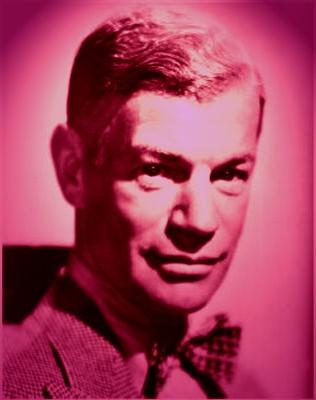
ON MAY 29th the Religion of Antinous celebrates the life of Saint James Whale (22 July 1889 — 29 May 1957), the openly gay British-born director of such films as Frankenstein, The Old Dark House, Bride of Frankenstein and The Invisible Man.

His movies were modern parables about the cruelty of "normal" people towards "monsters" in their midst. 


All of those 1930s films are recognized as classics of the genre. Whale directed over a dozen films in other genres, including what is considered the definitive 1936 film version of the musical Show Boat.

He became increasingly disenchanted with his association with horror, but many of his non-horror films have fallen into obscurity. Whale was openly gay throughout his career, something that was very unusual in the 1920s and 1930s.

He tended to use gay actors who were friends of his, including Colin Clive, Ernest Thesiger, Charles Laughton and Laughton's wife Elsa Lanchester, who played the "Bride". Thesiger has tea (below) in mad-scientist garb. 

Bride of Frankenstein, in particular, is widely interpreted as having a gay subtext and it has been claimed that Whale's refusal to remain in the closet led to the end of his career.

James Whale's true genius was in making movies which made the audience sympathize with the "monster" instead of the "normal" people, who invariably were portrayed as ridiculous, comic fools.

James Whale's soaring career was dashed by homophobic studio bosses who objected to having a "pansy" directing major movies. He spent the last decade of his life as an outcast in Hollywood.

He "accidentally" drowned in his own swimming pool in the mid-1950s after having become a chronic depressive following a stroke.

His life was brought to the screen in the award-winning movie Gods and Monsters, which is a masterful adaptation of a very wonderfully written gay novel entitled Father of Frankenstein by Christopher Bram.

The book and the movie are about his final weeks of life with flashbacks to his childhood in poverty in northern England and his traumatic experiences during World War I and to his heyday as the toast of Tinseltown, and his plunge into obscurity — and his final plunge into the watery arms of Antinous.

It is a great irony that the only out-and-proud Hollywood director of the 1930s is remembered as a man whose name is equated with monsters.

Tuesday, April 14, 2026

SIR JOHN GIELGUD
SAINT OF ANTINOUS


ON April 14th the Religion of Antinous honors one of our most blessed thespian saints and martyrs, St. John Gielgud, who was born on this day in 1904.

The most terrible moment in John Gielgud's life -- on which he maintained a public silence for 50 years -- was the subject of a critically acclaimed play in the London West End.

The play, entitled "Plague Over England", was about the scandal which swept across Britain in 1953 when John Gielgud was arrested by an undercover policeman in a public toilet in London.

But the 2008 play was concerned with much more than Gielgud's arrest in on the charge of "importuning for immoral purposes". The play showed the plight of gay men in the 1950s Cold War atmosphere when gays were associated with Communist espionage. 

Its characters include the producer who nearly ended his career, the virulently anti-homosexual Lord Chief Justice Rayner Goddard, an American fleeing his own country's anti-Communist paranoia, and a doctor who claims to "cure" same-sex attraction with "Clockwork Orange"-style electric shock therapy.

Homosexuals had long been feared and hated in England as men who, it was believed, preyed on the innocent young, and were thus unfit to lead normal, happy lives. Until 1967, they risked prosecution for what the law called "acts of gross indecency between male persons", even in private, and could be arrested for merely showing -- in a police spy's opinion -- an intent to commit them.

Police throughout England were alert for any hints of homosexual behaviour. Just before Gielgud was arrested, two prominent high-class gay men had been uncovered as KGB spies, resulting in a further crackdown on all gay activities. The officer who arrested Gielgud was part of a Metropolitan Police squad established in 1930 that regularly lurked in central London toilets.


The year in which Gielgud came to grief in a Chelsea public convenience was a particularly dangerous one for homosexuals, as the increased frankness of the period allowed politicians, the police, and the press to profit by inflaming public hysteria, warning that a "plague" or "epidemic" of sodomy and Communism was sweeping the land.

The climate of fear was chilling to gay men who paid even the slightest attention to the news.

Gielgud, however, was, in his own words a "silly gubbins" who took no notice of anything outside of acting. On October 21, following the rehearsal for the play "A Day By the Sea", this supremely unworldly man, then 49, had a few drinks at a party and then visited a public lavatory popular with "cottagers" -- English gay slang for men who cruise toilets.

Arrested, and aware that he should give a false identity, he said he was a clerk called Arthur (his real name) Gielgud. The next day he  appeared before a magistrate who did not know who he was, fined him 10 pounds, and ordered him, with the disdain and sexual ignorance of the period, to "see your doctor the moment you leave this court".

Unfortunately, a better-informed Evening Standard reporter was there, too. When that afternoon's paper hit the streets, he was on the front page.

You can imagine the shame and the terror with which Gielgud turned up at rehearsal (he had considered suicide) for the role of a bachelor diplomat whose mother worries that he is lonely and unloved.

But the company, led by his co-star, Dame Sybil Thorndike, in fact welcomed him with open arms. "Oh, John," she said, in one of the most magnificent double entendres of all time, "you HAVE been a silly bugger!"


The producer of "A Day By the Sea", however, the immensely powerful Binkie Beaumont, saw the newspaper articles and the hate mail, and worried that the public would stay away. 

Yet his thoughts of firing the star were thwarted by Gielgud's brother, Val, who applied a little judicious blackmail about Binkie's very own private life.

Everyone was nervous that the audience might react with silence or even boos.


But as the curtain came down he was cheered to the rafters.

Gielgud was known for having a penchant for anonymous bathroom sex -- It's one of the reasons his knighthood (just a few months before the arrest) was postponed for years. He even had a "cruising cap" for such forays, an attempt to disguise himself so as to avert detection by fans who might recognize him.

The arrest had important consequences, and not only for Gielgud, who was told by the British embassy in Washington to forget about a planned American production of "The Tempest". because he might prove "an embarrassment".

Afterwards, the floodgates opened as the public was confronted by the disturbing fact that an extremely distinguished and beloved artist was one of the people they, in theory, despised. The fuss contributed to the Wolfenden Commission, set up the following year to study prostitution, taking on homosexuality as well. Its recommendations eventually led to decriminalisation in Britain.

While the affair broke Gielgud emotionally, he put himself back together in a way that made him better suited to a theatre in a world of greater change and upheaval.


For his talent and for his courage, the Religion of Antinous honors Saint John Gielgud as a Prophet of Homoeros.

Saturday, January 31, 2026

DEREK JARMAN
SAINT OF ANTINOUS


ON January 31st the Religion of Antinous celebrates the life of Saint Derek Jarman.

St. Derek, born on this day in 1942, created eleven extraordinary feature films ... including "Sebastiane," "Jubilee," "The Tempest," "Caravaggio," "The Last Of England," and "Edward II" ... and over three dozen shorts.

This multi-talented artist is also acclaimed for his painting (several major exhibits), stage and film design (for director Ken Russell and for a glorious Pet Shop Boys concert tour), gay and human rights activism, literature (memoirs, social criticism, poetry), and, on a serene note, his exquisite gardens full of "found" art.

Most gay men have seen Sebastiane which, when it came out more than 30 years ago, was the first British film to feature positive images of gay sexuality, not to mention the first film entirely in Latin.

Edward II raised eyebrows among critics for its upfront depiction of the brutal assassination of England's openly gay monarch by means of rectal assault.


The exquisitely beautiful Caravaggio is Saint Derek's best-known film.

We Antinoians remember Saint Derek for his art and we honor him as well for his boundless courage. His death from AIDS was cruelly slow and agonizing. And yet, as AIDS robbed him of his mobility and even of his eyesight, he turned the tables on Death and Dying by turning Death and Dying into an art form. 


His last feature-length film, Blue, consists of a single shot of saturated blue color filling the screen as Derek talks about his "vision" of life and art. How very typical of Derek Jarman.

Thumbing his nose at fate right up to the end. A dying man who is blind and yet who talks about his vision.

The light of his eyes faded until all he saw was the darkness where the Night Terrors feed on fear and doubt. And what did Derek do? He turned the darkness into vibrant color. He turned his fear and his worries into artistic energy. The dramatic lighting and brilliant colors of his films were so very dramatic and brilliant because they were always, always set against the inky darkness.

That is why we consecrate Derek Jarman a Saint of Antinous. Just like Saint Caravaggio, also one of our Blessed Saints, Martyrs and Exemplars, his "vision" lay in turning the Darkness into Light and Color. He died February 19, 1994.

Thursday, January 22, 2026

HEATH LEDGER
SAINT OF ANTINOUS


ON January 22nd the religion of Antinous commemorates the brief, shining life of Saint Heath Ledger, the gifted actor whose on-screen portrayals inspired millions of gay people and whose off-screen life paralleled so many more. Not gay himself, Saint Heath nonetheless is a gay icon, like Saint Judy Garland and others.

Saint Heath died on this day in 2008 under mysterious circumstances after taking anti-depressants and sleeping pills at the age of 28.


His body was found lying across the bed of his Manhattan apartment. The manner of his death bore eery parallels to the death of English  singer/songwriter Nick Drake, who is also a Saint of Antinous.

Best known for his Oscar-nominated role as a gay cowpoke in "Brokeback Mountain", the acclaimed Australian-born actor also played The Joker in the blockbuster "The Dark Knight", for which role he posthumously was awarded a Golden Globe Award for best supporting actor. On the first anniversary of his death, he posthumously won an Academy Award as best supporting actor for his role as the psychopathic criminal mastermind The Joker.

No one will ever know why Saint Heath overdosed on anti-depressants, as had his idol Nick Drake. No one will ever know why Saint River Phoenix took a fatal cocktail of booze and alcohol, just as no one will ever know why Saint Richey Edwardsjumped off a bridge to his death (if he did), and no one will know why so many talented and overly sensitive young men meet death so tragically and so young.

Just as no one knows for sure what happened to Antinous. Thus they are all Saints of Antinous.

Shortly before his death, Heath Ledger made a video tribute to Nick Drake (photo right), the ambisexual English singer/songwriter who died in 1974 under almost identical circumstances to Saint Heath.

Saying he planned to make a movie about Saint Nick, Heath appeared in a self-made video (about drowning) to the tune of Nick Drake's song Black-Eyed Dog. It was the last song that Nick is believed to have recorded before he died under mysterious circumstances after taking anti-depressants and sleeping pills at the age of 26. His body was found lying across his bed.

The black-eyed dog is thought to be a reference to Winston Churchill's famous "little black dog." Throughout his life Churchill was shadowed by violent mood swings, fits of depression and periods of emotional doubt. He felt that he was followed by this unpredictable darkness and uncertainty. He called it his "little black dog."

Heath seems to have been very well acquainted with the "little black dog" of depression, the black demon which nips at the heels of so many sensitive young souls who cannot find their way in this harsh world.

And thus Antinous is the God of Lost Boys. He knows their suffering. He knows how it is to stand on the shore at the twilight of the world, with one foot on dry land and the other foot in the murky depths of oblivion — and he understands how a beautiful soul can slip off into that oblivion.


Antinous is the God of these very sweet, shy, sensitive and talented artists, young men who agonize over their shortcomings and who can only cope with the harsh realities of showbiz by taking tablets with unpronounceable names in private.

Thursday, May 29, 2025

JAMES WHALE, SAINT OF ANTINOUS


ON MAY 29th the Religion of Antinous celebrates the life of Saint James Whale (22 July 1889 — 29 May 1957), the openly gay British-born director of such films as Frankenstein, The Old Dark House, Bride of Frankenstein and The Invisible Man.

His movies were modern parables about the cruelty of "normal" people towards "monsters" in their midst. 


All of those 1930s films are recognized as classics of the genre. Whale directed over a dozen films in other genres, including what is considered the definitive 1936 film version of the musical Show Boat.

He became increasingly disenchanted with his association with horror, but many of his non-horror films have fallen into obscurity. Whale was openly gay throughout his career, something that was very unusual in the 1920s and 1930s.

He tended to use gay actors who were friends of his, including Colin Clive, Ernest Thesiger, Charles Laughton and Laughton's wife Elsa Lanchester, who played the "Bride". Thesiger has tea (below) in mad-scientist garb. 

Bride of Frankenstein, in particular, is widely interpreted as having a gay subtext and it has been claimed that Whale's refusal to remain in the closet led to the end of his career.

James Whale's true genius was in making movies which made the audience sympathize with the "monster" instead of the "normal" people, who invariably were portrayed as ridiculous, comic fools.

James Whale's soaring career was dashed by homophobic studio bosses who objected to having a "pansy" directing major movies. He spent the last decade of his life as an outcast in Hollywood.

He "accidentally" drowned in his own swimming pool in the mid-1950s after having become a chronic depressive following a stroke.

His life was brought to the screen in the award-winning movie Gods and Monsters, which is a masterful adaptation of a very wonderfully written gay novel entitled Father of Frankenstein by Christopher Bram.

The book and the movie are about his final weeks of life with flashbacks to his childhood in poverty in northern England and his traumatic experiences during World War I and to his heyday as the toast of Tinseltown, and his plunge into obscurity — and his final plunge into the watery arms of Antinous.

It is a great irony that the only out-and-proud Hollywood director of the 1930s is remembered as a man whose name is equated with monsters.

Sir Ian McKellen, who is also from conservative Northern England and is an openly gay star of stage and screen, was nominated for a Golden Globe and for an Academy Award for his role as James Whale in the 1998 movie Gods and Monsters.

Brendan Fraser also won critical acclaim in that film as Whale's yard boy who identifies with the Frankenstein monster. His compelling portrayal suggests to the audience that all of us are gods and monsters, to some degree. But then, even Antinous was a god to pagans — yet a monster to early Christians.

And Lynn Redgrave won a Golden Globe and got an Oscar nod for her scene-stealing performance as James Whale's disapproving Swedish housekeeper — a tongue-in-cheek characterization drawn from the real-life eccentrics who performed supporting roles in Whale's wonderfully campy old movies.


Monday, April 14, 2025

SIR JOHN GIELGUD
SAINT OF ANTINOUS


ON April 14th the Religion of Antinous honors one of our most blessed thespian saints and martyrs, St. John Gielgud, who was born on this day in 1904.

The most terrible moment in John Gielgud's life -- on which he maintained a public silence for 50 years -- was the subject of a critically acclaimed play in the London West End.

The play, entitled "Plague Over England", was about the scandal which swept across Britain in 1953 when John Gielgud was arrested by an undercover policeman in a public toilet in London.

But the 2008 play was concerned with much more than Gielgud's arrest in on the charge of "importuning for immoral purposes". The play showed the plight of gay men in the 1950s Cold War atmosphere when gays were associated with Communist espionage. 

Its characters include the producer who nearly ended his career, the virulently anti-homosexual Lord Chief Justice Rayner Goddard, an American fleeing his own country's anti-Communist paranoia, and a doctor who claims to "cure" same-sex attraction with "Clockwork Orange"-style electric shock therapy.

Homosexuals had long been feared and hated in England as men who, it was believed, preyed on the innocent young, and were thus unfit to lead normal, happy lives. Until 1967, they risked prosecution for what the law called "acts of gross indecency between male persons", even in private, and could be arrested for merely showing -- in a police spy's opinion -- an intent to commit them.

Police throughout England were alert for any hints of homosexual behaviour. Just before Gielgud was arrested, two prominent high-class gay men had been uncovered as KGB spies, resulting in a further crackdown on all gay activities. The officer who arrested Gielgud was part of a Metropolitan Police squad established in 1930 that regularly lurked in central London toilets.


The year in which Gielgud came to grief in a Chelsea public convenience was a particularly dangerous one for homosexuals, as the increased frankness of the period allowed politicians, the police, and the press to profit by inflaming public hysteria, warning that a "plague" or "epidemic" of sodomy and Communism was sweeping the land.

The climate of fear was chilling to gay men who paid even the slightest attention to the news.

Gielgud, however, was, in his own words a "silly gubbins" who took no notice of anything outside of acting. On October 21, following the rehearsal for the play "A Day By the Sea", this supremely unworldly man, then 49, had a few drinks at a party and then visited a public lavatory popular with "cottagers" -- English gay slang for men who cruise toilets.

Arrested, and aware that he should give a false identity, he said he was a clerk called Arthur (his real name) Gielgud. The next day he  appeared before a magistrate who did not know who he was, fined him 10 pounds, and ordered him, with the disdain and sexual ignorance of the period, to "see your doctor the moment you leave this court".

Unfortunately, a better-informed Evening Standard reporter was there, too. When that afternoon's paper hit the streets, he was on the front page.

You can imagine the shame and the terror with which Gielgud turned up at rehearsal (he had considered suicide) for the role of a bachelor diplomat whose mother worries that he is lonely and unloved.

But the company, led by his co-star, Dame Sybil Thorndike, in fact welcomed him with open arms. "Oh, John," she said, in one of the most magnificent double entendres of all time, "you HAVE been a silly bugger!"


The producer of "A Day By the Sea", however, the immensely powerful Binkie Beaumont, saw the newspaper articles and the hate mail, and worried that the public would stay away. 

Yet his thoughts of firing the star were thwarted by Gielgud's brother, Val, who applied a little judicious blackmail about Binkie's very own private life.

Everyone was nervous that the audience might react with silence or even boos.


But as the curtain came down he was cheered to the rafters.

Gielgud was known for having a penchant for anonymous bathroom sex -- It's one of the reasons his knighthood (just a few months before the arrest) was postponed for years. He even had a "cruising cap" for such forays, an attempt to disguise himself so as to avert detection by fans who might recognize him.

The arrest had important consequences, and not only for Gielgud, who was told by the British embassy in Washington to forget about a planned American production of "The Tempest". because he might prove "an embarrassment".

Afterwards, the floodgates opened as the public was confronted by the disturbing fact that an extremely distinguished and beloved artist was one of the people they, in theory, despised. The fuss contributed to the Wolfenden Commission, set up the following year to study prostitution, taking on homosexuality as well. Its recommendations eventually led to decriminalisation in Britain.

While the affair broke Gielgud emotionally, he put himself back together in a way that made him better suited to a theatre in a world of greater change and upheaval.


For his talent and for his courage, the Religion of Antinous honors Saint John Gielgud as a Prophet of Homoeros.

Friday, January 31, 2025

DEREK JARMAN
SAINT OF ANTINOUS


ON January 31st the Religion of Antinous celebrates the life of Saint Derek Jarman.

St. Derek, born on this day in 1942, created eleven extraordinary feature films ... including "Sebastiane," "Jubilee," "The Tempest," "Caravaggio," "The Last Of England," and "Edward II" ... and over three dozen shorts.

This multi-talented artist is also acclaimed for his painting (several major exhibits), stage and film design (for director Ken Russell and for a glorious Pet Shop Boys concert tour), gay and human rights activism, literature (memoirs, social criticism, poetry), and, on a serene note, his exquisite gardens full of "found" art.

Most gay men have seen Sebastiane which, when it came out more than 30 years ago, was the first British film to feature positive images of gay sexuality, not to mention the first film entirely in Latin.

Edward II raised eyebrows among critics for its upfront depiction of the brutal assassination of England's openly gay monarch by means of rectal assault.


The exquisitely beautiful Caravaggio is Saint Derek's best-known film.

We Antinoians remember Saint Derek for his art and we honor him as well for his boundless courage. His death from AIDS was cruelly slow and agonizing. And yet, as AIDS robbed him of his mobility and even of his eyesight, he turned the tables on Death and Dying by turning Death and Dying into an art form. 


His last feature-length film, Blue, consists of a single shot of saturated blue color filling the screen as Derek talks about his "vision" of life and art. How very typical of Derek Jarman.

Thumbing his nose at fate right up to the end. A dying man who is blind and yet who talks about his vision.

The light of his eyes faded until all he saw was the darkness where the Night Terrors feed on fear and doubt. And what did Derek do? He turned the darkness into vibrant color. He turned his fear and his worries into artistic energy. The dramatic lighting and brilliant colors of his films were so very dramatic and brilliant because they were always, always set against the inky darkness.

That is why we consecrate Derek Jarman a Saint of Antinous. Just like Saint Caravaggio, also one of our Blessed Saints, Martyrs and Exemplars, his "vision" lay in turning the Darkness into Light and Color. He died February 19, 1994.

Wednesday, January 22, 2025

HEATH LEDGER
SAINT OF ANTINOUS


ON January 22nd the religion of Antinous commemorates the brief, shining life of Saint Heath Ledger, the gifted actor whose on-screen portrayals inspired millions of gay people and whose off-screen life paralleled so many more. Not gay himself, Saint Heath nonetheless is a gay icon, like Saint Judy Garland and others.

Saint Heath died on this day in 2008 under mysterious circumstances after taking anti-depressants and sleeping pills at the age of 28.


His body was found lying across the bed of his Manhattan apartment. The manner of his death bore eery parallels to the death of English  singer/songwriter Nick Drake, who is also a Saint of Antinous.

Best known for his Oscar-nominated role as a gay cowpoke in "Brokeback Mountain", the acclaimed Australian-born actor also played The Joker in the blockbuster "The Dark Knight", for which role he posthumously was awarded a Golden Globe Award for best supporting actor. On the first anniversary of his death, he posthumously won an Academy Award as best supporting actor for his role as the psychopathic criminal mastermind The Joker.

No one will ever know why Saint Heath overdosed on anti-depressants, as had his idol Nick Drake. No one will ever know why Saint River Phoenix took a fatal cocktail of booze and alcohol, just as no one will ever know why Saint Richey Edwardsjumped off a bridge to his death (if he did), and no one will know why so many talented and overly sensitive young men meet death so tragically and so young.

Just as no one knows for sure what happened to Antinous. Thus they are all Saints of Antinous.

Shortly before his death, Heath Ledger made a video tribute to Nick Drake (photo right), the ambisexual English singer/songwriter who died in 1974 under almost identical circumstances to Saint Heath.

Saying he planned to make a movie about Saint Nick, Heath appeared in a self-made video (about drowning) to the tune of Nick Drake's song Black-Eyed Dog. It was the last song that Nick is believed to have recorded before he died under mysterious circumstances after taking anti-depressants and sleeping pills at the age of 26. His body was found lying across his bed.

The black-eyed dog is thought to be a reference to Winston Churchill's famous "little black dog." Throughout his life Churchill was shadowed by violent mood swings, fits of depression and periods of emotional doubt. He felt that he was followed by this unpredictable darkness and uncertainty. He called it his "little black dog."

Heath seems to have been very well acquainted with the "little black dog" of depression, the black demon which nips at the heels of so many sensitive young souls who cannot find their way in this harsh world.

And thus Antinous is the God of Lost Boys. He knows their suffering. He knows how it is to stand on the shore at the twilight of the world, with one foot on dry land and the other foot in the murky depths of oblivion — and he understands how a beautiful soul can slip off into that oblivion.


Antinous is the God of these very sweet, shy, sensitive and talented artists, young men who agonize over their shortcomings and who can only cope with the harsh realities of showbiz by taking tablets with unpronounceable names in private.

Friday, January 10, 2025

ANTINOUS THE GAY GOD
IS NOW ANTINOUS THE FEATURE FILM


FILMING will begin this year on the long-awaited feature film "Antinous" by artist Stuart Sandford, according to filmmaker Gus Van Sant.

In an interview with VARIETY, Van Sant, who is best known for Oscar winners "Good Will Hunting" and "Milk," says he is backing the screen thriller "Antinous," a modern-day drama inspired by the life and death of Antinous. He says visual artist Sandford wrote and will direct the film, which will be his feature film debut.

"Antinous" tells the story of a present-day young actor, who becomes convinced he is the reincarnation of Antinous, sparking a psychosexual drama that bridges the grandeur of ancient Rome with Hollywood's obsession with youth, beauty and immortality.

Van Sant told Variety: "I'm excited to see Stuart Sandford, an amazing photographer and sculptor, create a beautiful film inspired by the historical relationship between Hadrian and Antinous."

"Antinous has been on my mind for more than a decade, and his story is one that few people know about," Sandford said. "As an artist, my work brings together ideas from classical antiquity into a contemporary context. This film takes that concept and expands it greatly. It’s a reflection of enduring struggles with identity, desire, sexuality, obsession, fame, power and societal expectations ... themes just as relevant today as they were in antiquity. Antinous’ story takes on profound significance. His life reminds us of the fear and vulnerability that comes with living authentically under oppressive systems."

The project is produced by Dreamtown's Ben Charles Edwards ("Quant," "The Wheels of Heaven"), and Kirsty Bell ("A Bird Flew In," "Don't Forget Me"), and is executive produced by Phil McKenzie ("Ronnies").

Filming is scheduled to begin in the second quarter of this year, with locations spanning London, Los Angeles and Greece, in co-production with the production company and film financier Goldfinch Entertainment.

"This is a story that has remained in the shadows for far too long—a young man whose life and death have rippled through history in art, literature and legend, yet remains largely unknown,” Edwards said. “Antinous’ story is not just history, it’s a reflection of enduring struggles with identity, desire and societal expectations—themes as relevant today as they were in antiquity."

Wednesday, May 29, 2024

JAMES WHALE, SAINT OF ANTINOUS


ON MAY 29th the Religion of Antinous celebrates the life of Saint James Whale (22 July 1889 — 29 May 1957), the openly gay British-born director of such films as Frankenstein, The Old Dark House, Bride of Frankenstein and The Invisible Man.

His movies were modern parables about the cruelty of "normal" people towards "monsters" in their midst. 


All of those 1930s films are recognized as classics of the genre. Whale directed over a dozen films in other genres, including what is considered the definitive 1936 film version of the musical Show Boat.

He became increasingly disenchanted with his association with horror, but many of his non-horror films have fallen into obscurity. Whale was openly gay throughout his career, something that was very unusual in the 1920s and 1930s.

He tended to use gay actors who were friends of his, including Colin Clive, Ernest Thesiger, Charles Laughton and Laughton's wife Elsa Lanchester, who played the "Bride". Thesiger has tea (below) in mad-scientist garb. 

Bride of Frankenstein, in particular, is widely interpreted as having a gay subtext and it has been claimed that Whale's refusal to remain in the closet led to the end of his career.

James Whale's true genius was in making movies which made the audience sympathize with the "monster" instead of the "normal" people, who invariably were portrayed as ridiculous, comic fools.

James Whale's soaring career was dashed by homophobic studio bosses who objected to having a "pansy" directing major movies. He spent the last decade of his life as an outcast in Hollywood.

He "accidentally" drowned in his own swimming pool in the mid-1950s after having become a chronic depressive following a stroke.

His life was brought to the screen in the award-winning movie Gods and Monsters, which is a masterful adaptation of a very wonderfully written gay novel entitled Father of Frankenstein by Christopher Bram.

The book and the movie are about his final weeks of life with flashbacks to his childhood in poverty in northern England and his traumatic experiences during World War I and to his heyday as the toast of Tinseltown, and his plunge into obscurity — and his final plunge into the watery arms of Antinous.

It is a great irony that the only out-and-proud Hollywood director of the 1930s is remembered as a man whose name is equated with monsters.

Sir Ian McKellen, who is also from conservative Northern England and is an openly gay star of stage and screen, was nominated for a Golden Globe and for an Academy Award for his role as James Whale in the 1998 movie Gods and Monsters.

Brendan Fraser also won critical acclaim in that film as Whale's yard boy who identifies with the Frankenstein monster. His compelling portrayal suggests to the audience that all of us are gods and monsters, to some degree. But then, even Antinous was a god to pagans — yet a monster to early Christians.

And Lynn Redgrave won a Golden Globe and got an Oscar nod for her scene-stealing performance as James Whale's disapproving Swedish housekeeper — a tongue-in-cheek characterization drawn from the real-life eccentrics who performed supporting roles in Whale's wonderfully campy old movies.


Sunday, April 14, 2024

SIR JOHN GIELGUD
SAINT OF ANTINOUS


ON April 14th the Religion of Antinous honors one of our most blessed thespian saints and martyrs, St. John Gielgud, who was born on this day in 1904.

The most terrible moment in John Gielgud's life -- on which he maintained a public silence for 50 years -- was the subject of a critically acclaimed play in the London West End.

The play, entitled "Plague Over England", was about the scandal which swept across Britain in 1953 when John Gielgud was arrested by an undercover policeman in a public toilet in London.

But the 2008 play was concerned with much more than Gielgud's arrest in on the charge of "importuning for immoral purposes". The play showed the plight of gay men in the 1950s Cold War atmosphere when gays were associated with Communist espionage. 

Its characters include the producer who nearly ended his career, the virulently anti-homosexual Lord Chief Justice Rayner Goddard, an American fleeing his own country's anti-Communist paranoia, and a doctor who claims to "cure" same-sex attraction with "Clockwork Orange"-style electric shock therapy.

Homosexuals had long been feared and hated in England as men who, it was believed, preyed on the innocent young, and were thus unfit to lead normal, happy lives. Until 1967, they risked prosecution for what the law called "acts of gross indecency between male persons", even in private, and could be arrested for merely showing -- in a police spy's opinion -- an intent to commit them.

Police throughout England were alert for any hints of homosexual behaviour. Just before Gielgud was arrested, two prominent high-class gay men had been uncovered as KGB spies, resulting in a further crackdown on all gay activities. The officer who arrested Gielgud was part of a Metropolitan Police squad established in 1930 that regularly lurked in central London toilets.


The year in which Gielgud came to grief in a Chelsea public convenience was a particularly dangerous one for homosexuals, as the increased frankness of the period allowed politicians, the police, and the press to profit by inflaming public hysteria, warning that a "plague" or "epidemic" of sodomy and Communism was sweeping the land.

The climate of fear was chilling to gay men who paid even the slightest attention to the news.

Gielgud, however, was, in his own words a "silly gubbins" who took no notice of anything outside of acting. On October 21, following the rehearsal for the play "A Day By the Sea", this supremely unworldly man, then 49, had a few drinks at a party and then visited a public lavatory popular with "cottagers" -- English gay slang for men who cruise toilets.

Arrested, and aware that he should give a false identity, he said he was a clerk called Arthur (his real name) Gielgud. The next day he  appeared before a magistrate who did not know who he was, fined him 10 pounds, and ordered him, with the disdain and sexual ignorance of the period, to "see your doctor the moment you leave this court".

Unfortunately, a better-informed Evening Standard reporter was there, too. When that afternoon's paper hit the streets, he was on the front page.

You can imagine the shame and the terror with which Gielgud turned up at rehearsal (he had considered suicide) for the role of a bachelor diplomat whose mother worries that he is lonely and unloved.

But the company, led by his co-star, Dame Sybil Thorndike, in fact welcomed him with open arms. "Oh, John," she said, in one of the most magnificent double entendres of all time, "you HAVE been a silly bugger!"


The producer of "A Day By the Sea", however, the immensely powerful Binkie Beaumont, saw the newspaper articles and the hate mail, and worried that the public would stay away. 

Yet his thoughts of firing the star were thwarted by Gielgud's brother, Val, who applied a little judicious blackmail about Binkie's very own private life.

Everyone was nervous that the audience might react with silence or even boos.


But as the curtain came down he was cheered to the rafters.

Gielgud was known for having a penchant for anonymous bathroom sex -- It's one of the reasons his knighthood (just a few months before the arrest) was postponed for years. He even had a "cruising cap" for such forays, an attempt to disguise himself so as to avert detection by fans who might recognize him.

The arrest had important consequences, and not only for Gielgud, who was told by the British embassy in Washington to forget about a planned American production of "The Tempest". because he might prove "an embarrassment".

Afterwards, the floodgates opened as the public was confronted by the disturbing fact that an extremely distinguished and beloved artist was one of the people they, in theory, despised. The fuss contributed to the Wolfenden Commission, set up the following year to study prostitution, taking on homosexuality as well. Its recommendations eventually led to decriminalisation in Britain.

While the affair broke Gielgud emotionally, he put himself back together in a way that made him better suited to a theatre in a world of greater change and upheaval.


For his talent and for his courage, the Religion of Antinous honors Saint John Gielgud as a Prophet of Homoeros.

Wednesday, January 31, 2024

DEREK JARMAN
SAINT OF ANTINOUS


ON January 31st the Religion of Antinous celebrates the life of Saint Derek Jarman.

St. Derek, born on this day in 1942, created eleven extraordinary feature films ... including "Sebastiane," "Jubilee," "The Tempest," "Caravaggio," "The Last Of England," and "Edward II" ... and over three dozen shorts.

This multi-talented artist is also acclaimed for his painting (several major exhibits), stage and film design (for director Ken Russell and for a glorious Pet Shop Boys concert tour), gay and human rights activism, literature (memoirs, social criticism, poetry), and, on a serene note, his exquisite gardens full of "found" art.

Most gay men have seen Sebastiane which, when it came out more than 30 years ago, was the first British film to feature positive images of gay sexuality, not to mention the first film entirely in Latin.

Edward II raised eyebrows among critics for its upfront depiction of the brutal assassination of England's openly gay monarch by means of rectal assault.


The exquisitely beautiful Caravaggio is Saint Derek's best-known film.

We Antinoians remember Saint Derek for his art and we honor him as well for his boundless courage. His death from AIDS was cruelly slow and agonizing. And yet, as AIDS robbed him of his mobility and even of his eyesight, he turned the tables on Death and Dying by turning Death and Dying into an art form. 


His last feature-length film, Blue, consists of a single shot of saturated blue color filling the screen as Derek talks about his "vision" of life and art. How very typical of Derek Jarman.

Thumbing his nose at fate right up to the end. A dying man who is blind and yet who talks about his vision.

The light of his eyes faded until all he saw was the darkness where the Night Terrors feed on fear and doubt. And what did Derek do? He turned the darkness into vibrant color. He turned his fear and his worries into artistic energy. The dramatic lighting and brilliant colors of his films were so very dramatic and brilliant because they were always, always set against the inky darkness.

That is why we consecrate Derek Jarman a Saint of Antinous. Just like Saint Caravaggio, also one of our Blessed Saints, Martyrs and Exemplars, his "vision" lay in turning the Darkness into Light and Color. He died February 19, 1994.

Monday, January 22, 2024

HEATH LEDGER
SAINT OF ANTINOUS


ON January 22nd the religion of Antinous commemorates the brief, shining life of Saint Heath Ledger, the gifted actor whose on-screen portrayals inspired millions of gay people and whose off-screen life paralleled so many more. Not gay himself, Saint Heath nonetheless is a gay icon, like Saint Judy Garland and others.

Saint Heath died on this day in 2008 under mysterious circumstances after taking anti-depressants and sleeping pills at the age of 28.


His body was found lying across the bed of his Manhattan apartment. The manner of his death bore eery parallels to the death of English  singer/songwriter Nick Drake, who is also a Saint of Antinous.

Best known for his Oscar-nominated role as a gay cowpoke in "Brokeback Mountain", the acclaimed Australian-born actor also played The Joker in the blockbuster "The Dark Knight", for which role he posthumously was awarded a Golden Globe Award for best supporting actor. On the first anniversary of his death, he posthumously won an Academy Award as best supporting actor for his role as the psychopathic criminal mastermind The Joker.

No one will ever know why Saint Heath overdosed on anti-depressants, as had his idol Nick Drake. No one will ever know why Saint River Phoenix took a fatal cocktail of booze and alcohol, just as no one will ever know why Saint Richey Edwardsjumped off a bridge to his death (if he did), and no one will know why so many talented and overly sensitive young men meet death so tragically and so young.

Just as no one knows for sure what happened to Antinous. Thus they are all Saints of Antinous.

Shortly before his death, Heath Ledger made a video tribute to Nick Drake (photo right), the ambisexual English singer/songwriter who died in 1974 under almost identical circumstances to Saint Heath.

Saying he planned to make a movie about Saint Nick, Heath appeared in a self-made video (about drowning) to the tune of Nick Drake's song Black-Eyed Dog. It was the last song that Nick is believed to have recorded before he died under mysterious circumstances after taking anti-depressants and sleeping pills at the age of 26. His body was found lying across his bed.

The black-eyed dog is thought to be a reference to Winston Churchill's famous "little black dog." Throughout his life Churchill was shadowed by violent mood swings, fits of depression and periods of emotional doubt. He felt that he was followed by this unpredictable darkness and uncertainty. He called it his "little black dog."

Heath seems to have been very well acquainted with the "little black dog" of depression, the black demon which nips at the heels of so many sensitive young souls who cannot find their way in this harsh world.

And thus Antinous is the God of Lost Boys. He knows their suffering. He knows how it is to stand on the shore at the twilight of the world, with one foot on dry land and the other foot in the murky depths of oblivion — and he understands how a beautiful soul can slip off into that oblivion.


Antinous is the God of these very sweet, shy, sensitive and talented artists, young men who agonize over their shortcomings and who can only cope with the harsh realities of showbiz by taking tablets with unpronounceable names in private.

Monday, May 29, 2023

JAMES WHALE, SAINT OF ANTINOUS


ON MAY 29th the Religion of Antinous celebrates the life of Saint James Whale (22 July 1889 — 29 May 1957), the openly gay British-born director of such films as Frankenstein, The Old Dark House, Bride of Frankenstein and The Invisible Man.

His movies were modern parables about the cruelty of "normal" people towards "monsters" in their midst. 


All of those 1930s films are recognized as classics of the genre. Whale directed over a dozen films in other genres, including what is considered the definitive 1936 film version of the musical Show Boat.

He became increasingly disenchanted with his association with horror, but many of his non-horror films have fallen into obscurity. Whale was openly gay throughout his career, something that was very unusual in the 1920s and 1930s.

He tended to use gay actors who were friends of his, including Colin Clive, Ernest Thesiger, Charles Laughton and Laughton's wife Elsa Lanchester, who played the "Bride". Thesiger has tea (below) in mad-scientist garb. 

Bride of Frankenstein, in particular, is widely interpreted as having a gay subtext and it has been claimed that Whale's refusal to remain in the closet led to the end of his career.

James Whale's true genius was in making movies which made the audience sympathize with the "monster" instead of the "normal" people, who invariably were portrayed as ridiculous, comic fools.

James Whale's soaring career was dashed by homophobic studio bosses who objected to having a "pansy" directing major movies. He spent the last decade of his life as an outcast in Hollywood.

He "accidentally" drowned in his own swimming pool in the mid-1950s after having become a chronic depressive following a stroke.

His life was brought to the screen in the award-winning movie Gods and Monsters, which is a masterful adaptation of a very wonderfully written gay novel entitled Father of Frankenstein by Christopher Bram.

The book and the movie are about his final weeks of life with flashbacks to his childhood in poverty in northern England and his traumatic experiences during World War I and to his heyday as the toast of Tinseltown, and his plunge into obscurity — and his final plunge into the watery arms of Antinous.

It is a great irony that the only out-and-proud Hollywood director of the 1930s is remembered as a man whose name is equated with monsters.

Sir Ian McKellen, who is also from conservative Northern England and is an openly gay star of stage and screen, was nominated for a Golden Globe and for an Academy Award for his role as James Whale in the 1998 movie Gods and Monsters.

Brendan Fraser also won critical acclaim in that film as Whale's yard boy who identifies with the Frankenstein monster. His compelling portrayal suggests to the audience that all of us are gods and monsters, to some degree. But then, even Antinous was a god to pagans — yet a monster to early Christians.

And Lynn Redgrave won a Golden Globe and got an Oscar nod for her scene-stealing performance as James Whale's disapproving Swedish housekeeper — a tongue-in-cheek characterization drawn from the real-life eccentrics who performed supporting roles in Whale's wonderfully campy old movies.


Friday, April 14, 2023

SIR JOHN GIELGUD
SAINT OF ANTINOUS


ON April 14th the Religion of Antinous honors one of our most blessed thespian saints and martyrs, St. John Gielgud, who was born on this day in 1904.

The most terrible moment in John Gielgud's life -- on which he maintained a public silence for 50 years -- was the subject of a critically acclaimed play in the London West End.

The play, entitled "Plague Over England", was about the scandal which swept across Britain in 1953 when John Gielgud was arrested by an undercover policeman in a public toilet in London.

But the 2008 play was concerned with much more than Gielgud's arrest in on the charge of "importuning for immoral purposes". The play showed the plight of gay men in the 1950s Cold War atmosphere when gays were associated with Communist espionage. 

Its characters include the producer who nearly ended his career, the virulently anti-homosexual Lord Chief Justice Rayner Goddard, an American fleeing his own country's anti-Communist paranoia, and a doctor who claims to "cure" same-sex attraction with "Clockwork Orange"-style electric shock therapy.

Homosexuals had long been feared and hated in England as men who, it was believed, preyed on the innocent young, and were thus unfit to lead normal, happy lives. Until 1967, they risked prosecution for what the law called "acts of gross indecency between male persons", even in private, and could be arrested for merely showing -- in a police spy's opinion -- an intent to commit them.

Police throughout England were alert for any hints of homosexual behaviour. Just before Gielgud was arrested, two prominent high-class gay men had been uncovered as KGB spies, resulting in a further crackdown on all gay activities. The officer who arrested Gielgud was part of a Metropolitan Police squad established in 1930 that regularly lurked in central London toilets.


The year in which Gielgud came to grief in a Chelsea public convenience was a particularly dangerous one for homosexuals, as the increased frankness of the period allowed politicians, the police, and the press to profit by inflaming public hysteria, warning that a "plague" or "epidemic" of sodomy and Communism was sweeping the land.

The climate of fear was chilling to gay men who paid even the slightest attention to the news.

Gielgud, however, was, in his own words a "silly gubbins" who took no notice of anything outside of acting. On October 21, following the rehearsal for the play "A Day By the Sea", this supremely unworldly man, then 49, had a few drinks at a party and then visited a public lavatory popular with "cottagers" -- English gay slang for men who cruise toilets.

Arrested, and aware that he should give a false identity, he said he was a clerk called Arthur (his real name) Gielgud. The next day he  appeared before a magistrate who did not know who he was, fined him 10 pounds, and ordered him, with the disdain and sexual ignorance of the period, to "see your doctor the moment you leave this court".

Unfortunately, a better-informed Evening Standard reporter was there, too. When that afternoon's paper hit the streets, he was on the front page.

You can imagine the shame and the terror with which Gielgud turned up at rehearsal (he had considered suicide) for the role of a bachelor diplomat whose mother worries that he is lonely and unloved.

But the company, led by his co-star, Dame Sybil Thorndike, in fact welcomed him with open arms. "Oh, John," she said, in one of the most magnificent double entendres of all time, "you HAVE been a silly bugger!"


The producer of "A Day By the Sea", however, the immensely powerful Binkie Beaumont, saw the newspaper articles and the hate mail, and worried that the public would stay away. 

Yet his thoughts of firing the star were thwarted by Gielgud's brother, Val, who applied a little judicious blackmail about Binkie's very own private life.

Everyone was nervous that the audience might react with silence or even boos.


But as the curtain came down he was cheered to the rafters.

Gielgud was known for having a penchant for anonymous bathroom sex -- It's one of the reasons his knighthood (just a few months before the arrest) was postponed for years. He even had a "cruising cap" for such forays, an attempt to disguise himself so as to avert detection by fans who might recognize him.

The arrest had important consequences, and not only for Gielgud, who was told by the British embassy in Washington to forget about a planned American production of "The Tempest". because he might prove "an embarrassment".

Afterwards, the floodgates opened as the public was confronted by the disturbing fact that an extremely distinguished and beloved artist was one of the people they, in theory, despised. The fuss contributed to the Wolfenden Commission, set up the following year to study prostitution, taking on homosexuality as well. Its recommendations eventually led to decriminalisation in Britain.

While the affair broke Gielgud emotionally, he put himself back together in a way that made him better suited to a theatre in a world of greater change and upheaval.


For his talent and for his courage, the Religion of Antinous honors Saint John Gielgud as a Prophet of Homoeros.